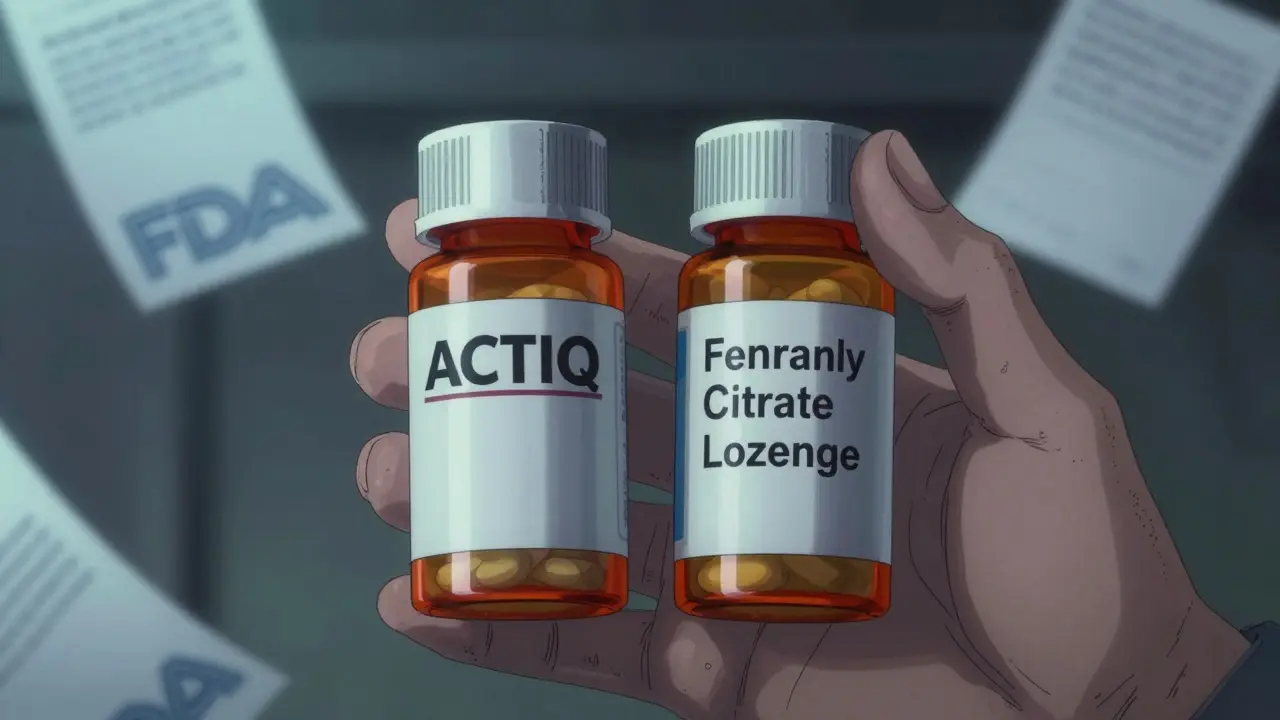
When you're looking for a cheaper version of a brand-name drug, you might think of generic drugs. But there's another option many people don't know about: authorized generics. These aren't just any generic - they're the exact same drug as the brand-name version, made by the same company, but sold without the brand name on the label. They look different - maybe a different color or shape - but they work the same way. And the only official place to find a complete list of these drugs is the U.S. Food and Drug Administration (FDA).
What Exactly Is an Authorized Generic?
An authorized generic is a brand-name drug that’s rebranded as a generic. The manufacturer doesn’t create a new version. Instead, they take the exact same pill, capsule, or injection - same active ingredient, same dosage, same factory - and sell it under a different label. No changes to the formula. No shortcuts. Just a new name and a lower price.
For example, if you take ACTIQ, a brand-name fentanyl lozenge, you might find an authorized generic version sold as just "fentanyl citrate lozenge." Same drug. Same manufacturer (Cephalon, LLC). Same effectiveness. But without the brand name, it costs less.
This isn’t the same as a regular generic. Regular generics are made by other companies after the brand patent expires. They go through the FDA’s Abbreviated New Drug Application (ANDA) process. Authorized generics skip that. They’re approved under the original brand’s New Drug Application (NDA). That’s why they’re not listed in the FDA’s Orange Book - the go-to resource for regular generics. You won’t find them there. You have to go to the FDA’s separate Authorized Generics list.
Why Does This List Even Exist?
The FDA started keeping this list because of a law passed in 2003: the Medicare Prescription Drug, Improvement, and Modernization Act (MMA). Section 505(t) of the Federal Food, Drug, and Cosmetic Act requires the FDA to publish a public list of all authorized generics. The goal? Transparency.
Before this law, brand-name companies could quietly launch their own generic version to undercut competitors. Patients and pharmacies didn’t know these were the same drugs. The FDA’s list makes it clear: if a drug appears here, it’s not a copy - it’s the original, just repackaged.
It also helps regulators track how brand manufacturers use authorized generics to delay true generic competition. The Federal Trade Commission (FTC) has found that sometimes, these authorized generics are introduced right before a regular generic hits the market - and priced almost the same as the brand. That can stop price drops that should happen when competition kicks in.
Where to Find the Official FDA List
The only official source is the FDA’s dedicated page: fda.gov/drugs/abbreviated-new-drug-application-anda/fda-list-authorized-generic-drugs.
On that page, you’ll find a downloadable PDF. It’s about 1.09 MB and contains over 800 entries as of October 2025. Each row shows:
- The brand name (like ARTHROTEC)
- The dosage form and strength (e.g., 50 mg/200 mcg tablet)
- The name of the brand manufacturer (e.g., Pfizer Inc.)
- The date the authorized generic entered the market
For example, you’ll see that CLEOCIN T 1% gel, made by Pfizer, entered the market on June 11, 2003. That doesn’t mean it launched exactly then - the FDA admits the date is based on when the company reported it in their annual paperwork, not the actual day it hit shelves.
You won’t find a searchable database yet. As of early 2026, the list is still a PDF. But the FDA has said it’s working on a new online tool with filters and search functions, expected to launch in Q2 2026.
What the List Doesn’t Tell You
This is critical: the FDA list is not a real-time inventory. It doesn’t tell you if the drug is still being sold, if it’s in stock, or where to buy it.
Many pharmacists have run into this problem. One independent pharmacy owner in Ohio checked the list for five authorized generics he thought were available. Only one was actually being distributed to his wholesaler. The others had been discontinued months earlier - but the FDA list still showed them as "entered the market" in 2022.
Another issue: the list doesn’t include pricing. A 2023 study by Harvard Medical School found that many authorized generics cost only slightly less than the brand - sometimes just 5-10% cheaper. That’s not enough to make a big difference for patients on tight budgets.
And not all authorized generics are reported. The FTC estimates 10-15% may be missing because companies don’t always include them in their annual reports. There’s no penalty for skipping this step.
How to Use This List in Real Life
If you’re a patient, this list won’t help you walk into a pharmacy and ask for a specific authorized generic. But if you’re comparing prices or asking your pharmacist for alternatives, it gives you the exact name to look up.
Here’s how to use it effectively:
- Find your brand-name drug on the FDA list.
- Write down the generic name and manufacturer (e.g., "fentanyl citrate, made by Cephalon").
- Ask your pharmacist: "Is there an authorized generic for this?" and give them the name.
- Check the National Drug Code (NDC) Directory on fda.gov to confirm the product’s current status.
- Call your wholesaler or use a commercial database like IQVIA to see if it’s actually being shipped.
For pharmacists and healthcare providers, the list is a powerful tool for competitive intelligence. It helps you spot when a brand manufacturer is launching its own generic - which often signals that the brand will soon raise prices or pull the product from the market.
Who’s Behind the Most Authorized Generics?
Some companies use this strategy more than others. As of the October 2025 list:
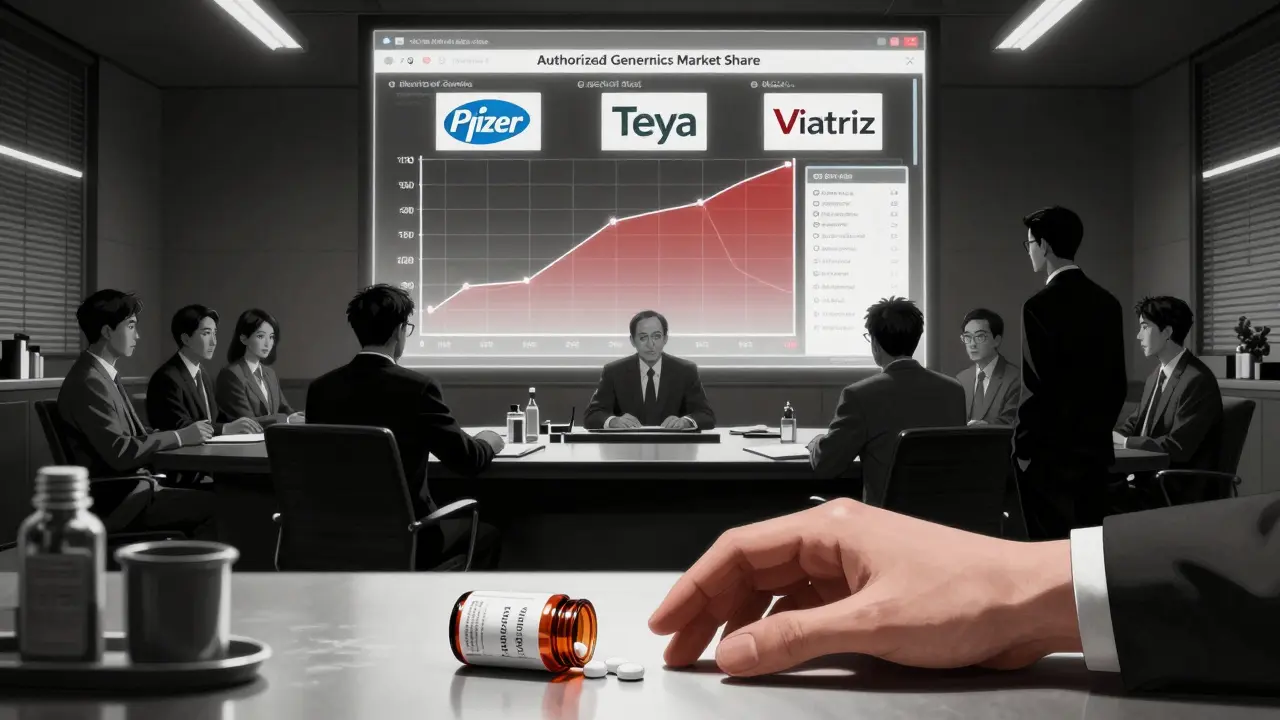
- Pfizer leads with 47 authorized generics
- Teva has 32
- Mylan (now part of Viatris) has 28
These aren’t small players. They’re the giants of the pharmaceutical industry. They use authorized generics to protect their profits when patents expire. Instead of letting a cheaper generic from another company steal their customers, they launch their own - and keep the revenue.
That’s why the FTC calls it a "strategic tool." It’s legal. It’s transparent (thanks to the FDA list). But it doesn’t always benefit the patient.
What’s Coming Next?
The FDA is working on a major upgrade. By mid-2026, the static PDF will be replaced by a searchable, dynamic database. This will let users filter by drug name, manufacturer, or date. It might even link to real-time availability data.
There’s also talk of connecting the list to the FDA’s Drug Shortage Portal and the price transparency rules from the 2022 Inflation Reduction Act. That could mean seeing not just if a drug exists - but how much it costs and whether it’s in stock.
But until then, the PDF is all you’ve got. And you need to use it with caution.
Common Mistakes People Make
People often confuse authorized generics with regular generics. Don’t. The Orange Book is for regular generics. This list is for authorized ones. They’re two different systems.
Another mistake: assuming the "date entered the market" means the drug is still available. It doesn’t. Many authorized generics are pulled after a few months. The FDA doesn’t track when they disappear.
And don’t rely on this list for pricing. You’ll still need to check with your pharmacy or insurer. The FDA doesn’t control or report prices.
Final Thoughts
The FDA’s Authorized Generics list is a valuable resource - but only if you understand its limits. It’s not a shopping guide. It’s not a price checker. It’s a transparency tool. It tells you which brand-name drugs have been quietly turned into generics by their own makers.
If you’re trying to save money on prescriptions, this list gives you the names to ask for. But you still need to talk to your pharmacist, check availability, and compare prices. Don’t assume that just because it’s on the FDA list, it’s sitting on your pharmacy shelf.
For industry professionals, it’s a window into how big pharma protects its profits. For patients, it’s a hidden path to lower-cost meds - if you know how to use it.
Where can I find the official FDA list of authorized generics?
The official list is on the FDA’s website at fda.gov/drugs/abbreviated-new-drug-application-anda/fda-list-authorized-generic-drugs. It’s available as a downloadable PDF. The FDA plans to replace it with a searchable database in mid-2026.
Are authorized generics the same as regular generics?
No. Regular generics are made by other companies after the brand patent expires and are approved through the ANDA process. Authorized generics are made by the original brand manufacturer and sold under the brand’s NDA. They’re chemically identical to the brand-name drug - no changes in ingredients, dosage, or manufacturing.
Why aren’t authorized generics listed in the Orange Book?
The Orange Book only includes drugs approved through the Abbreviated New Drug Application (ANDA) process. Authorized generics are approved under the original brand’s New Drug Application (NDA), so they’re not included. The FDA keeps a separate list for authorized generics because they operate under different rules.
Can I trust the "Date Authorized Generic Entered Market" on the FDA list?
Not exactly. The date reflects when the manufacturer reported the drug in their annual report - not the actual day it hit the market. Many companies don’t report exact launch dates. The FDA admits the date may be inaccurate or delayed by months.
Does the FDA list show if an authorized generic is still being sold?
No. The FDA does not track whether an authorized generic is still on the market or when it was discontinued. Many drugs listed are no longer available. You need to check with your pharmacy, wholesaler, or commercial databases like IQVIA to confirm current availability.
Why do some authorized generics cost almost as much as the brand name?
Brand manufacturers often price authorized generics just slightly below the brand name to maintain profit margins. This strategy can slow down price drops from true generic competition. Studies show that in many cases, the savings are minimal - sometimes less than 10% - which limits their benefit to patients.
How can I verify if an authorized generic is available in my area?
Use the FDA list to get the exact drug name and manufacturer. Then check the National Drug Code (NDC) Directory on fda.gov to confirm the product’s status. Call your pharmacy or wholesaler to ask if they carry it. For the most accurate, real-time data, use commercial databases like IQVIA or consult your pharmacy’s purchasing system.




Helen Leite January 24, 2026
OMG this is wild 😱 I just found out my $400 pill is literally the same as the $40 one?? Who’s REALLY in charge here?? 🤯 #PharmaConspiracy 🍿
Izzy Hadala January 25, 2026
The regulatory framework governing authorized generics is predicated upon the statutory mandate enacted under Section 505(t) of the Federal Food, Drug, and Cosmetic Act. The transparency objectives articulated therein are laudable, though implementation remains hampered by non-standardized reporting protocols and the absence of dynamic data synchronization.
Elizabeth Cannon January 26, 2026
yall need to stop trusting the FDA list like its gospel 🙄 i work in a pharmacy and half these "active" generics are ghosts. if you wanna save $$, ask for the NDC and call your wholesaler. dont trust a pdf from 2025 that says "entered market 2022" 🤷♀️ #pharmacistsknowbetter
Gina Beard January 28, 2026
The illusion of choice is the most expensive drug of all.
Phil Maxwell January 28, 2026
I had no idea authorized generics existed. I just assumed generics = cheaper. This makes me wonder how many other things in healthcare are hiding in plain sight. Maybe I should check my insulin next...
Shelby Marcel January 29, 2026
sooo… if the FDA list is just a pdf and the dates are made up… how do i even know if the one my doc prescribed is legit? like… am i getting scammed or what?? 🤔
blackbelt security January 30, 2026
Knowledge is power. If you’re paying full price for a brand-name drug, you’re not being smart. Use this list. Ask for the generic name. Save money. Simple.
Patrick Gornik January 30, 2026
Ah yes, the classic capitalist sleight-of-hand: manufacture the monopoly, then monetize its dissolution. The FDA’s list isn’t transparency-it’s a performative gesture to appease the masses while Big Pharma quietly rebrands its profit engine. This isn’t healthcare. It’s corporate theater with a side of placebo pricing. The Orange Book? A relic. The PDF? A graveyard of unspoken collusion. And yet… we’re told to be grateful for crumbs.
Karen Conlin February 1, 2026
Hey everyone-just wanted to share something I learned last week. I had a patient come in asking about her fentanyl lozenge. She was crying because she couldn’t afford it. I pulled up the FDA list, found the authorized generic, called her wholesaler, and we got it for $18 instead of $380. She hugged me. That’s why this stuff matters. Don’t just read the list-use it. Talk to your pharmacist. Ask for the NDC. You’re not being pushy-you’re being smart. And if you’re a provider? Share this with your patients. We’re in this together.
asa MNG February 3, 2026
LMAO so the FDA is just a glorified spreadsheet? 😂 I bet they’re all sitting in some basement eating donuts while pharma execs laugh all the way to the bank. And why do i even care? bc my dad’s meds are $500 a month and i’m working 2 jobs. #PharmaScam #GiveUsTheRealPrice
Sushrita Chakraborty February 3, 2026
While the FDA's disclosure mechanism is commendable, it remains fundamentally incomplete without real-time market integration. In India, we rely on the National Pharmaceutical Pricing Authority's database, which includes pricing, availability, and discontinuation notices. A similar, robust, and dynamic system is urgently required in the United States to ensure equitable access and prevent consumer exploitation.
Sawyer Vitela February 5, 2026
The Harvard study showed 5-10% savings? That’s not a discount. That’s a joke. This entire system is designed to make patients feel like they’re saving money while the real savings go to the manufacturer’s bottom line. Stop celebrating crumbs.