CDL Medication Compliance Checker
Select a medication category or type to check its status for commercial drivers.
Select a medication above to see the CDL regulatory status.
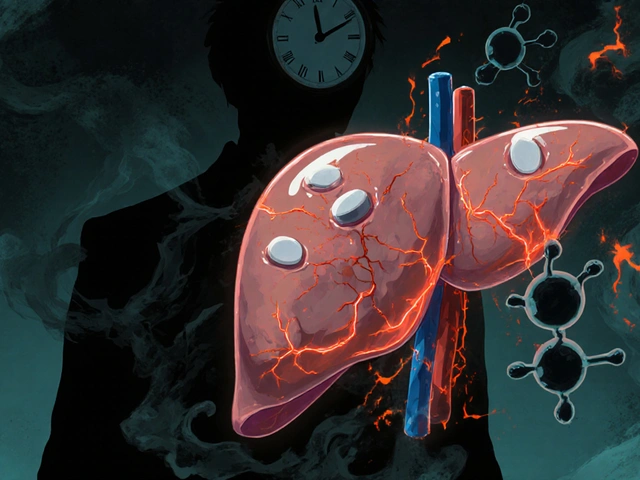
You sit behind the wheel of an eighteen-wheeler, ready to haul freight across state lines. You have your Commercial Driver's License (CDL), you are rested, and you know the road. But there is a pill in your pocket that could cost you everything. For commercial drivers, taking medication is not just a personal health decision; it is a regulatory minefield governed by strict federal laws.
The Federal Motor Carrier Safety Administration (FMCSA) enforces rules under 49 CFR Parts 382 and 391 that dictate exactly what you can and cannot put in your body while operating a Commercial Motor Vehicle (CMV). These regulations exist because impairment kills. In 2020 alone, 4.2% of large truck crashes involved drivers who tested positive for disqualifying substances, leading to over 1,200 fatalities. The stakes are high, and the margin for error is zero.
Understanding the Core Regulations
To stay compliant, you need to understand the legal framework. The cornerstone is 49 CFR §391.41(b)(3), which mandates that drivers must be free from any physical, mental, or organic condition that might impair their ability to control a CMV. This is broad language, but it gets specific when paired with 49 CFR §382.107, which prohibits the use of any drug determined by the Secretary of Transportation to be incompatible with safe vehicle operation.
This isn't about policing your private life; it is about safety-sensitive functions. When you hold a CDL, you are operating a machine that weighs up to 80,000 pounds. The FMCSA explicitly bans Schedule I controlled substances. This includes marijuana, regardless of whether you live in a state where it is legal for medical or recreational use. It also includes phencyclidine (PCP) and any substance that demonstrably impairs driving ability.
The enforcement mechanism has tightened significantly since the implementation of the Drug and Alcohol Clearinghouse rule in 2016. Today, data is centralized. If you fail a test or refuse one, it shows up instantly in the SAFER system. With approximately 3.8 million roadside inspections conducted annually, the chance of getting caught off-guard is real. Compliance is not optional; it is the price of admission for this career.
Disqualifying Medications vs. Permitted Prescriptions
Not all medications are created equal in the eyes of the DOT. Some are automatic disqualifiers, while others require careful documentation. Understanding this distinction is crucial for maintaining your license.
| Medication Type | Examples | CDL Status | Notes |
|---|---|---|---|
| Schedule I Controlled Substances | Marijuana, PCP | Prohibited | Banned federally even if legal in your state. |
| Amphetamines/Stimulants | Adderall, Vyvanse | Generally Prohibited | Exceptions exist for narcolepsy with specific waivers. |
| Narcotics/Opioids | Codeine, Morphine | Prohibited | Absolute ban on Schedule II narcotics for CDL holders. |
| Antidepressants | SSRIs, SNRIs | Permitted* | *Must not cause drowsiness or impairment per physician judgment. |
| Non-Stimulant ADHD Meds | Strattera | Often Permitted | Preferred alternative to stimulants for CDL applicants. |
One major point of confusion involves ADHD medications. Drugs like Adderall and Vyvanse are commonly prescribed for attention deficits but remain prohibited for most CDL holders. According to Foley Transportation’s 2025 compliance guide, these stimulants are banned due to their potential for abuse and impact on heart rate and focus. However, non-stimulant alternatives like Strattera have seen success. A 2024 forum discussion on TruckersReport.com documented dozens of cases where drivers successfully petitioned for medical exemptions after switching to non-stimulant options. If you rely on stimulants, you likely face a barrier to entry unless you qualify for a rare narcolepsy waiver.
Contrast this with the European Union, where 78% of member states permit therapeutic use of certain narcotics under strict monitoring. The U.S. maintains an absolute prohibition on Schedule II narcotics for commercial drivers, reflecting a stricter risk-averse approach compared to international standards.
The Role of the Medical Examiner
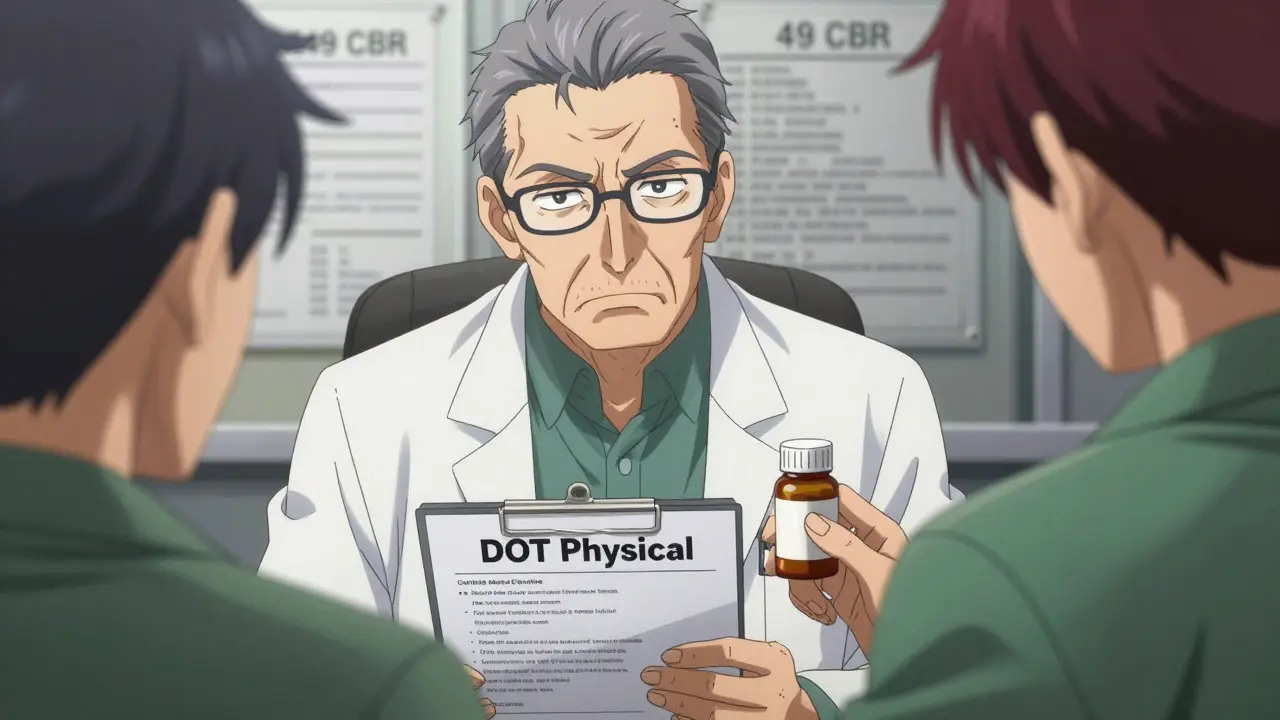
Your gateway to compliance is the Certified Medical Examiner listed in the National Registry of Certified Medical Examiners (NRCME). These professionals are trained to evaluate not just your health, but your fitness to drive safely. They do not simply check boxes; they assess risk.
Dr. Gary Solomon, a certified examiner with over two decades of experience, noted that approximately 35% of drivers he examines take medications requiring special consideration. Antidepressants are the most common category here. The key factor is the "good faith judgment" standard. Under DOT guidelines, a prescription is permitted only if:
- It is prescribed by a licensed physician.
- The physician determines the dosage is consistent with safe performance of duties.
- The driver uses the medication exactly as prescribed.
This means you cannot self-medicate or adjust dosages without consultation. During your DOT physical, which occurs every 24 months (or more frequently if conditions change), you must disclose every substance you take. This includes over-the-counter products. Many drivers unknowingly trigger issues with cold medicines containing pseudoephedrine or cough syrups with dextromethorphan, which can interact with other drugs or cause false positives.
The cost of this examination ranges from $85 to $150, but consider it insurance. Failing to disclose a medication can lead to immediate disqualification and potential fraud charges if discovered during a post-accident investigation.
Navigating Challenges and User Experiences
The reality of these regulations hits hard for many drivers. A 2022 survey by the Owner-Operator Independent Drivers Association (OOIDA) found that 63% of CDL drivers had to stop effective chronic pain medications due to DOT restrictions. Of those, 41% reported worsened medical conditions. This creates a difficult trade-off between health management and career viability.
Social media threads, such as discussions on r/Truckers, reveal frustration among drivers facing license suspensions for using prescribed ADHD medications. One thread highlighted nearly 300 drivers sharing stories of suspension. However, there is a path forward. The FMCSA offers a Skill Performance Evaluation (SPE) certificate process for drivers with disqualifying conditions or medications. While complex, this program had a 68% approval rate in 2023, offering hope for those who can demonstrate safe driving capabilities despite their medical needs.
For carriers, the stakes are equally high. The American Trucking Associations reports that medication-related issues account for 12.3% of all medical certification denials. Carriers that fail to manage medication protocols properly face an average fine of $14,200 per violation, according to FMCSA audit data. This has driven a shift toward electronic medication tracking systems, with adoption jumping from 18% in 2019 to 67% in 2024.

Future Trends and Emerging Risks
The landscape is shifting. In February 2024, the FMCSA proposed expanding reportable medications to include all benzodiazepines, responding to a 22% increase in benzodiazepine-positive crash tests between 2019 and 2023. Benzodiazepines, often prescribed for anxiety or sleep, can cause significant sedation and delayed reaction times-fatal combinations at highway speeds.
Technology is also changing compliance. The Drug and Alcohol Clearinghouse now requires medication-related restrictions to be reported within 24 hours, with fines of $1,250 for non-compliance. Looking ahead, the FMCSA is funding pilot programs with companies like Samsara and KeepTruckin to test biometric wearables that detect real-time impairment. This move toward continuous monitoring suggests that the era of periodic checks may give way to constant oversight.
However, demographic shifts pose a looming crisis. The Commercial Vehicle Medical Research Foundation warns that 43% of drivers over 50 require medications that may conflict with current DOT standards. Without policy refinement, the industry could face a shortage of 54,000 drivers by 2027. Balancing safety with the practical needs of an aging workforce will be the next great challenge for regulators.
Practical Steps for Compliance
If you are a commercial driver, take these steps to protect your license:
- Create a Medication Action Plan: Work with your physician to document how each medication affects your driving. Use tools like the Driving Impairment Checklist to track side effects.
- Disclose Everything: Never hide over-the-counter meds or supplements during your DOT physical. Transparency builds trust with your examiner.
- Explore Alternatives: If you are on a disqualifying drug like Adderall, ask your doctor about non-stimulant options like Strattera before your next exam.
- Monitor Updates: Follow FMCSA dockets, especially regarding benzodiazepines and new reporting requirements. Ignorance of the law is not a defense.
- Keep Records: Maintain copies of all prescriptions and physician statements confirming your fitness to drive.
Compliance is proactive, not reactive. By staying informed and working closely with healthcare providers who understand DOT regulations, you can manage your health without jeopardizing your livelihood.
Can I take Adderall with a CDL?
Generally, no. Amphetamine-based medications like Adderall are prohibited for CDL holders under FMCSA regulations due to their classification as stimulants. Exceptions are rare and typically limited to specific narcolepsy waivers. Non-stimulant alternatives like Strattera are often approved instead.
Is marijuana allowed for commercial drivers in legal states?
No. Marijuana remains a Schedule I controlled substance under federal law. Even if you live in a state where medical or recreational marijuana is legal, testing positive for THC will disqualify you from holding a CDL and operating a CMV.
How often do I need a DOT physical?
Most drivers need a DOT physical every 24 months. However, if you have certain medical conditions like hypertension or diabetes, your examiner may certify you for shorter periods, such as six or twelve months, requiring more frequent evaluations.
What happens if I fail a drug test due to prescription medication?
If you test positive for a substance covered by your prescription, you can usually clear the result by providing proof of prescription to the Medical Review Officer (MRO). However, if the medication is disqualifying under DOT rules (like certain opioids), you may still lose your medical certification despite having a valid prescription.
Do over-the-counter medications affect my CDL status?
Yes, indirectly. While OTC meds are not banned, ingredients like pseudoephedrine or dextromethorphan can cause false positives on drug tests or interact with other medications. You must disclose all OTC products during your DOT physical to ensure they do not impair your driving ability.