
If you have eczema, you know how frustrating it can be. The itching, the dry patches, the constant worry about what might make it worse. But one of the most common-and often overlooked-problems people with eczema face isn’t just the rash itself. It’s skin infections. And the link between the two isn’t just coincidence. It’s biology.
Why Eczema Makes Skin More Vulnerable
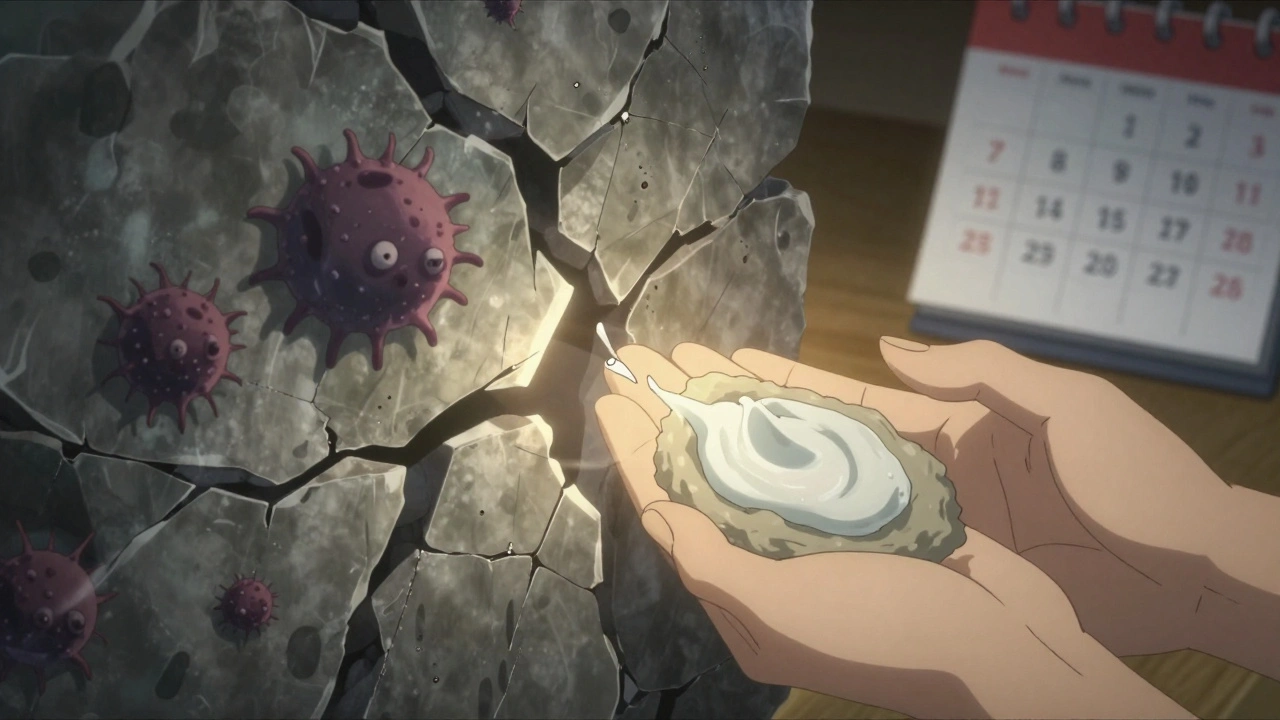
Eczema, especially atopic dermatitis, isn’t just dry skin. It’s a broken skin barrier. Healthy skin acts like a wall-tight, strong, keeping out germs and holding in moisture. In eczema, that wall has cracks. Tiny gaps form between skin cells. The natural oils that protect the surface are missing. And the skin’s immune system goes into overdrive, causing inflammation.
This isn’t just uncomfortable. It’s dangerous. Bacteria, viruses, and fungi that normally live harmlessly on the skin’s surface can now slip through those gaps. The most common offender? Staphylococcus aureus, or staph. Up to 90% of people with moderate to severe eczema carry this bacteria on their skin, compared to only 5% of people without eczema.
It’s not that staph causes eczema. It’s the other way around. The damaged skin lets staph in. Once inside, it feeds on the broken tissue, releases toxins, and triggers even more inflammation. That’s why flare-ups often come with oozing, crusting, or yellowish scales-signs of infection.
What a Skin Infection Looks Like With Eczema
It’s easy to confuse an infected eczema flare-up with a regular flare-up. Both involve redness, itching, and swelling. But infection adds specific warning signs:
- Wet, weepy patches that don’t dry up
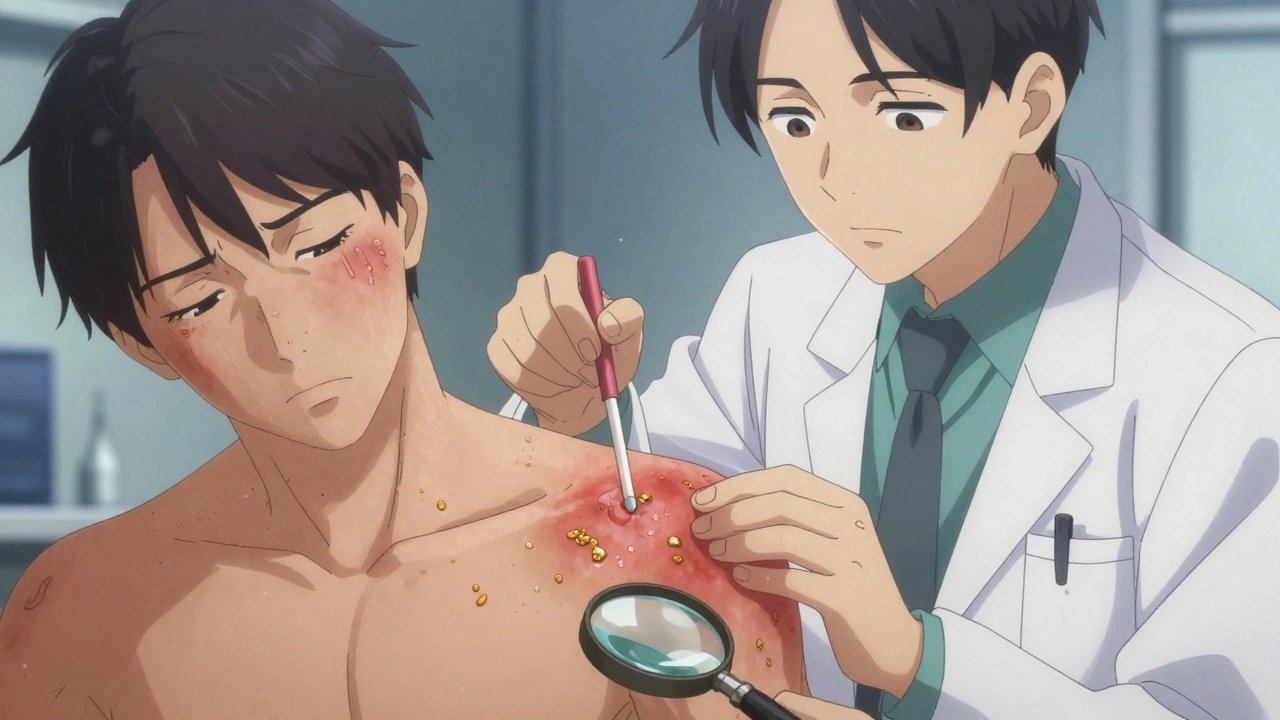
- Golden-yellow crusts on top of the rash
- Sudden worsening of itching or pain
- Fever or swollen lymph nodes near the rash
- Rash spreading quickly, even with treatment
If you see any of these, don’t wait. A simple eczema cream won’t fix an infection. You need medical attention. Left untreated, bacterial infections can spread deeper into the skin, leading to cellulitis-a serious condition that can require hospitalization.
Viruses are less common but just as dangerous. Herpes simplex virus (the cold sore virus) can cause a rare but severe infection called eczema herpeticum. It looks like clusters of painful blisters, often on top of eczema patches. It can spread fast and needs urgent antiviral treatment.
How Infections Make Eczema Worse
It’s a cycle. Eczema leads to infection. Infection makes eczema worse. And worse eczema means more infection risk.
When staph bacteria colonize the skin, they release substances called superantigens. These don’t just cause local irritation-they trick the immune system into going haywire. The body attacks its own skin cells, increasing inflammation and making the skin even more fragile. That’s why some people with eczema seem to get one flare-up after another, even when they’re doing everything right.
Studies show that people with eczema who have high levels of staph on their skin are more likely to have persistent, hard-to-control symptoms. Treating the infection doesn’t just clear up the sores-it helps calm the underlying eczema too.
What Doctors Do to Treat Infected Eczema
There’s no one-size-fits-all fix, but treatment usually follows a few clear steps.
First, your doctor will look at the rash. In many cases, they can tell if it’s infected just by sight. If it’s unclear, they might take a swab to test for bacteria or viruses.
If it’s bacterial, topical antibiotics like mupirocin are often the first step. For widespread infections, oral antibiotics like flucloxacillin or erythromycin are prescribed. Treatment usually lasts 7 to 14 days. It’s important to finish the full course-even if the rash looks better after a few days.
If it’s viral, antiviral pills like acyclovir are used. For eczema herpeticum, treatment often starts in hospital.
Once the infection is under control, managing the eczema becomes the focus again. Moisturizers, topical steroids, and newer medications like crisaborole or calcineurin inhibitors help repair the skin barrier. In severe cases, doctors may recommend bleach baths-diluted household bleach in bathwater-to reduce staph bacteria on the skin.
Preventing Infections Before They Start
The best treatment is prevention. Here’s what actually works:
- Moisturize daily. Thick creams or ointments (not lotions) help seal the skin barrier. Apply right after bathing while skin is still damp.
- Keep nails short. Scratching is the biggest cause of skin breaks. Even small scratches let germs in.
- Use gentle cleansers. Avoid soaps with fragrances or alcohol. Soap-free washes like Cetaphil or E45 are better.
- Wear soft fabrics. Cotton is best. Wool and synthetics can irritate and trap sweat.
- Consider bleach baths. Twice a week, add half a cup of bleach to a full bathtub. Soak for 10 minutes, then rinse with clean water. This reduces bacteria without killing good skin microbes.
- Watch for early signs. If your eczema suddenly feels hotter, more painful, or starts oozing, act fast.
Some people benefit from long-term, low-dose antibiotics during high-risk seasons-like winter, when skin gets drier. But this isn’t for everyone. Talk to your doctor if you’re getting infections often.
What Doesn’t Work
There’s a lot of misinformation out there. Avoid these myths:
- Apple cider vinegar soaks. They can burn already damaged skin and make things worse.
- Essential oils. Many are skin irritants. Tea tree oil, for example, can trigger allergic reactions in eczema-prone skin.
- Over-washing. Showering too often, especially with hot water, strips natural oils and dries skin further.
- Ignoring signs of infection. Waiting to see if it gets better often leads to bigger problems.
Just because something is "natural" doesn’t mean it’s safe for eczema. Your skin is already compromised. Stick to evidence-based care.
When to See a Doctor
You don’t need to panic every time your eczema flares. But call your doctor if:
- The rash doesn’t improve after 3-5 days of regular treatment
- You see yellow crusts, pus, or weeping
- You develop a fever or feel unwell
- The rash spreads rapidly or appears in new areas
- You’ve had multiple infections in the past year
Early treatment stops small problems from becoming serious ones. And the sooner you treat an infection, the faster your eczema will calm down.
The Bigger Picture
Understanding the link between skin infections and eczema changes how you manage your condition. It’s not just about calming inflammation. It’s about protecting your skin like you would protect a wound.
Think of your skin as a fence. Eczema leaves gaps. Infections are the animals that walk through. You can’t just chase the animals away-you need to fix the fence.
That means consistent care: moisturizing, avoiding triggers, watching for infection signs, and acting fast when something looks off. It’s not glamorous. But it works.
People with eczema who follow these steps don’t just get fewer infections. They also have fewer flare-ups, better sleep, and less stress. The skin barrier heals. The cycle breaks. And life gets easier.
Can eczema turn into a skin infection?
Yes. Eczema damages the skin barrier, making it easier for bacteria like staph to enter and cause infection. Signs include oozing, crusting, sudden worsening, or fever. It’s not eczema turning into infection-it’s eczema creating the conditions for infection to happen.
Is eczema caused by poor hygiene?
No. Eczema is a genetic condition linked to immune system overactivity and skin barrier defects. Poor hygiene doesn’t cause it. In fact, over-washing or using harsh soaps can make it worse. People with eczema often have clean skin but still get flare-ups because of their biology, not cleanliness.
Can I use over-the-counter antibiotic creams on my eczema?
Only if your doctor says so. Many OTC antibiotic creams, like Neosporin, contain ingredients that can cause allergic reactions in people with eczema. Even if it seems to help at first, it can lead to worse rashes later. Always check with a healthcare provider before using them.
Do bleach baths really help with eczema?
Yes, for many people. Diluted bleach baths (half a cup in a full tub) reduce staph bacteria on the skin, which helps prevent infections and calm inflammation. Do them twice a week for 10 minutes, then rinse with clean water. Don’t use undiluted bleach-it’s dangerous. This method is backed by multiple clinical studies and recommended by dermatology groups.
How long does it take for infected eczema to heal?
With proper treatment, most bacterial infections clear up in 7 to 14 days. But the eczema underneath may take longer to fully calm down-sometimes weeks. Healing isn’t just about the infection going away. It’s about repairing the skin barrier, which requires consistent moisturizing and avoiding triggers. Don’t stop care just because the rash looks better.




Lauryn Smith December 2, 2025
After years of struggling with eczema, I finally learned that moisturizing right after a shower made all the difference. Thick ointments, not lotions. And bleach baths twice a week-yes, they sound wild, but they actually cut down on infections. No more oozing patches. Life changed.
It’s not magic. It’s just science you can do at home.
Edward Hyde December 2, 2025
This whole post reads like a pharmaceutical ad disguised as medical advice. Bleach baths? Seriously? Next they’ll tell us to rub Vaseline on our faces and call it a cure. My skin doesn’t need chemical warfare-it needs to breathe.
And don’t even get me started on ‘staph’ being the villain. Pathogens are everywhere. Maybe we’re just too damn clean these days.
Scotia Corley December 2, 2025
While the article presents a clinically accurate overview of the eczema-infection nexus, it fails to adequately address the role of microbiome dysbiosis in chronic inflammation. The overemphasis on Staphylococcus aureus as a singular pathogen neglects the broader ecological context of cutaneous microbial communities.
Furthermore, the recommendation of bleach baths, though supported by randomized trials, may induce epidermal barrier disruption in susceptible individuals if not precisely calibrated. A more nuanced approach is warranted.
Debbie Naquin December 3, 2025
Barrier dysfunction isn’t just about cracks-it’s about signaling failure. The skin isn’t broken, it’s miscommunicating. Immune cells are getting false alarms from keratinocytes that think they’re under siege. Staph doesn’t invade, it exploits the noise.
That’s why steroids alone fail. You’re silencing the alarm, not fixing the wiring.
Fix the circuit. Not the symptom.
Mary Ngo December 4, 2025
Have you ever wondered why this is happening now? Who controls the research behind bleach baths? Who funds the dermatologists pushing these protocols? The pharmaceutical industry has a vested interest in keeping eczema patients dependent on treatments that don’t cure-only manage.
And what about the long-term effects of repeated antibiotics? Are we trading one crisis for another? The system is designed to keep you coming back. Don’t be fooled.
There’s a reason they don’t talk about gut healing or ancestral diets. They don’t want you to know you can heal without them.
Kenny Leow December 5, 2025
As someone who grew up in a household where we never used soap on our faces, I can say this: simplicity works.
Washing with water only, moisturizing with pure shea butter, and avoiding heat-this is what kept my eczema under control for years. No bleach. No antibiotics. Just respect for the skin’s natural rhythm.
Maybe we’ve overcomplicated things too much.
Kelly Essenpreis December 6, 2025
Why are we letting big pharma dictate how we treat our skin? In my country we just let it heal on its own. No bleach baths. No antibiotics. Just let the body do its job. This post is pure propaganda. We’re being manipulated to buy products we don’t need
And why are all the studies from the US? What about other countries where people don’t have this problem? Coincidence?
ariel nicholas December 7, 2025
Let’s be clear: this is not a medical issue-it’s a systemic failure. The skin barrier isn’t broken because of genetics-it’s broken because of environmental toxins, processed foods, and the relentless assault of synthetic detergents. And yet, we’re told to slap on creams and bathe in bleach?
Who benefits? The corporations that sell the creams, the bleach, the antibiotics, the ‘special’ moisturizers.
The truth? We’re being sold a lie wrapped in clinical jargon.
Bonnie Youn December 9, 2025
You got this. I used to be scared every time my skin flared-but once I started the bleach baths and kept my nails short, everything changed. It’s not perfect, but it’s manageable.
Don’t give up. Moisturize like your life depends on it (because it kinda does). And if something looks weird-don’t wait. Call your doc. You’re not overreacting. You’re being smart.
You’re not alone. We’ve all been there. Keep going.
Charlotte Collins December 9, 2025
Interesting how conveniently the article ignores the fact that bleach is a known carcinogen. The CDC recommends it? That’s comforting. What’s next-injecting formaldehyde into our moisturizers for ‘barrier repair’?
And let’s not forget the psychological toll of being told your skin is ‘infected’ when it’s just… your skin. Pathologizing natural variation is the real disease here.
They want you to feel broken so you’ll keep buying.
Margaret Stearns December 9, 2025
I’ve had eczema since I was a baby. The bleach baths helped me more than anything else. I use unscented Dove soap and apply ceramide cream right after showering. I didn’t know this was a thing other people did. It’s nice to see it validated.
Also, short nails. Always short nails. I used to scratch until I bled. Now I wear cotton gloves at night. Small changes, big difference.
amit kuamr December 10, 2025
In India we use neem oil and turmeric paste. It works better than bleach. Why are Americans so afraid of natural things? Your skin is not a lab experiment. Let it breathe. Stop treating it like a battlefield.
My cousin had eczema since childhood. He never used antibiotics. Now he’s 45 and his skin is fine. Just diet and coconut oil.
elizabeth muzichuk December 10, 2025
Do you realize how many children are being drugged with antibiotics for eczema? This isn’t medicine-it’s chemical abuse. The FDA is complicit. The doctors are paid. The parents are scared. And the children? They grow up with weakened immune systems because we were told to kill every microbe on the skin.
How many of us have been lied to? How many of us are still being lied to?
I cried when I read this. Not because I was relieved. Because I realized I was never told the truth.
Alexander Williams December 11, 2025
The concept of ‘colonization’ versus ‘infection’ is being conflated here. Staph aureus is a commensal in 90% of eczema patients-it’s not an invader, it’s a resident. The immune response to its superantigens is the real driver of pathology, not bacterial load alone.
Topical antibiotics may reduce counts but do nothing to modulate immune recognition. The real therapeutic target is not the microbe-it’s the T-cell response to its antigens.
Suzanne Mollaneda Padin December 11, 2025
This is the most helpful thing I’ve read in years. I’ve been doing the bleach baths for 6 months now. My skin is calmer, my sleep is better, and I don’t panic when I see a red patch anymore.
Also-cotton pajamas. Game changer. I used to wear polyester because it felt soft. Turns out, it’s like sandpaper on eczema skin.
Thank you for writing this. I’m sharing it with my support group.