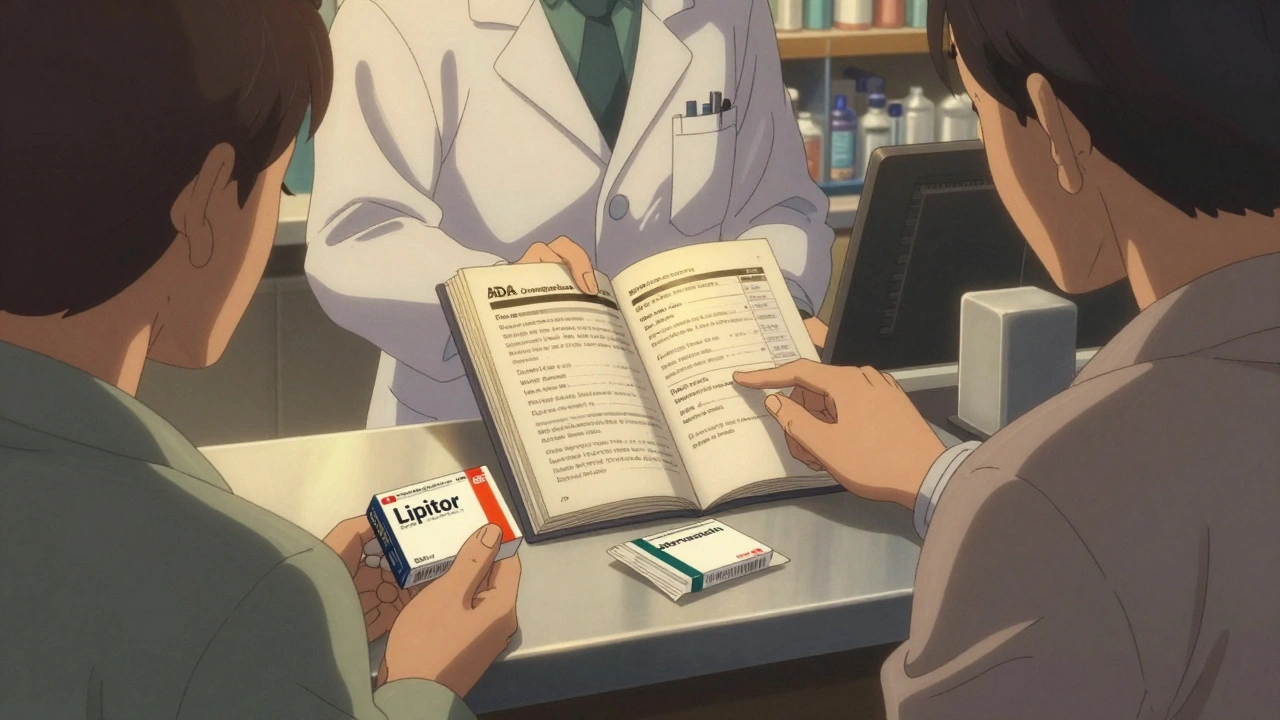
When you pick up a prescription, you might see two options on the label: the name you recognize, like Lipitor, or a simpler one like atorvastatin. The first is the brand-name drug. The second is the generic. Many patients wonder: is the cheaper version just as good? The short answer is yes - for most people, in most cases. But there are important details you need to know to make the right choice for your health and your wallet.
What Exactly Is a Generic Drug?
A generic drug isn’t a copy. It’s not a knockoff. It’s the same medicine, made to the same strict standards as the brand-name version. The active ingredient - the part that actually treats your condition - is identical. If you’re taking a generic version of sertraline, you’re getting the exact same chemical as Zoloft. The FDA requires this. No exceptions.Where generics differ is in the extras: the color, the shape, the fillers, the coating. These are called inactive ingredients, or excipients. They help the pill hold together or dissolve properly. For most people, these differences don’t matter. But for a small group - like those with allergies to certain dyes or gluten - they can. That’s why pharmacists are trained to ask about sensitivities when switching.
The FDA’s approval process for generics is rigorous. Before a generic hits the shelf, the manufacturer must prove it delivers the same amount of active ingredient into your bloodstream at the same rate as the brand. This is called bioequivalence. The acceptable range? Between 80% and 125% of the brand’s performance. In reality, most generics fall within just 3-4% of the original. A 2008 study of over 2,000 trials found the average difference was barely noticeable.
Why Are Generics So Much Cheaper?
Brand-name drugs cost a lot because the company that invented them spent years and millions developing them. They pay for clinical trials, marketing, and patent protection. Once the patent expires - usually after 20 years - other companies can make the same drug. They don’t need to repeat expensive trials. They just need to prove their version works the same way. That cuts costs dramatically.On average, generics cost 80-85% less than their brand-name counterparts. Take atorvastatin (Lipitor). The brand costs around $4.50 per tablet. The generic? About $0.10. Sertraline (Zoloft) runs $400 for a month’s supply as a brand. The generic? Around $4. That’s not a savings. That’s a revolution.
Over the last decade, generic drugs saved the U.S. healthcare system more than $1.6 trillion. That’s $265 saved per person every year. For people on fixed incomes, on Medicare, or without good insurance, that difference can mean the difference between taking your medicine and skipping doses.
When Generics Aren’t the Best Choice
Most of the time, generics are perfect. But not always. There are a few situations where switching can be risky.First, drugs with a narrow therapeutic index. These are medicines where even a tiny change in blood levels can cause harm. Examples include warfarin (a blood thinner), levothyroxine (for thyroid disease), and phenytoin (for seizures). For these, the FDA recommends caution. Some states even require your doctor to write “dispense as written” on the prescription. If you’re on one of these, don’t switch brands without talking to your doctor. Even small differences in how your body absorbs the drug can throw off your levels.
Second, complex delivery systems. Think inhalers, patches, or extended-release pills. The way the drug is released matters. A 2016 study found that 12% of patients switching from Advair Diskus to a generic version had trouble using the inhaler correctly - not because the medicine was different, but because the device felt different. Same active ingredients. Different mechanism. That can lead to underdosing.
Third, some extended-release formulations, like bupropion XL (Wellbutrin XL), have had documented issues. In 2012, the FDA warned that certain generic versions didn’t release the drug the same way, leading to reports of reduced effectiveness. While newer generics have improved, some patients still report differences. If you’ve been stable on a brand and your generic seems to stop working, tell your doctor.

What Do Patients Really Experience?
Real-world data tells a clear story. A review of 47 studies involving nearly 10,000 patients found that generics worked just as well as brands in 98.5% of cases. That’s nearly universal equivalence.On Drugs.com, 82% of users reported being satisfied with generics. That’s only 3% lower than brand-name satisfaction. But the complaints? They’re not about effectiveness. They’re about appearance. One patient wrote: “I’ve been taking the same pill for five years. Then suddenly it changed color and shape. I thought I got the wrong medicine.” That’s not uncommon. Different generic manufacturers use different dyes and shapes. If you’re on multiple medications, that can be confusing.
Reddit users in r/pharmacy report that 27% of complaints about generics are about pills looking different. In r/PersonalFinance, 93% of positive comments mention cost as the reason they switched. And the numbers back it up: patients who switch to generics are 22% more likely to stick with their medication because they can afford it.
Pharmacists say 68% of patients are nervous about generics at first. But after a quick explanation - “It’s the same medicine, just cheaper” - 89% keep using them. The fear fades when the facts are clear.
How to Make the Smart Switch
You don’t have to guess. Here’s how to make the right call:- Ask your pharmacist: “Is this generic FDA-approved and rated AB?” The Orange Book from the FDA lists all approved generics and their equivalence ratings. AB means it’s interchangeable.
- Check your state’s rules. In 49 states, pharmacists can substitute generics automatically unless your doctor says “do not substitute.” In 28 states, they must notify you if you’re switching a narrow therapeutic index drug.
- Stick with one pharmacy. They’ll track which manufacturer’s version you’re getting. If your pill looks different, they’ll warn you.
- Use tools like GoodRx or the FDA’s Drugs@FDA database to compare prices and check manufacturer changes.
- Keep a list of your medications - including the shape, color, and imprint code (the letters/numbers on the pill). That helps you spot changes.
For chronic conditions like high blood pressure or diabetes, generics are almost always the best choice. For acute issues like antibiotics or pain relievers, they’re even better - because you’re only taking them for a few days.

What’s Changing in 2025?
The landscape is shifting. The FDA’s new GDUFA III rules, launched in 2023, cut approval times for generics to 10 months for priority drugs. That means more options, faster. The Inflation Reduction Act of 2022 is starting to take effect - Medicare will begin negotiating prices for 10 high-cost drugs starting in 2026. That could push even more brand-name drugs into the generic pipeline.But challenges remain. About 78% of the active ingredients in generic drugs come from India and China. Supply chain issues can cause shortages. And complex generics - like inhalers or eye drops - still lag behind. Only 35% of off-patent complex drugs have generic versions.
The FDA is working on new guidelines for these harder-to-make generics. Final rules are expected in mid-2024. That means better, more reliable options coming soon.
Your Rights and Your Power
You have the right to ask for the generic. You have the right to know why you’re getting a specific version. And you have the right to say no if you’re uncomfortable.Doctors and pharmacists aren’t trying to trick you. They’re trying to help you stay healthy without going broke. Most of the time, the generic is the smarter choice. But if you’ve had a bad experience - if you feel worse after switching - speak up. Your body knows. And your doctor needs to hear it.
Don’t let fear or confusion stop you from saving money. But don’t ignore your own experience either. The goal isn’t just to save dollars. It’s to stay healthy, take your meds, and live better.
Are generic drugs as safe as brand-name drugs?
Yes. Generic drugs must meet the same FDA standards for safety, strength, quality, and purity as brand-name drugs. The FDA inspects manufacturing sites for both types equally. In 2022, 98.7% of generic manufacturers passed inspections - nearly the same as brand-name producers at 99.1%.
Can I switch from a brand-name drug to a generic without telling my doctor?
In most cases, yes - pharmacists can switch you automatically unless your doctor wrote "dispense as written." But for drugs with narrow therapeutic indices like warfarin or levothyroxine, your doctor should be informed. Even if not required, it’s smart to let them know about any switch, especially if you’re on multiple medications.
Why does my generic pill look different every time?
Different generic manufacturers use different colors, shapes, and inactive ingredients. That’s legal and normal. But if your pill changes shape or color unexpectedly, check with your pharmacist. They can tell you if it’s a different manufacturer and confirm it’s still the same medicine.
Are there any generic drugs I should avoid?
Not because they’re unsafe - but because of how they work. Avoid switching generic versions of narrow therapeutic index drugs (like thyroid meds or blood thinners) without medical supervision. Also be cautious with complex delivery systems like inhalers or patches. If you’ve had trouble with a generic before, stick with what works.
How do I know if my generic is FDA-approved?
Look for the "AB" rating in the FDA’s Orange Book. Any generic with this rating is considered therapeutically equivalent to the brand. You can search this database at fda.gov/drugsatfda. Your pharmacist can also confirm this for you.
Will switching to a generic affect my insurance coverage?
Usually, it helps. Most insurance plans, including Medicare Part D, require you to try the generic first. If you insist on the brand, you’ll pay more. Some plans even charge a higher copay for brand-name drugs when a generic is available.
What should I do if I think my generic isn’t working?
Don’t stop taking it. Call your doctor and pharmacist. Keep track of when you switched and what symptoms changed. Sometimes, the issue is the delivery device (like an inhaler) or a different manufacturer’s formulation. Your doctor can test your levels (like TSH for thyroid meds) or switch you back temporarily to confirm.
If you’re taking medication long-term, the choice between generic and brand isn’t just about price. It’s about consistency, safety, and control. Generics give you access to the same treatment at a fraction of the cost. For most people, that’s the smartest move. But your health is personal. Listen to your body. Ask questions. And never feel guilty for choosing what works best for you.




Rebecca M. December 2, 2025
Oh wow, finally someone wrote an article that doesn’t make me feel like a sucker for choosing the $0.10 pill instead of the $4.50 one. I’ve been taking generic atorvastatin for years and my pharmacist still looks at me like I’m stealing medicine. Like, honey, I’m not ‘settling’-I’m outsmarting the system. And yes, my pill is now a neon green oval instead of the blue oval I’ve known since 2019. I still take it. Because I’m not a drama queen. I’m a budget queen. 👑
Lynn Steiner December 4, 2025
My mom switched to generic levothyroxine and now she’s crying in the shower again. She says she ‘feels fuzzy’-like her brain is wrapped in cotton wool. I told her it’s just the dye. She said, ‘But the last one had no dye!’ I’m just saying… if your thyroid is crying, maybe don’t gamble with the color of the pill. 🇺🇸💔
Alicia Marks December 5, 2025
You got this. Generics are safe, smart, and saving lives every day. If your meds work, keep taking them. If you’re unsure, ask your pharmacist. You’re doing better than you think. 💪
Paul Keller December 6, 2025
It is imperative to recognize that the bioequivalence parameters established by the FDA-namely, the 80–125% confidence interval for Cmax and AUC-are not merely statistical conveniences, but rigorous benchmarks validated through thousands of pharmacokinetic studies. The notion that generics are ‘inferior’ is a cognitive bias rooted in brand loyalty and misinformation, not pharmacological science. One must also acknowledge the socioeconomic imperative: in a nation where 30% of adults skip doses due to cost, the availability of therapeutically equivalent generics is not merely prudent-it is ethically non-negotiable.
Shannara Jenkins December 7, 2025
My grandma switched to generic warfarin last year and we were all terrified-but her INR stayed perfect. She said, ‘If the pill looks weird, I just look at the letters on it.’ She writes down the imprint code on her fridge like a secret code. Now she’s got a whole collection of pill photos. I think she’s proud of being a pill detective. 😄
ATUL BHARDWAJ December 7, 2025
In India generics are the only option. Same medicine. Cheaper. No drama. People live longer with it. Why make it complicated?
Steve World Shopping December 8, 2025
Let me clarify the pharmacoeconomic architecture here: the 80–125% bioequivalence window is not a validation of therapeutic parity but a regulatory compromise born of industry lobbying. The excipient variability, particularly in extended-release matrices, introduces nonlinear absorption kinetics that are not adequately captured in single-dose Cmax/AUC studies. In clinical practice, the therapeutic failure rate for complex generics exceeds 12%-a figure deliberately obfuscated by institutional inertia.
Elizabeth Grace December 9, 2025
My cousin switched from Zoloft to generic sertraline and said she felt like a zombie for two weeks. Then she realized she’d been taking it at night instead of morning. Turns out the pill didn’t change-her routine did. So yeah, maybe it’s not the drug. Maybe it’s just… life. 😅
Steve Enck December 10, 2025
The entire discourse surrounding generic medications is a symptom of late-stage capitalist pharmaceutical hegemony. The FDA’s approval framework is not a scientific meritocracy but a bureaucratic façade designed to preserve market segmentation under the illusion of consumer choice. The ‘AB’ rating is a linguistic sleight-of-hand: equivalence is statistically inferred, not ontologically guaranteed. One must ask: if a pill is chemically identical but pharmacodynamically ambiguous, is it still the same drug-or merely a simulacrum of therapeutic intent?
Jay Everett December 12, 2025
Look, I’ve been on generic meds for over a decade-blood pressure, cholesterol, even the weird antidepressant no one else knows the name of. I’ve had pills that looked like tiny UFOs, rainbow capsules, and even one that glowed under blacklight (probably just a weird dye, but I took a pic anyway). The only time I had an issue? Switched to a new generic of bupropion and felt like I’d been hit by a truck for a week. Called my doc. Switched back. Problem solved. Point is: don’t panic. Don’t assume. Track your pills. Talk to your pharmacist. And if it feels off? Change it. Your body isn’t lying. 🤝💊