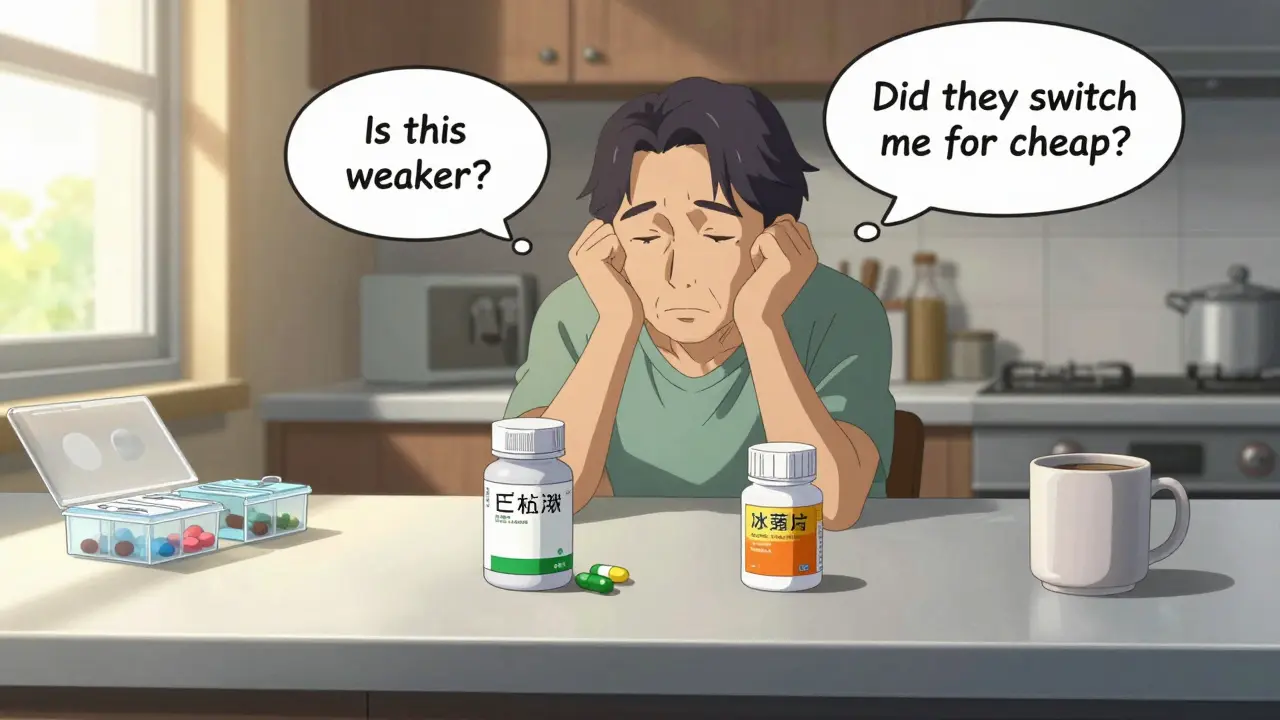
Switching from a brand-name drug to its generic version sounds simple: same active ingredient, same dose, same way to take it. But for many people, the switch doesn’t go smoothly. They skip doses. They stop taking it altogether. They blame the generic for side effects they never had before. And it’s not because the medicine doesn’t work - it’s because of perception.
Why People Stop Taking Their Generic Medication
Generic drugs are just as safe and effective as brand-name ones. The FDA requires them to deliver the same amount of active ingredient into the bloodstream within the same time frame. But here’s the catch: patients don’t always know that. And when they see a pill that looks different - smaller, differently colored, or labeled with a strange company name - they start to wonder.
A 2020 University of Michigan study found that nearly 3 out of 10 elderly patients got confused by the change in pill appearance. Some thought they’d been given the wrong medicine. Others assumed the generic was weaker. In one study, people given placebo pills labeled as "generic" reported 18% more pain and were 32% more likely to take extra pills than those given identical placebos labeled as "brand-name." This isn’t about chemistry. It’s about psychology.
And it gets worse for certain conditions. For people taking blood thinners like warfarin or thyroid meds like levothyroxine, even tiny differences in how the body absorbs the drug can matter. A 2017 NEJM study showed a small but real increase in hospitalizations after switching these drugs to generics. That’s why doctors often recommend staying on the same manufacturer’s version if possible.
The Real Cost of Non-Adherence
When people stop taking their meds - even for a few days - the consequences add up fast. In the U.S., medication non-adherence costs the healthcare system over $500 billion a year. That’s not just lost pills. It’s emergency room visits, hospital stays, and worsening chronic disease.
Take statins. When people switch to generic statins, adherence actually goes up - because copays drop by 80%. But for blood pressure pills, adherence drops by 12%. Why? Because high blood pressure doesn’t have obvious symptoms. If you don’t feel different after switching, you assume the generic isn’t working. The same thing happens with antidepressants. A 2020 study found nearly 1 in 5 patients stopped taking their generic antidepressant within three months, convinced it wasn’t helping.
And it’s not just about money. A 2023 Kaiser Permanente study found that patients who stuck with the same generic manufacturer after switching had 47% better adherence than those who switched between different generic brands. Why? Consistency. Same size. Same shape. Same color. That familiarity matters more than we think.
What Pharmacists Should Do - And What They Usually Don’t
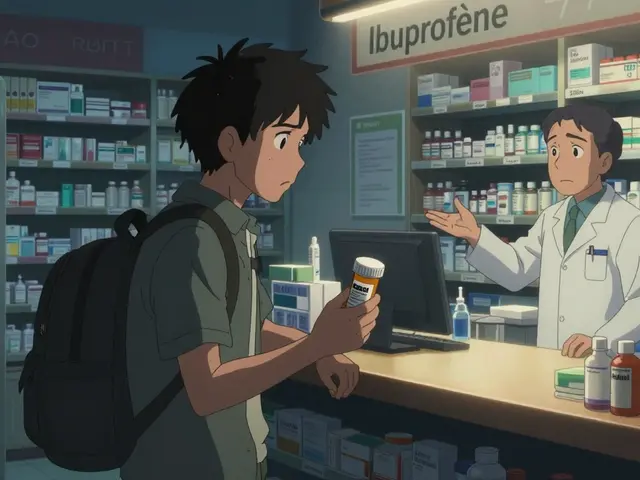
Pharmacists are on the front lines. They’re the ones handing over the new pill bottle. But most don’t have time to explain. A 2022 audit found only 19% of transitions included a real conversation about why the switch happened. Only 28% explained bioequivalence. And just 34% talked about why the pill looked different.
Here’s what works:
- Explain bioequivalence simply: "This generic has the same active ingredient as your old pill. The FDA says it works just as well. It’s not cheaper because it’s weaker - it’s cheaper because no one paid to develop it from scratch."
- Point out the differences: "I know this pill looks different - it’s smaller and white instead of blue. But it’s the same medicine. Here’s the old bottle so you can compare."
- Ask for concerns: "Have you ever had trouble with a generic before? Are you worried about how it might affect you?"
- Offer help: "We can send you a reminder text. Or if you’d feel better, we can order the same generic brand you were on before."
Simple, right? But most transitions skip all of this. A 2022 survey found 68% of independent pharmacists felt rushed during substitutions. No time to talk. No time to listen. And patients walk out confused.

What Patients Can Do
If you’re switching to a generic, here’s what you can do to stay on track:
- Keep the old bottle. Compare the new pill to the old one. Write down the shape, color, and markings. You’ll be less likely to panic if you know what to expect.
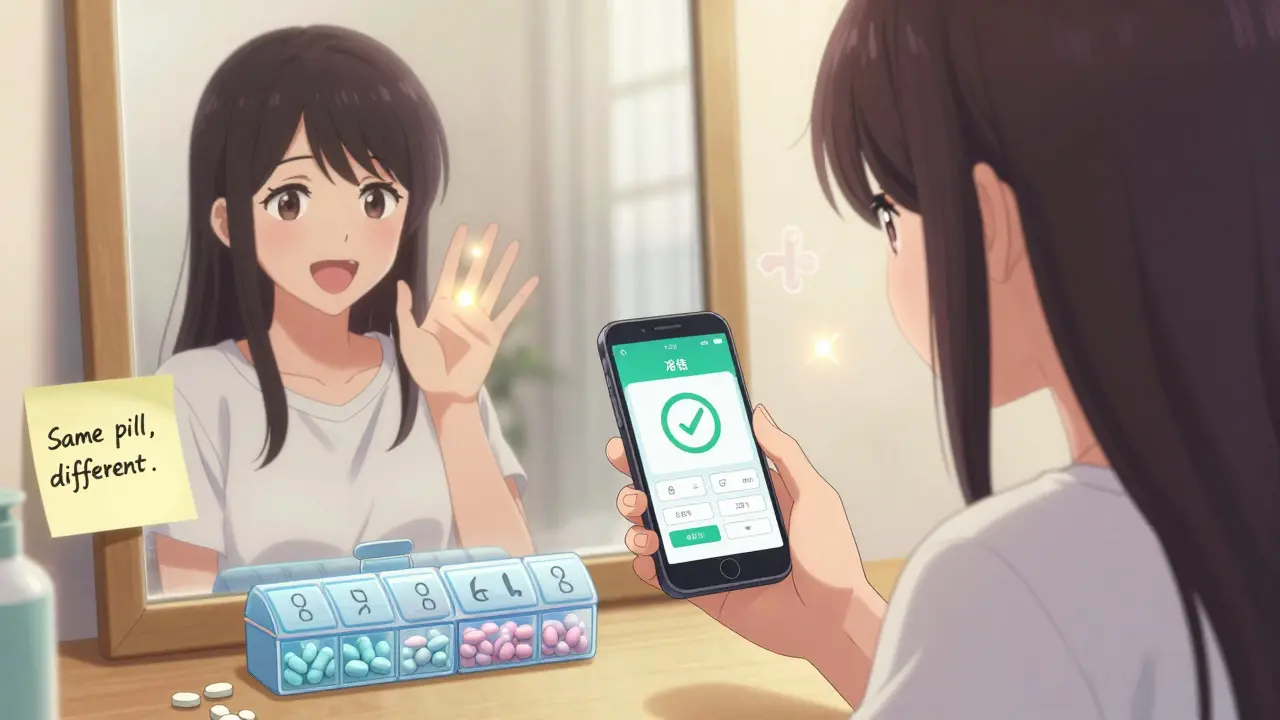
- Use a pill organizer. A weekly pill box with labeled compartments reduces confusion. It also makes it obvious if you missed a dose.
- Ask for consistency. If you’re on a critical drug like warfarin or levothyroxine, ask your pharmacist: "Can I get the same generic manufacturer as before?" Many pharmacies can do this.
- Track your symptoms. Keep a short log: "Day 1: no change. Day 3: a little dizzy. Day 5: back to normal." This helps you and your doctor spot real issues versus perception.
- Don’t assume it’s broken. If you feel worse after switching, talk to your doctor. But don’t assume it’s the generic. Often, it’s stress, sleep, diet, or just your body adjusting.
When Generics Work Better
It’s not all bad. For many people, switching to generics improves adherence - because they can actually afford it.
A 2018 JAMA study showed that for statins, generic use increased adherence by 14% simply because the monthly cost dropped from $120 to $15. For Medicare beneficiaries stuck in the "donut hole," generics made the difference between taking their meds and skipping them.
And it’s not just cost. A 2022 GoodRx survey found that 67% of patients on generic statins said they took them more regularly because they didn’t have to think twice about the price. No more choosing between pills and groceries.
The Future: Better Tools, Better Support
Change is coming. Starting January 1, 2025, the FDA will require generic manufacturers to include patient education materials with every new prescription. These will explain the switch, address appearance differences, and reassure patients about safety.
Pharmacy systems are getting smarter too. E-prescribing tools now flag when a brand-to-generic switch happens, reminding pharmacists to counsel the patient. Medication synchronization programs - where all your prescriptions are due on the same day each month - improved generic adherence by 18% in a 2022 study.
And new tech is helping. AI-powered apps like AiCure use your phone camera to confirm you took your pill. In trials, they boosted adherence during generic switches by 37%. Imagine getting a text: "I saw you take your pill today. Good job." That kind of support works.
Bottom Line
Generic drugs are not inferior. They’re regulated, tested, and proven. But switching isn’t just a pharmacy transaction. It’s a psychological event. Patients need clear, calm, consistent information. Pharmacists need time to give it. Doctors need to support it.
The goal isn’t to stop generics. It’s to make the transition smooth. Because when people stay on their meds - no matter the label - everyone wins: patients, providers, and the system.
Are generic drugs really as effective as brand-name drugs?
Yes. The FDA requires generic drugs to contain the same active ingredient, strength, dosage form, and route of administration as the brand-name version. They must also prove bioequivalence - meaning they deliver the same amount of medicine into your bloodstream at the same rate. Studies show that for most drugs, generic and brand-name versions have identical clinical outcomes. The only differences are in inactive ingredients (like fillers or dyes) and pill appearance - neither affects how well the medicine works.
Why do I feel different after switching to a generic?
You’re not imagining it - but the cause is likely not the drug itself. The change in pill size, color, or shape can trigger a nocebo effect: when your brain expects something to feel different, it makes you feel different. Stress, sleep changes, or even seasonal allergies can also mimic side effects. If symptoms persist, talk to your doctor. They may check your dosage, rule out other causes, or consider switching back to the brand or a consistent generic manufacturer.
Should I avoid generics for heart or thyroid medications?
Not necessarily. For drugs with a narrow therapeutic index - like warfarin, levothyroxine, or some seizure meds - small changes in absorption can matter. But studies show that for most patients, switching is safe. The key is consistency: once you switch, stay with the same generic manufacturer. Avoid switching between different generics unless your doctor advises it. If you’ve been stable on a brand, talk to your doctor before switching. Your pharmacist can also help you find a generic with the same appearance as your old pill.
Can I ask for the same generic brand I was on before?
Yes. Many pharmacies can special-order a specific generic manufacturer if you prefer it. Just ask: "Can I get the same generic company as last time?" This is especially helpful if you’ve had trouble with a different version. Consistency in pill appearance helps reduce confusion and improves adherence. Some insurance plans may require prior authorization, but your pharmacist can help navigate that.
How can I tell if I’m taking the right generic?
Check the label: it should list the active ingredient and match your prescription. Compare the pill’s shape, color, and imprint to your old bottle. Many pharmacies include a handout explaining the switch. If you’re unsure, call your pharmacist. They can confirm the manufacturer and explain any differences. Using a pill organizer with labeled compartments also helps you track what you’ve taken and spot inconsistencies.






Darlene Gomez March 22, 2026
Really appreciate this breakdown. I’ve been a pharmacist for 12 years, and I can tell you - the biggest hurdle isn’t the science. It’s the fear. People see a different pill and think they’re being swapped out for a cheap substitute. We need to normalize saying: ‘Yeah, it looks weird, but it’s the same medicine. Here, let me show you the label.’
I keep a printed comparison chart behind the counter. Same color, same shape, same imprint. I hand it to folks. It’s not rocket science. Just human.
And honestly? The fact that some patients do better on generics because they can finally afford them? That’s the win we forget to celebrate.
Katie Putbrese March 23, 2026
So now we’re telling people to trust pills because the government says so? LOL. Wake up. Big Pharma doesn’t care about you - they just want to offload their expired patents onto unsuspecting seniors. You think generics are ‘just as good’? Tell that to my neighbor who had a stroke after switching to a generic blood thinner. FDA doesn’t test real-world outcomes - they test lab numbers.
This whole ‘perception’ nonsense is just corporate spin to cover up the fact that generics are made in foreign factories with sketchy quality control. You want real adherence? Keep the brand-name. Period.
Jacob Hessler March 24, 2026
bro the generic just looks different thats it. i switched my blood pressure med and thought i was gonna die. turned out i was just stressed. stop overthinking it. the pill is the same. the fda says so. stop being a drama queen.
Amber Gray March 24, 2026
I swear if one more pharmacist hands me a white oval pill and says 'it's the same' I'm gonna scream 😤我妈说的对,便宜没好货!I don't care what the FDA says - if it doesn't look like my old blue pill, I'm not taking it. My body remembers.
Danielle Arnold March 25, 2026
Wow. A 12-page essay on why people are dumb for being scared of pills. Groundbreaking. I’m sure the 30% who stopped taking their meds just needed a PowerPoint.
Jesse Hall March 26, 2026
This hit home for me. My mom’s on levothyroxine and switched generics twice last year - she felt off both times. We finally asked for the same manufacturer, and she’s been stable since. It’s not about being paranoid. It’s about consistency.
Also - I love that you mentioned pill organizers. My grandma uses one with alarms. She says it’s like having a little robot reminding her to live. ❤️
Donna Fogelsong March 26, 2026
The FDA is a puppet of Big Pharma. You think they really test every generic? Nah. They approve based on paperwork. The real bioequivalence data? Buried. I’ve seen the whistleblower reports. You’re being dosed with filler that’s not even FDA-approved. The color change? That’s to confuse your body’s recognition system. Wake up. This is mind control.
Sean Bechtelheimer March 27, 2026
I took a generic for 3 weeks and felt like a zombie 😵💫 Then I switched back to brand - boom. Energy returned. Coincidence? I don’t think so. They’re playing with our hormones. Why else would they change the pill shape? It’s not random - it’s designed to mess with your head. #AskTheQuestion
Seth Eugenne March 27, 2026
Thank you for writing this with so much care. I’ve had patients cry because they thought switching meant they were being ‘downgraded’ - like their health wasn’t worth the brand-name price.
One woman told me, ‘I used to feel like I was worth something when I took that blue pill.’ That broke my heart.
We started keeping one bottle of the old generic on hand just for comparison. Just so they could see - side by side - it’s the same. No fancy tech. Just presence. And patience.
It’s not about the pill. It’s about trust.