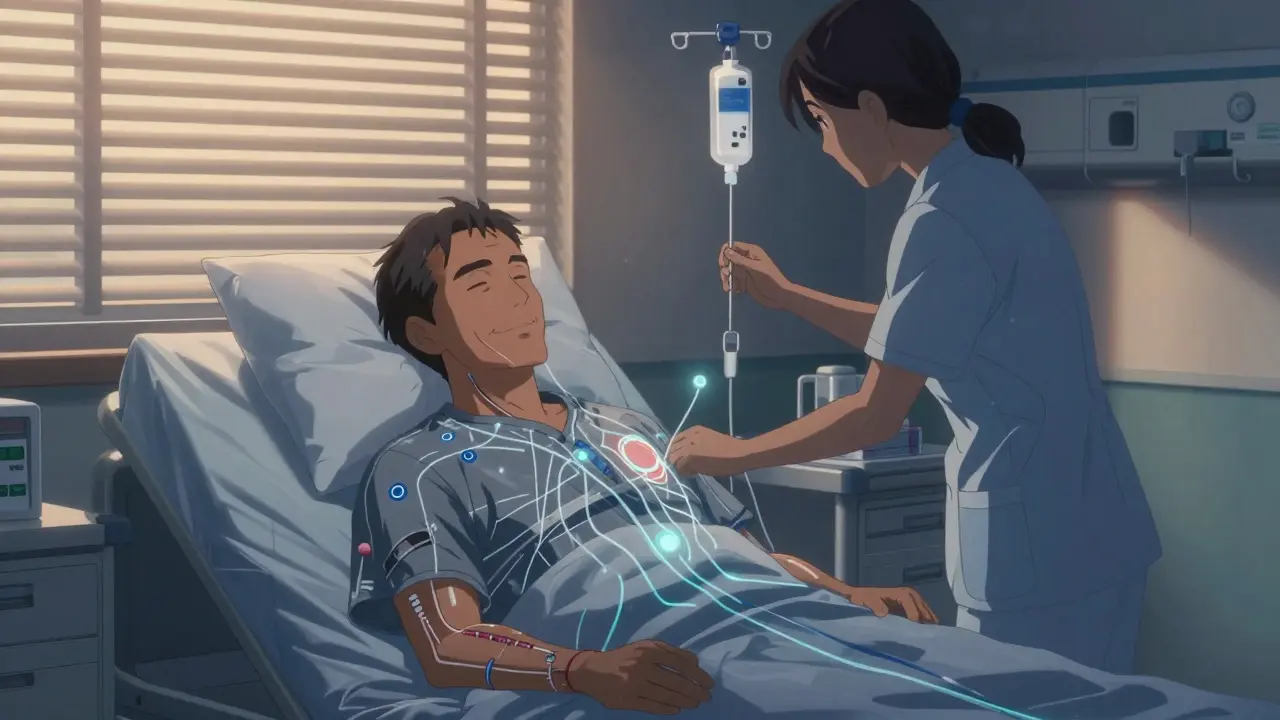
After surgery, pain doesn’t have to mean opioids. For years, patients were sent home with prescriptions for morphine or oxycodone, often with little thought to long-term risks. But that’s changing. Today, the standard for post-surgical pain isn’t just about numbing the pain-it’s about doing it safely, effectively, and without turning pain relief into a dependency. Multimodal analgesia is now the backbone of modern recovery, helping patients heal faster, leave the hospital sooner, and avoid the trap of chronic opioid use.
What Is Multimodal Analgesia?
Multimodal analgesia (MMA) isn’t a single drug. It’s a smart mix of medications and techniques that work together to block pain at different points in the nervous system. Think of it like turning off multiple switches instead of just one. You’re not relying on one strong opioid to do all the work. Instead, you combine acetaminophen, NSAIDs, gabapentin, lidocaine infusions, and regional nerve blocks-all targeting pain in different ways. The goal? Better pain control with less opioids. This approach isn’t new, but it’s now the rule, not the exception. In 2021, 14 major medical societies-including the American Society of Anesthesiologists-came together to publish a consensus statement that made MMA the official standard for acute pain after surgery. They didn’t just recommend it. They set seven clear principles every hospital should follow.Why Opioid Sparing Matters
Opioids aren’t harmless. Even a few days of use can lead to nausea, constipation, drowsiness, and confusion. For older adults or people with kidney or liver issues, the risks are even higher. And then there’s the bigger picture: opioid dependence. The CDC’s 2016 guidelines started the shift away from overprescribing, and hospitals have been catching up ever since. The numbers speak for themselves. Studies show that when MMA is used properly, patients use 32% to 57% fewer opioids after surgery. One study at Rush University Medical Center cut daily morphine use from 45.2 milligram equivalents (MME) down to just 18.7 MME-a 61% drop. And patients didn’t report more pain. In fact, their pain scores stayed below 4 out of 10, which is considered mild. Beyond reducing opioids, MMA also cuts down on side effects. Patients on multimodal regimens have 28% less nausea and vomiting. That means fewer anti-nausea drugs, quicker recovery, and fewer delays in walking or eating after surgery.How MMA Works: The Core Medications
MMA isn’t one-size-fits-all, but most protocols include a few key players:- Acetaminophen (Tylenol): Given every 6 hours, IV or oral. It’s safe, effective, and works on central pain pathways. Even in patients who can’t take pills after surgery, IV acetaminophen is widely used.
- NSAIDs (like celecoxib or naproxen): These reduce inflammation and pain at the surgical site. Celecoxib is often preferred because it’s easier on the stomach. But naproxen can’t be used if kidney function is low (eGFR under 30).
- Gabapentin or pregabalin: These calm overactive nerves, especially helpful for nerve-related pain after spine or orthopedic surgery. Dosing must be adjusted for kidney problems-down to 200mg once daily if eGFR is low.
- Ketamine: A low-dose IV infusion (0.1-0.3 mg/kg) can block pain signals without the respiratory risks of opioids. It’s especially useful for high-risk patients, including those with chronic pain or opioid tolerance.
- Lidocaine: An IV infusion (1-2 mg/kg/hr) can reduce pain and inflammation. It’s often used for 24-48 hours after major surgery.
- Dexmedetomidine: A sedative that also reduces pain perception. Used in small doses during and after surgery to keep patients calm without deep sedation.
Regional Anesthesia: The Silent Hero
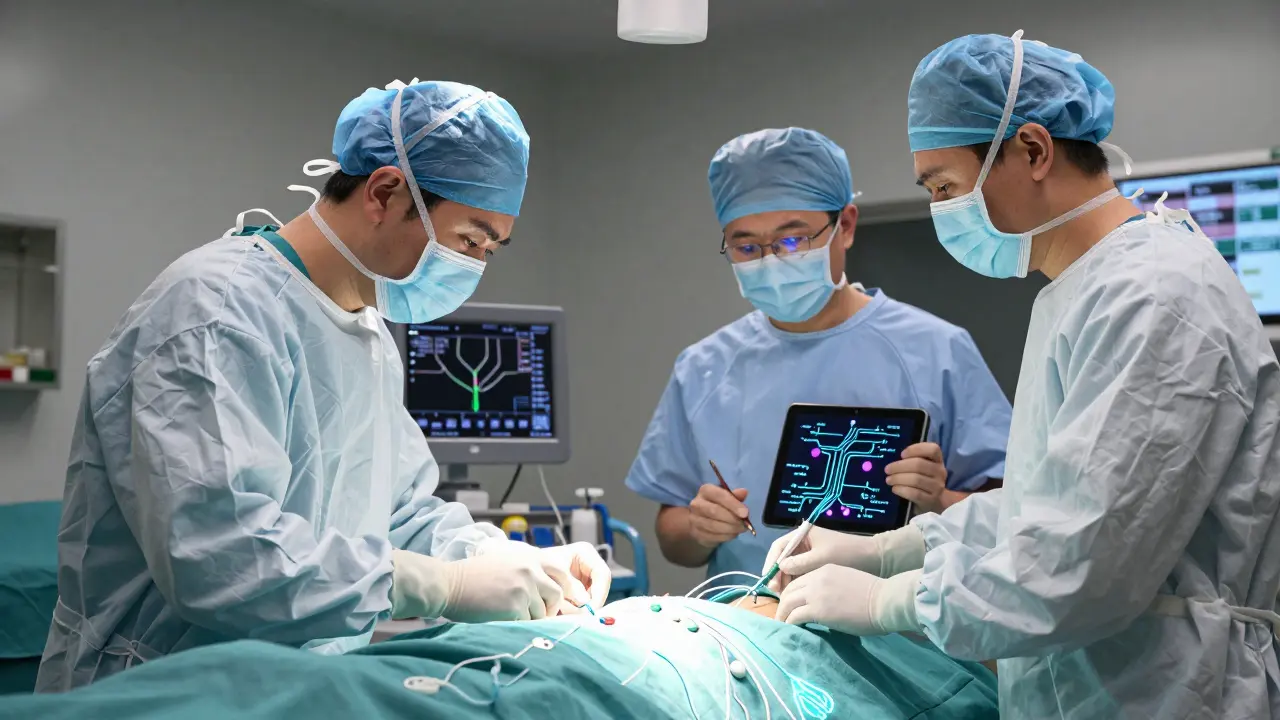
Medications alone aren’t enough. The real game-changer? Regional nerve blocks. An ultrasound-guided spinal, epidural, or peripheral nerve block can numb the exact area of surgery for hours or even days. A femoral nerve block after knee replacement? That can eliminate the need for IV opioids entirely. At McGovern Medical School, combining regional blocks with MMA reduced average hospital stays by 1.8 days. Same-day discharge rates jumped from 12% to 37% for eligible procedures. That’s not just cost savings-it’s better quality of life. Patients recover at home, where they’re more comfortable and less exposed to hospital germs. These blocks aren’t just for big surgeries. Even minor procedures like ankle repairs or hand surgeries benefit from targeted nerve blocks. The key is timing: the block should be done before the surgery starts, not after the pain begins.Who Benefits Most?
MMA works best in surgeries with predictable, localized pain. That includes:- Joint replacements (knee, hip)
- Spine surgery
- Abdominal surgery
- Orthopedic trauma
- Thoracic surgery
- Patients with chronic pain
- Those with a history of opioid use
- People with kidney or liver disease
- Older adults
- Patients who request opioid-free surgery

Implementation: It Takes a Team
MMA doesn’t work if it’s just a list of drugs on paper. It needs coordination. From the moment a patient walks in, the plan starts:- Pre-op: Acetaminophen, gabapentin, and NSAIDs are given before the patient even goes to surgery. This is called pre-emptive analgesia-stopping pain before it starts.
- Intra-op: Anesthesiologists add ketamine, lidocaine, or regional blocks during surgery.
- Post-op: Nurses check pain scores every 2 hours for the first 24 hours. Pharmacists review meds for interactions. Pain specialists adjust doses based on response.
- Discharge: Patients go home with a 5-10 day supply of gabapentin or acetaminophen to prevent pain from turning chronic.
Challenges and Pitfalls
MMA isn’t perfect. The biggest hurdle? Access. Not every hospital has ultrasound machines for nerve blocks. Not every anesthesiologist is trained in advanced regional techniques. Some pharmacies don’t stock IV ketamine or lidocaine. And if the team doesn’t communicate, the plan falls apart. Dosing errors are another risk. Gabapentin must be lowered for kidney patients. NSAIDs can’t be used in those with heart failure or poor kidney function. Giving the wrong dose can cause harm instead of help. Also, patients need education. Many expect to get a strong opioid and are confused when they don’t. Clear communication before surgery-explaining why opioids are minimized-makes a huge difference.What’s Next?
By 2025, the American Society of Anesthesiologists predicts 85% of major surgeries will use formal MMA protocols. That’s up from 60% in 2022. The next phase is personalization: tailoring regimens to genetic factors, mental health history, and even gut microbiome data. Research is also exploring continuous wound infusions-small catheters left at the surgical site to drip local anesthetic for days. And more hospitals are training non-anesthesiologists to perform basic nerve blocks, expanding access. The bottom line? Post-surgical pain doesn’t have to mean opioids. With the right mix of drugs, nerve blocks, and teamwork, patients get better pain control, fewer side effects, and a much lower chance of long-term dependency. The tools are here. The science is solid. The only thing left is making sure every hospital uses them.Is multimodal analgesia safe for older patients?
Yes, when properly adjusted. Older adults often need lower doses of gabapentin and NSAIDs due to reduced kidney or liver function. Acetaminophen is generally safe, and regional nerve blocks reduce the need for systemic drugs. The key is preoperative assessment of kidney, liver, and heart health. Hospitals now use standardized checklists to guide dosing based on age, weight, and medical history.
Can I still get opioids if my pain is severe?
Absolutely. Multimodal analgesia doesn’t mean no opioids-it means opioids are a backup. If your pain stays above 6 out of 10 despite non-opioid meds, you’ll still get a small dose of morphine or hydromorphone, usually given in tiny increments every 15 minutes as needed. The goal is to use the least amount possible, not none at all.
How long do I need to take gabapentin after surgery?
Most protocols recommend a 5- to 10-day course after discharge, especially after spine or orthopedic surgery. This helps prevent nerve pain from becoming chronic. Stopping too early can cause rebound pain. Your doctor will adjust the dose based on your pain level and kidney function.
What if I’m already on opioids for chronic pain?
You’ll still benefit from multimodal analgesia. In fact, it’s even more important. The Compass SHARP Guidelines recommend continuing your regular opioid dose while adding non-opioid meds like acetaminophen, gabapentin, and regional blocks. This prevents withdrawal and reduces the need for extra opioids after surgery. Never stop your chronic pain meds suddenly without medical supervision.
Does multimodal analgesia cost more?
Upfront, it may cost slightly more due to additional medications and staff time. But overall, it saves money. Shorter hospital stays, fewer complications like nausea or constipation, and less need for long-term opioid treatment reduce total costs. One study showed a $1,200 per-patient savings in total care costs with MMA compared to opioid-only care.







Kathryn Weymouth December 23, 2025
Finally, someone’s talking sense. I had knee replacement last year and was handed a script for oxycodone like it was candy. Turns out, the multimodal stuff-acetaminophen, gabapentin, and that nerve block-had me walking the same day. No fog, no constipation, no cravings. Why did it take so long for hospitals to catch on?
Julie Chavassieux December 24, 2025
Wow.
Candy Cotton December 24, 2025
It is imperative to note that the American Society of Anesthesiologists, in conjunction with fourteen other esteemed medical societies, has formally codified multimodal analgesia as the gold standard. To deviate from this protocol is not merely suboptimal-it is negligent. The United States leads the world in surgical innovation, and we must not allow fragmented implementation to undermine this progress.
Sam Black December 25, 2025
Man, I remember when pain meant pills. Now I see nurses doing pre-op gabapentin like it’s coffee. And those nerve blocks? They’re like putting a pause button on pain before it even starts. I work in a rural clinic-we don’t have ultrasound machines, but we’ve started training our PAs to do basic blocks. It’s not perfect, but it’s a start. We’re not just treating pain-we’re protecting people from a whole other kind of surgery: addiction.
Cara Hritz December 26, 2025
soo much good info here but like… i think u meant 'gabapentin' not 'gabapentin'?? also why is everyone so scared of opioids?? i had back surgery and the oxycodone was a godsend, no regrets. maybe its just me??
Jamison Kissh December 27, 2025
It’s fascinating how medicine has shifted from suppression to modulation. We used to think pain was a signal to be silenced. Now we see it as a system to be harmonized. Multimodal analgesia doesn’t erase pain-it redistributes the burden across the nervous system, like turning down the volume on ten speakers instead of smashing the stereo. That’s not just clinical-it’s philosophical. And maybe that’s why it works better: it respects the body’s complexity instead of trying to override it.
Art Van Gelder December 28, 2025
Let me tell you something-I’m from the South, we don’t do ‘maybe’ when it comes to pain. We do ‘take this pill’ and ‘go to sleep.’ But after my cousin got his hip replaced at McGovern and walked out the same day? No opioids? No hospital bed? Just a bag of Tylenol and a nerve block? I thought he was lying. Then I saw his wife’s Instagram story-him dancing at his granddaughter’s birthday. No cane. No grimacing. Just… joy. That’s when I realized: we’ve been treating pain like a monster to kill. Turns out, we just needed to outsmart it. And honestly? That’s the most American thing I’ve seen in years.
Tony Du bled December 29, 2025
My uncle had a heart surgery last year and they gave him lidocaine drip and gabapentin. He said he felt weird at first-like his body was floating-but the pain? Barely there. No nausea, no constipation, no zombie mode. They sent him home with a 7-day supply and a text reminder to take his meds. No opioids. No drama. Just smart care. I’m telling you, this isn’t the future. It’s already here.
Jim Brown December 29, 2025
The philosophical underpinning of multimodal analgesia lies in the recognition that suffering is not a monolithic phenomenon, but a multidimensional construct-biological, psychological, and social. To reduce it to a single pharmacological intervention is to commit a category error. The integration of regional anesthesia, non-opioid adjuvants, and pre-emptive protocols represents not merely an advancement in clinical practice, but an epistemological evolution in our understanding of human nociception. This is medicine becoming more humane.
Tarun Sharma December 30, 2025
Good approach. But in developing countries, access to ultrasound machines and trained anesthesiologists remains a challenge. Simple solutions like acetaminophen and NSAIDs should be prioritized where advanced tools are unavailable.
Aliyu Sani January 1, 2026
bro this is lit. i had a hernia op and they hit me with gabapentin + ketamine drip-felt like my body was chillin’ on a beach while my insides healed. no opioids, no vomit, no sleepless nights. now i’m telling all my homies in Lagos: don’t beg for pills, ask for blocks. the future’s here, and it ain’t opiate-based.
Gabriella da Silva Mendes January 3, 2026
Okay but like… why is everyone acting like this is some revolutionary breakthrough? 😒 I’ve been saying for YEARS that opioids are overhyped. My mom had spine surgery in ’19 and they gave her a nerve block and acetaminophen and she was binge-watching Netflix by noon. Meanwhile, my cousin’s friend’s dentist gave her 30 oxycodone after a wisdom tooth extraction and now she’s in rehab. So yeah. This isn’t science-it’s common sense. And if your hospital still hands out opioids like Halloween candy? FIRE THEM. 🙄