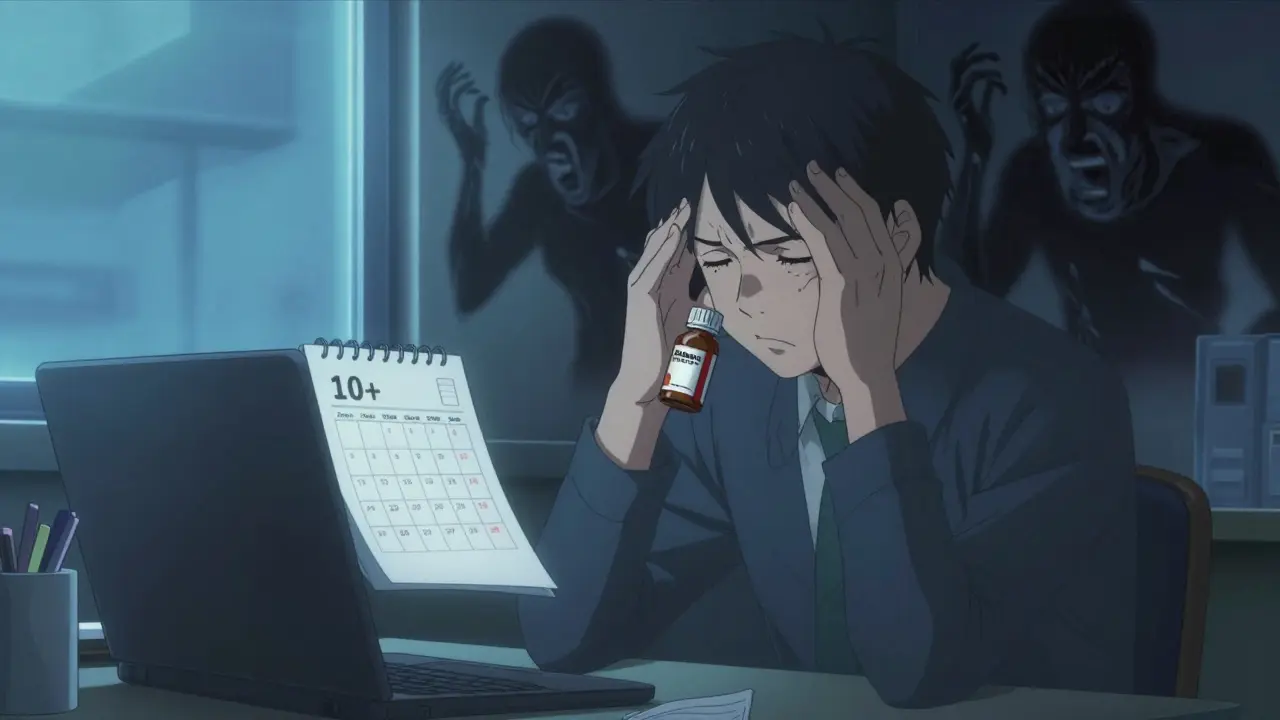
Every year, millions of people in the UK and beyond reach for an OTC painkiller at the first sign of a headache, or grab an antihistamine when their nose starts running. But how do you know if what you’re taking is enough-or if you should be seeing a doctor instead? The line between over-the-counter (OTC) and prescription medications isn’t always clear, and choosing the wrong one can mean wasted money, delayed relief, or even harm.
What Exactly Is an OTC Medication?
OTC medications are drugs you can buy without a doctor’s prescription. You’ll find them on shelves in supermarkets, pharmacies, and even gas stations. Common examples include ibuprofen for pain, loratadine for allergies, and omeprazole for heartburn. These products have been reviewed by health regulators like the FDA and the UK’s MHRA and are considered safe for self-use when taken as directed.
They’re designed for short-term, mild conditions you can recognize on your own: a sore throat, a minor rash, or occasional indigestion. Their active ingredients are usually lower in strength than prescription versions. For example, OTC hydrocortisone cream is 1%, while a prescription version can be 2.5%-stronger, and meant for more serious skin inflammation.
What makes OTC drugs different isn’t just strength-it’s accessibility. No appointment needed. No insurance paperwork. You can walk in, pick it up, and leave. That convenience comes with responsibility: you’re expected to know what you’re treating and how much to take.
When Do You Need a Prescription?
Prescription medications are for conditions that need professional diagnosis and ongoing monitoring. Think high blood pressure, diabetes, thyroid disorders, depression, or chronic migraines. These aren’t things you can safely self-manage without a doctor’s oversight.
Why? Because these conditions often involve complex interactions inside your body. A prescription drug like metformin for type 2 diabetes doesn’t just lower sugar-it affects how your liver produces glucose, how your muscles absorb it, and how your body responds to insulin. Get the dose wrong, and you risk serious side effects.
Prescription drugs also come in higher strengths. Take ranitidine, for example. The OTC version is 75 mg. The prescription version can be 150 mg or 300 mg. That extra potency matters if your heartburn isn’t going away after a few days of OTC use.
And let’s not forget drug interactions. Prescription meds often mix with other drugs, supplements, or even foods. Your doctor checks your full list of medications before prescribing. You don’t get that safety net with OTC.
Common Conditions: OTC vs. Prescription
Here’s how to decide for everyday problems:
- Headaches: If you get a headache once a week or less, ibuprofen or paracetamol (acetaminophen) from the shelf is fine. But if you’re having headaches more than 10 days a month, or they’re so bad you can’t function, you might need a prescription triptan. OTC painkillers can take 30-60 minutes to kick in. Triptans work faster and target the root cause of migraines, not just the pain.
- Allergies: OTC antihistamines like cetirizine or loratadine work well for sneezing, itchy eyes, and runny nose. But if your allergies trigger asthma or you need daily control, montelukast (Singulair) is a prescription option that targets inflammation deeper in the airways. It takes a couple of days to work, though-so don’t expect instant relief.
- Heartburn: OTC omeprazole or esomeprazole (Nexium) are great for occasional acid reflux. But if you’re taking them every day for more than two weeks, or you’re having trouble swallowing, chest pain, or unexplained weight loss, you need to see a doctor. These could be signs of GERD, ulcers, or even Barrett’s esophagus-conditions that need monitoring and possibly stronger meds.
- Acne: Benzoyl peroxide and adapalene (Differin) are now available OTC. They work for mild to moderate breakouts. But if you have cystic acne, scarring, or no improvement after 8-12 weeks, you’ll likely need a prescription retinoid, antibiotic, or hormonal treatment.
- Pain and Inflammation: OTC NSAIDs like naproxen help with sprains or arthritis flare-ups. But if you’re on them daily for months, you risk stomach bleeding or kidney damage. A doctor can prescribe safer alternatives or physical therapy.
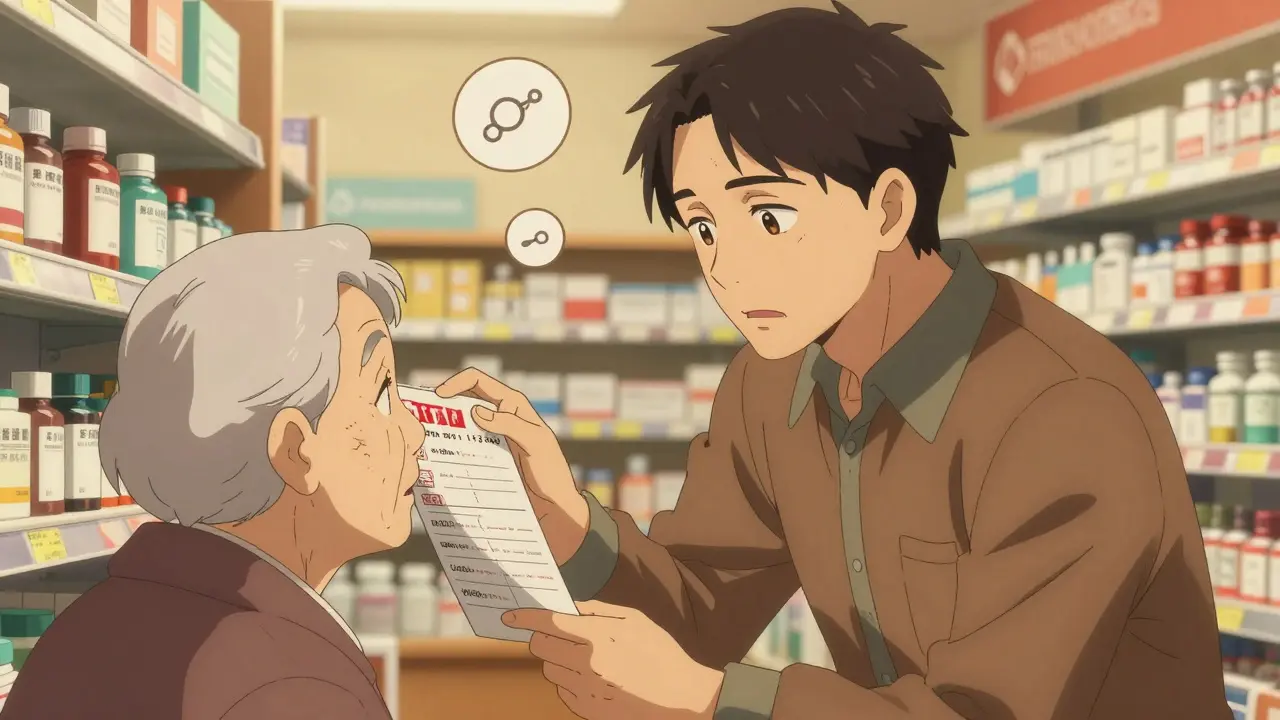
The Rx-to-OTC Switch: Why Some Drugs Move from Prescription to Shelf
Over the past decade, more prescription drugs have become available over the counter. Why? Because safety data showed they could be used safely without a doctor’s supervision.
Examples include:
- Fexofenadine (Allegra) for allergies
- Esomeprazole (Nexium) for heartburn
- Adapalene (Differin) for acne
- Epinephrine auto-injectors (EpiPen) for severe allergies (approved OTC in the US in April 2023)
This trend is growing. Experts predict 20-25 more medications will make the switch by 2030, especially in areas like contraception, allergy relief, and migraine treatment. But here’s the catch: just because a drug is now OTC doesn’t mean it’s right for everyone.
For example, the OTC version of epinephrine is a huge win for people with severe allergies. But if you’ve never used one before, you still need to know how to recognize anaphylaxis and when to use it. The OTC version doesn’t replace medical advice-it just makes life-saving tools more accessible.
Cost Matters-But Not Always How You Think
Many assume OTC is cheaper. Sometimes it is. A 100-tablet pack of generic ibuprofen 200mg costs around £4 in the UK. Brand-name Advil? £15. But here’s the twist: if you have prescription coverage, your insurer might pay for a prescription version of the same drug at a lower out-of-pocket cost.
Take omeprazole. The OTC version might cost £12 for a 28-day supply. But if you have a prescription for it through the NHS, you pay the standard £9.65 prescription charge in England-or nothing if you’re exempt. In the US, Medicare Part D often covers prescription proton pump inhibitors at low copays.
And don’t forget: if you’re using OTC meds long-term and they’re not working, you’re wasting money. A doctor’s visit might cost £40-£60, but it could save you hundreds in ineffective treatments.
When to Call a Pharmacist (Not Just a Doctor)
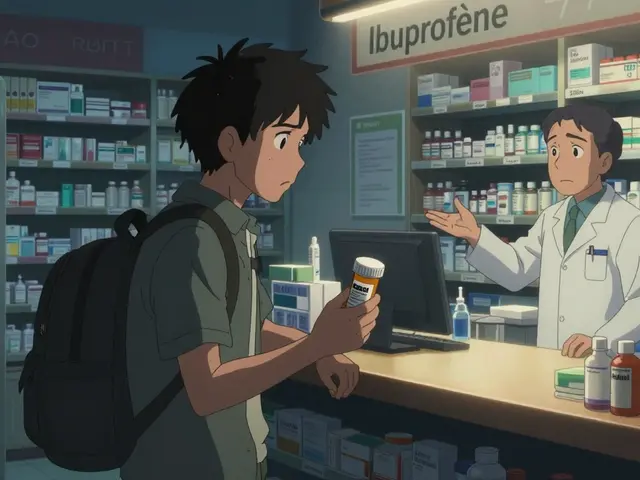
Pharmacists are your first line of defense for OTC decisions. In the UK, community pharmacists are trained to assess symptoms and recommend the right product-or tell you when to see a GP.
They’ll ask:
- How long have you had this symptom?
- Have you tried anything already?
- Are you taking other medications or supplements?
- Do you have any chronic conditions like asthma, diabetes, or kidney disease?
According to the American Pharmacists Association, 89% of pharmacists regularly counsel patients on OTC vs. prescription choices. You don’t need an appointment. Just walk in with your symptoms.
They can also help you avoid dangerous combinations. For example, mixing OTC cold meds with antidepressants can cause serotonin syndrome. Or taking too much paracetamol while on alcohol can damage your liver.
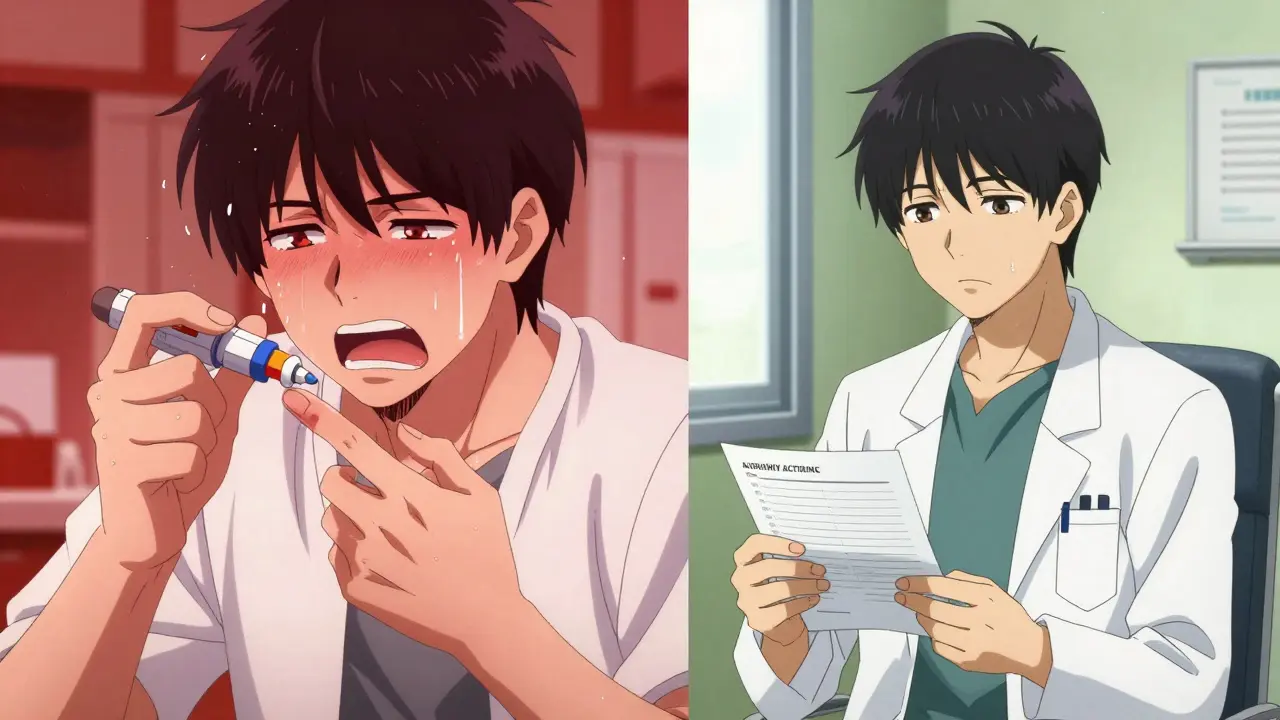
Red Flags: When OTC Isn’t Enough
Here’s when to stop self-treating and get medical help:
- Symptoms last longer than 7-10 days without improvement
- Pain or discomfort gets worse instead of better
- You develop new symptoms-fever, rash, swelling, difficulty breathing
- You’re taking OTC meds daily for more than two weeks
- You’re over 65 or have kidney, liver, or heart disease
- You’re pregnant or breastfeeding
These aren’t just cautionary notes. They’re warning signs. Ignoring them can turn a simple issue into a serious one.
What About the New OTC Epinephrine?
The approval of OTC epinephrine in the US in April 2023 was a game-changer. Before, people with severe allergies had to carry a prescription EpiPen. Now, they can buy it off the shelf-no doctor’s note needed.
But it’s not a free pass. You still need to:
- Know the signs of anaphylaxis: swelling of the throat, wheezing, dizziness, rapid pulse
- Use it immediately if you suspect a reaction
- Call emergency services even after using it
- Get a follow-up with an allergist
OTC epinephrine doesn’t replace an allergy action plan. It just makes it easier to save a life when seconds count.
Final Rule: Match the Tool to the Job
OTC medications are powerful tools-but only for the right job. Think of them like a hammer. Great for a nail. Useless for surgery.
Use OTC for:
- Mild, short-term symptoms
- Conditions you’ve had before and recognized
- Symptoms that don’t interfere with daily life
Use prescription for:
- Chronic or recurring conditions
- Symptoms that don’t improve after a week
- Conditions that affect your organs or overall health
- When you’re unsure what’s causing the problem
And always remember: just because a drug is available without a prescription doesn’t mean it’s harmless. Read the label. Stick to the dose. Watch for interactions. And if in doubt-ask a pharmacist. They’re there to help you make the right call.






Samar Khan December 30, 2025
I just took 3 ibuprofen because my head felt like it was being squeezed by a dragon 😵💫... and now I'm crying in the shower. Why is everything so hard???
Russell Thomas December 31, 2025
Oh wow, another ‘read the label’ lecture. Because clearly, the 12-year-old who bought NyQuil at 2 a.m. after a breakup didn’t already know what ‘drowsiness’ means. 🙄
Meanwhile, my grandma takes 4 Advil a day and still beats me at chess. Maybe we should just let people be idiots and save the NHS some paperwork.
Joe Kwon January 1, 2026
Great breakdown-really appreciate the nuance around Rx-to-OTC transitions. The pharmacoeconomic angle is often overlooked. For example, the shift of fexofenadine to OTC in 2011 reduced physician visits for allergic rhinitis by ~18% in the UK, per BMJ data. But the real win is accessibility: if you’re uninsured or underinsured, having epinephrine on the shelf isn’t just convenient-it’s lifesaving.
That said, we need better public education on anaphylaxis triggers and dosing protocols. OTC doesn’t mean ‘no training required.’
Also, props to pharmacists-they’re the unsung heroes of primary care. 🙌
Nicole K. January 2, 2026
People are so stupid. If you can’t tell when your heartburn is serious, you shouldn’t be allowed to buy medicine. Just go to the doctor like a normal person. Stop being lazy and blaming the system.
Fabian Riewe January 4, 2026
Love this post. Honestly, I used to just pop Advil for everything until I started getting stomach issues. Went to my doc, found out I had a mild ulcer from overusing NSAIDs.
Now I keep a journal: what I took, when, how long it lasted. If it’s not better in 3 days, I call my pharmacist. They’ve saved me from bad combos twice.
Also, OTC epinephrine? Huge win. My niece has peanut allergies-this’ll make her feel way more secure. Just gotta make sure folks know to call 911 after using it. No shortcuts with anaphylaxis.
Amy Cannon January 4, 2026
As someone who grew up in a household where ‘if it ain’t broke, don’t fix it’ was gospel, I never realized how deeply ingrained our cultural attitudes toward medicine are-until I moved to the States and saw people treating OTC meds like candy. In India, we’d never dream of self-medicating for more than two days without consulting a ‘doctor-bhaiya.’
But here? You see folks popping 10 pills a day like it’s cereal. And don’t even get me started on the ‘I read it on Reddit’ diagnoses.
Still… I’m glad epinephrine is OTC. My cousin almost died because she didn’t have her EpiPen on her. If this saves one life, it’s worth it. 🙏
Himanshu Singh January 6, 2026
Man this is so true. I had a headache for 3 weeks and thought it was stress. Turns out it was high blood pressure. I was just popping paracetamol like it was candy. Now I check my BP every morning. Thanks for the reminder to listen to your body. 🙏
Jasmine Yule January 7, 2026
Wow. This is the most balanced, thoughtful thing I’ve read all week. Seriously. I used to be the person who thought OTC meant ‘harmless.’ Then I saw my best friend go into anaphylaxis because she didn’t know how to use her EpiPen-and the pharmacy didn’t give her any instructions.
Thank you for highlighting the pharmacist’s role. They’re not just pill dispensers-they’re frontline clinicians. And yes, if you’re on daily OTC meds for more than two weeks? You’re not being smart. You’re being dangerous. 🙏
Greg Quinn January 8, 2026
It’s funny how we treat medicine like a tool, when really it’s a conversation between our biology and our choices.
OTC drugs are like whispering to your body: ‘Hey, I notice you’re uncomfortable.’
Prescriptions are more like a dialogue with a therapist who knows your whole history.
And epinephrine? That’s not a tool. That’s a scream. A primal, desperate, life-sustaining scream.
Maybe the real question isn’t ‘When should I use OTC?’ but ‘When am I too scared to ask for help?’
Lisa Dore January 9, 2026
Hey everyone-just wanted to say how much I appreciate this post. I’m a nurse, and I see way too many people delaying care because they think ‘it’s just a headache’ or ‘it’ll go away.’
And honestly? The OTC epinephrine thing? I cried reading that. I’ve had patients die because they didn’t have access. This is huge.
If you’re new to this stuff, don’t be shy-walk into any pharmacy and ask. No judgment. We’ve all been there. You’re not alone. 💪❤️
Alex Ronald January 10, 2026
Just wanted to add: if you’re on chronic NSAIDs and have kidney issues, talk to your doctor before using any OTC painkiller. Even ibuprofen can cause acute kidney injury in susceptible people. I’ve seen it happen. Better safe than sorry.
Teresa Rodriguez leon January 12, 2026
I don’t care what anyone says. OTC meds are dangerous. People are dying because they think ‘it’s just a pill.’ You think you’re being smart? You’re just one liver failure away from being a statistic.