BPH Treatment: Simple Choices to Relieve Prostate Problems
If your doctor mentioned an enlarged prostate, you probably wonder what to do next. Benign prostatic hyperplasia (BPH) is common after age 50, and the good news is there are plenty of ways to ease symptoms without drama. Below, we break down the main treatment paths, what to expect, and some everyday habits that can help.
Medication Basics: Alpha Blockers and 5‑Alpha Reductase Inhibitors
Most men start with a pill. Alpha blockers, like tamsulosin, relax the muscle fibers around the bladder neck, making it easier to pee. They work fast—often within a few days—but can cause dizziness or a faint feeling when you stand up quickly. If you’re prone to low blood pressure, ask your doctor about a lower dose first.
When the prostate itself needs shrinking, doctors turn to 5‑alpha reductase inhibitors such as finasteride or dutasteride. These drugs shrink the gland over months, so patience is key. A common side effect is reduced sexual drive, which many consider worth the trade‑off for smoother nights at the bathroom.
When Pills Aren’t Enough: Minimally Invasive Procedures
If meds don’t cut it, there are several office‑based procedures that use heat, laser, or water to remove excess tissue. Transurethral microwave therapy (TUMT) and transurethral needle ablation (TUNA) use heat to shrink the prostate. They usually let you go home the same day and have a short recovery.
Laser options like HoLEP (holmium laser enucleation) are gaining popularity because they remove a larger chunk of tissue and have lower retreatment rates. Even though the name sounds technical, the procedure is done under anesthesia and most men resume normal activities within a week.
For severe cases, traditional surgery—called transurethral resection of the prostate (TURP)—removes tissue through a scope. Recovery takes a bit longer, but it remains the gold standard for big prostates.
Regardless of the method, talk with your urologist about the size of your prostate, your overall health, and how the treatment fits your lifestyle.
Besides medical steps, small lifestyle tweaks can lessen BPH symptoms. Limit caffeine and alcohol in the evening, stay hydrated but don’t overdo fluids before bed, and keep a regular bathroom schedule. Some men find that timed voiding—going to the bathroom every 3‑4 hours—helps the bladder train itself.
Exercise also plays a role. Light walking or swimming improves pelvic blood flow and can lower urinary urgency. If you’re overweight, shedding a few pounds often reduces pressure on the bladder.
Finally, keep an eye on your symptoms. If you notice blood in the urine, sudden inability to pee, or persistent pain, call your doctor right away. Those signs could point to a complication that needs prompt attention.
In short, BPH treatment starts with simple pills, moves to minimally invasive procedures if needed, and is supported by everyday habits that keep the bladder happy. Talk openly with your healthcare provider, weigh the pros and cons of each option, and choose the path that matches your comfort level and daily routine.
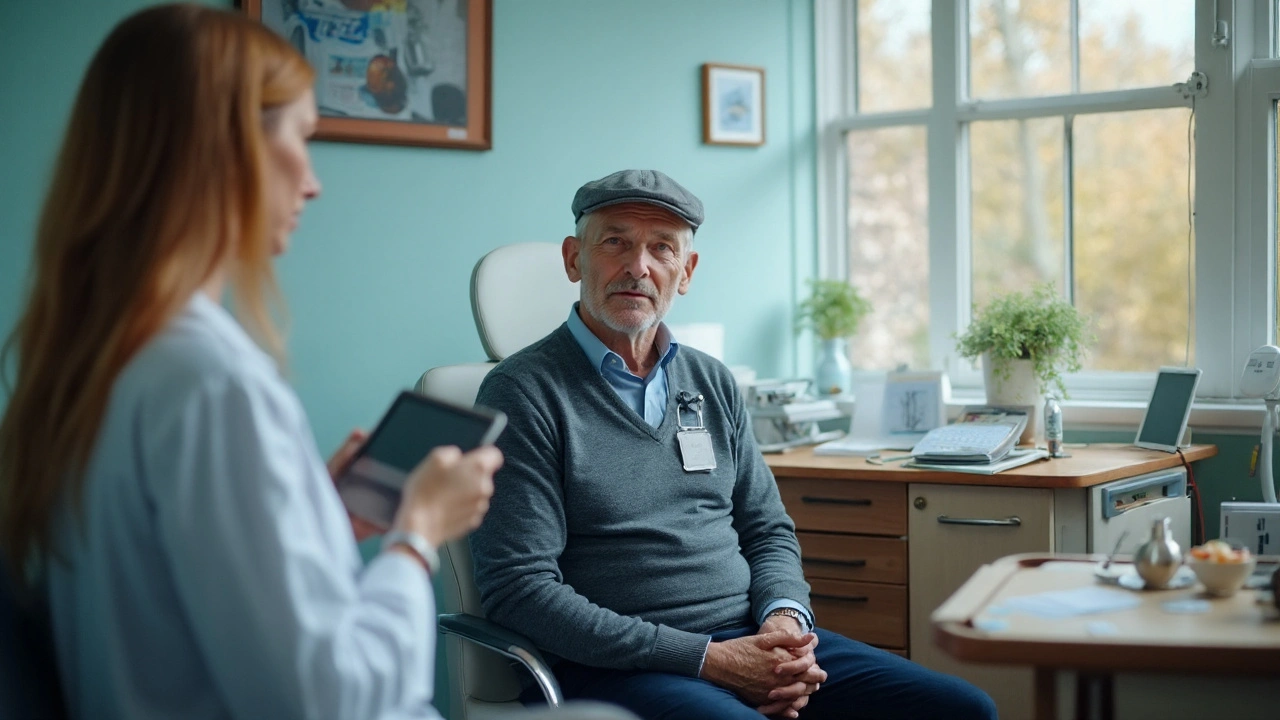
How Benign Prostatic Hyperplasia Triggers Lower Urinary Tract Symptoms
Discover why BPH causes LUTS, how doctors diagnose the link, and what treatment options can ease urinary problems for men over 50.