Childproof Medicine: How to Keep Kids Safe from Accidental Poisoning
When we talk about childproof medicine, packaging and storage methods designed to prevent young children from accessing harmful medications. Also known as child-resistant packaging, it's not just a box with a tricky cap—it's a critical safety layer that saves lives every day. Every year, over 50,000 children under six end up in emergency rooms because they got into medicine they weren’t supposed to. Most of these cases happen at home, often within minutes of a caregiver turning their back. The problem isn’t always that the medicine was left out—it’s that the packaging wasn’t truly secure, or the adult assumed the cap was locked when it wasn’t.
Child-resistant packaging, a standard set by the U.S. Consumer Product Safety Commission for prescription and many OTC drugs works by requiring two separate actions to open—like pressing down while turning, or squeezing the sides while pulling. But here’s the catch: if you don’t actually use it right, it doesn’t matter how well it’s designed. Many parents think they’re safe because they put the bottle in a cabinet, but if the cabinet door is left slightly open or the lock is broken, it’s just a matter of time before a curious toddler figures it out. And even if the cap is tight, kids can climb, pull, and reach. That’s why medication storage, the practice of keeping all drugs out of reach and sight, even when not in use is just as important as the packaging itself.
Some medicines are more dangerous than others. A single dose of a blood pressure pill or a painkiller can be deadly to a small child. Even vitamins with iron can cause poisoning. That’s why you shouldn’t just rely on the cap. Store all meds in a locked box, high up and away from places kids play. Never leave pills on the counter, even for a second. Don’t carry them in your purse if you can help it—kids see bags as treasure chests. And never tell a child medicine is candy. That’s how habits start.
It’s not just about bottles. Patches, liquids, and inhalers can be just as risky. A fentanyl patch stuck to the skin can kill a child in hours if they chew on it. Liquid medicine bottles with droppers? Those can be mistaken for juice. That’s why many parents now use medication safety locks, specialized cabinets or containers with child-safe latches—they’re cheap, easy to install, and make a huge difference. You wouldn’t leave a gun unlocked in the house. Medicine should be treated the same way.
The system works when everyone uses it right. Grandparents, babysitters, visitors—they all need to know the rules. A single slip-up can change a family’s life forever. That’s why the best childproof medicine strategy isn’t just about the bottle—it’s about building a habit. Lock it. Store it high. Keep it clean. And never assume someone else is watching.
Below, you’ll find real stories, expert advice, and practical tips from families and doctors who’ve been through it. Whether you’re a new parent, a caregiver, or just someone who wants to make sure their home is truly safe, these posts give you the tools to act—not just hope for the best.
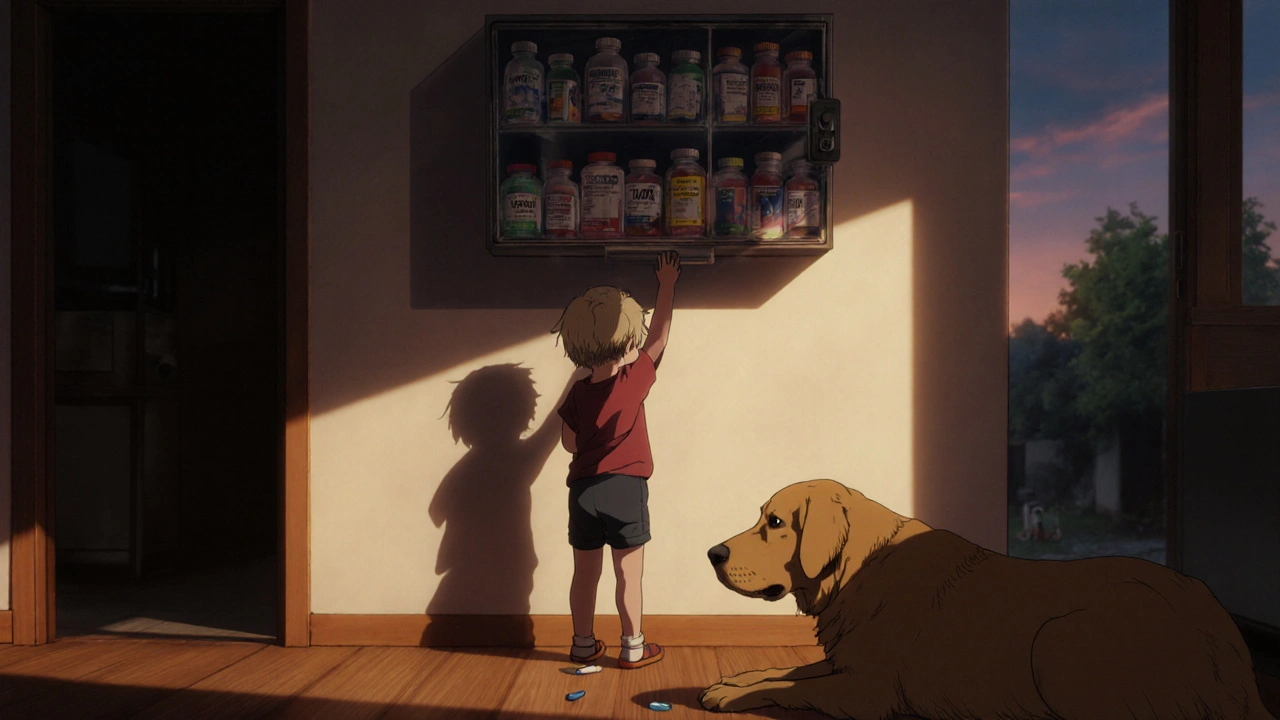
How to Keep Medications Safe from Children and Pets at Home
Learn how to safely store and dispose of medications to protect children and pets from accidental poisoning. Simple, proven steps to prevent emergencies at home.