Dispose of Pills Safely: How to Get Rid of Unused Medications Without Risk
When you have leftover pills—whether they’re expired, no longer needed, or just sitting in a drawer—dispose of pills safely, the proper way to discard unused medications to prevent harm to people, pets, and the environment. Also known as medication disposal, it’s not just about cleaning out your medicine cabinet. It’s about stopping drugs from ending up in water supplies, falling into the wrong hands, or poisoning children and pets. Many people still flush pills down the toilet or toss them in the trash, not realizing how dangerous that can be. The EPA and FDA have clear guidelines, and they’re not complicated.
Some medications are on the flush list, a short list of drugs that can be safely flushed if no take-back option is available, because they’re highly dangerous if misused. This includes opioids like fentanyl patches and certain painkillers that can kill someone with just one pill. For everything else, the best move is a drug take-back program, a free, secure drop-off service offered by pharmacies, hospitals, or law enforcement agencies. These programs collect unused meds and destroy them properly—no landfill, no water contamination. You can find one near you by checking with your local pharmacy or visiting the DEA’s website. No ID? No problem. Most take-back bins are anonymous.
What if you can’t get to a drop-off site? Then you dispose of pills at home—but do it right. Take the pills out of their original bottles. Mix them with something unappetizing like used coffee grounds, cat litter, or dirt. Put the mixture in a sealed plastic bag or container. Toss it in the trash. Never leave pills in empty bottles where someone could fish them out. And never crush pills unless your doctor says it’s okay—some are designed to release slowly, and crushing them can be dangerous.
Why does this matter? Because millions of unused prescriptions end up in homes every year. The CDC says over half of people who misuse prescription drugs get them from family or friends—often from medicine cabinets. Kids find them. Teens experiment. Pets get sick. Waterways get contaminated. Proper disposal isn’t just a good habit—it’s a public health necessity.
You’ll find posts here that cover everything from how to handle leftover antibiotics to what to do with old painkillers after surgery. Some explain the science behind why flushing certain drugs is okay, while others show you how to set up a safe disposal routine at home. There are guides on recognizing which meds are most dangerous to keep around, and how to talk to elderly parents about clearing out their medicine shelves. This isn’t about being perfect—it’s about doing better than tossing pills in the trash without thinking.
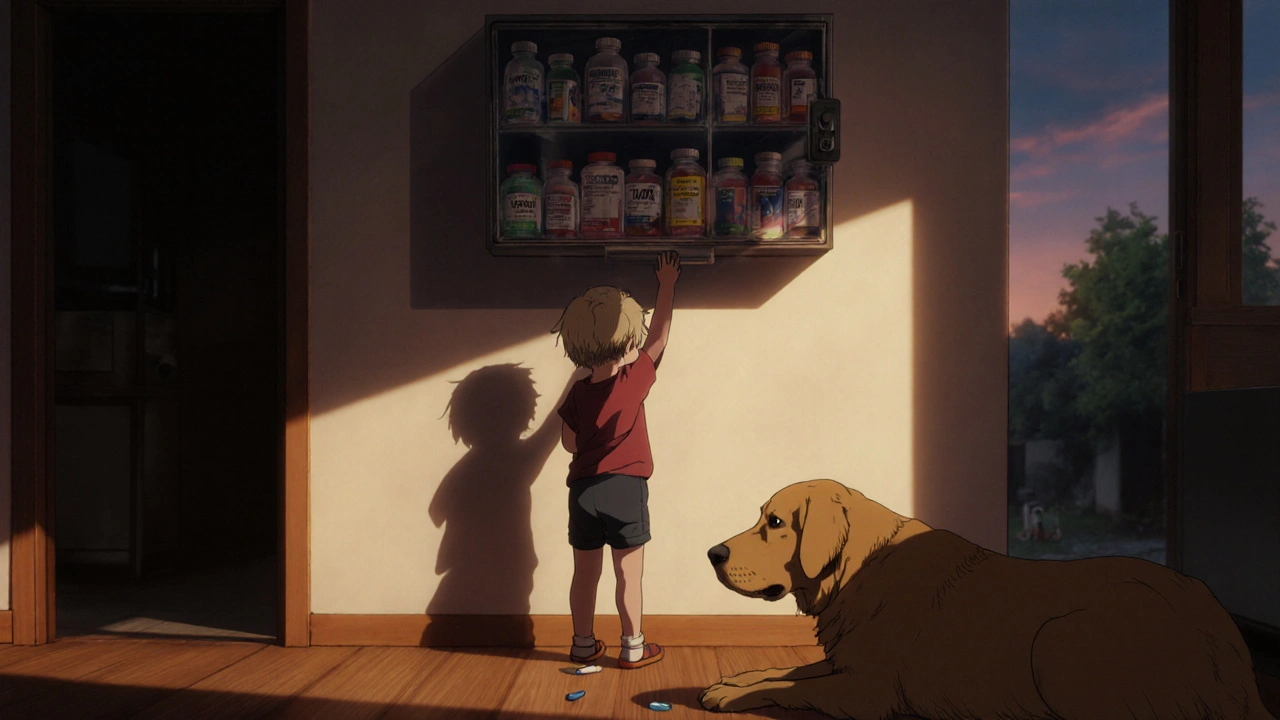
How to Keep Medications Safe from Children and Pets at Home
Learn how to safely store and dispose of medications to protect children and pets from accidental poisoning. Simple, proven steps to prevent emergencies at home.