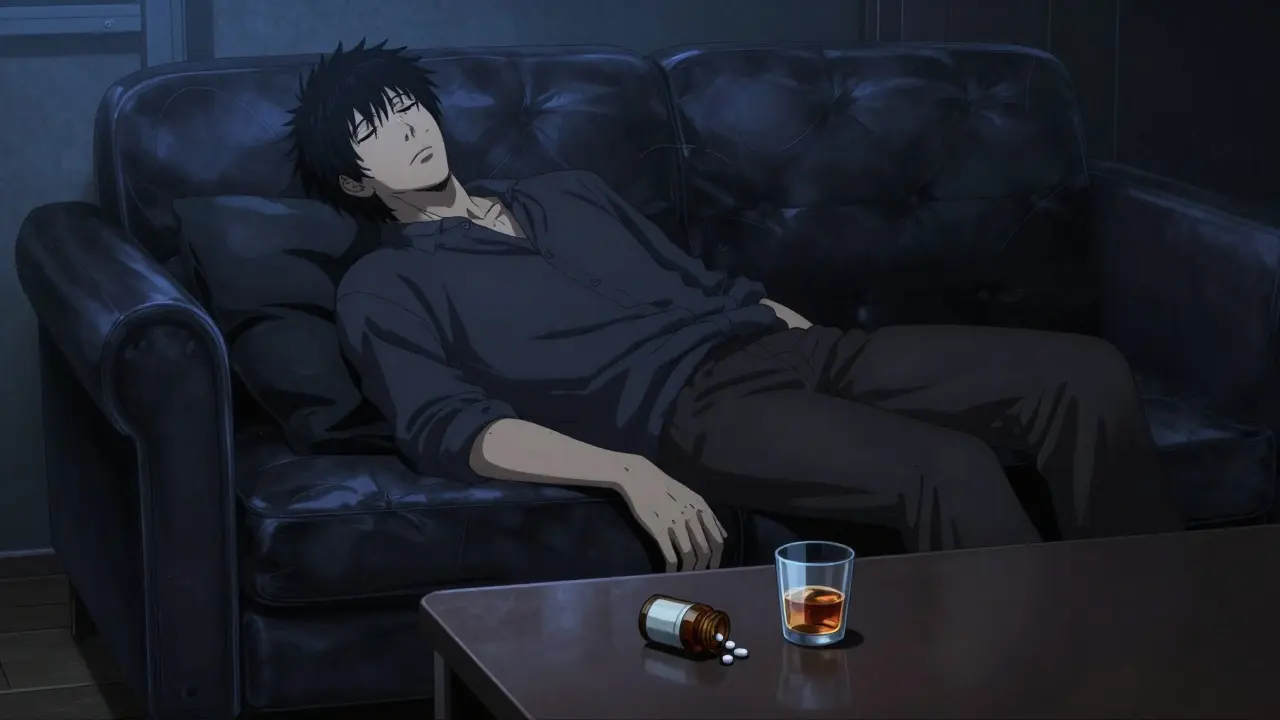
Imagine someone you know has taken too many pills. They are slumped on the couch, barely responsive, and their breathing is shallow. You might think they are just sleeping it off. But with benzodiazepines, a class of drugs commonly prescribed for anxiety and insomnia, this scenario can quickly turn into a life-threatening medical emergency. While pure benzodiazepine overdoses are rarely fatal on their own, the danger skyrockets when these drugs mix with other substances like alcohol or opioids. Understanding what happens in those critical first minutes-and how medical teams manage the situation-can mean the difference between recovery and tragedy.
The Hidden Danger of Mixed Substances
It is easy to underestimate the power of benzodiazepines because they are legal and often familiar. However, the data tells a stark story. According to the American Association of Poison Control Centers' 2022 Annual Report, benzodiazepines accounted for 9.3% of all human exposure cases, resulting in over 1,000 major outcomes and 126 deaths. The mortality rate from an isolated benzodiazepine overdose is surprisingly low, hovering around 0.01% to 0.05%. So why do people die?
The answer lies in combination. The CDC’s 2022 National Vital Statistics Reports reveal that 92% of benzodiazepine-related fatalities involve co-ingestion with other central nervous system (CNS) depressants, particularly opioids and alcohol. When mixed with opioids, the risk of respiratory arrest increases by a staggering 15-fold. This synergy creates a perfect storm where the brain’s drive to breathe is suppressed beyond recovery without immediate intervention. It is not just about taking too much of one drug; it is about the dangerous interaction between multiple substances that shut down vital functions.
Immediate Response: The ABCDE Protocol
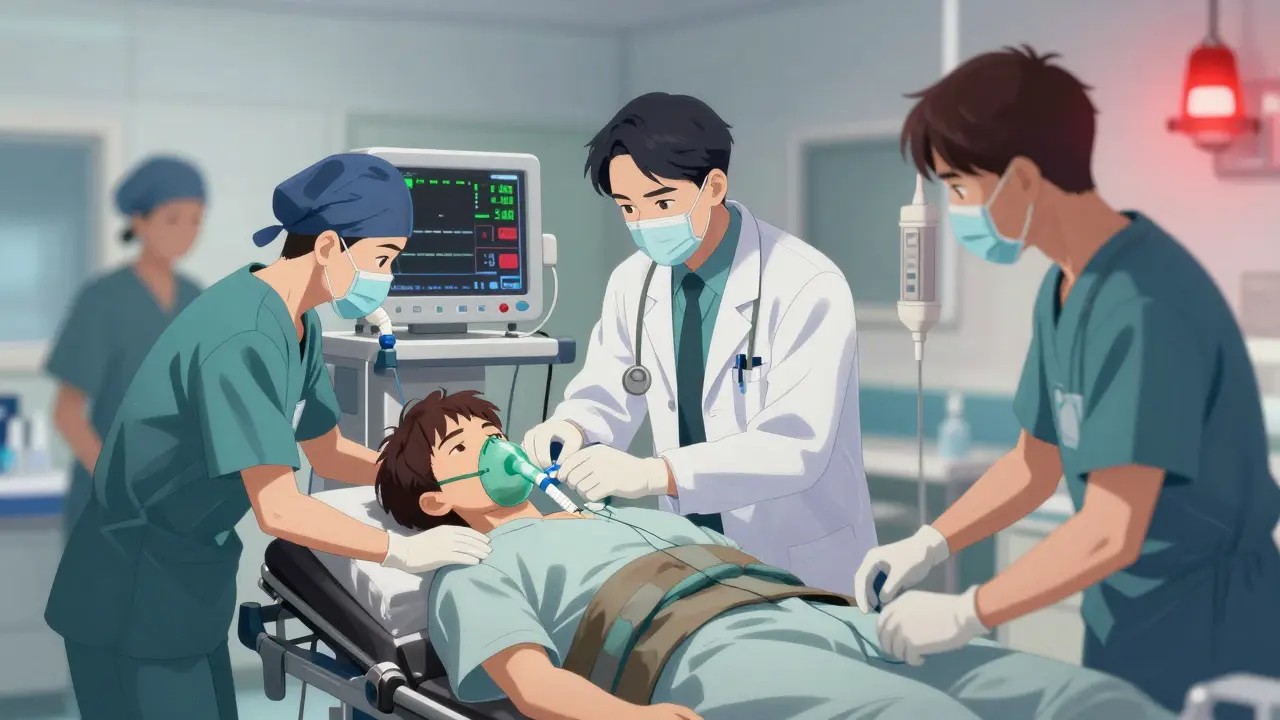
If you suspect an overdose, time is your most valuable resource. Medical professionals follow a standardized approach known as the ABCDE protocol, established by the Resuscitation Council UK. This method ensures that the most life-threatening issues are addressed first. Here is how it breaks down in a real-world emergency:
- Airway: The first priority is ensuring the airway is open and clear. If the person cannot maintain their airway, experts may need to step in immediately.
- Breathing: Respiratory depression is the primary killer. Medical teams administer oxygen via a non-rebreather mask at 15L/min initially. For patients with chronic obstructive pulmonary disease (COPD), a Venturi mask is used to prevent carbon dioxide retention.
- Circulation: Continuous monitoring of heart rate and blood pressure begins instantly. Hypotension (low blood pressure) can occur due to the sedative effects.
- Disability: Clinicians assess the level of consciousness using the Glasgow Coma Scale (GCS). A score of 8 or below indicates a severe coma requiring urgent expert help, often from an anesthesiologist.
- Exposure: The patient is fully examined to check for other signs of trauma, injection marks, or additional clues about ingested substances.
This structured approach prevents chaos. In the acute phase, serial blood pressure measurements are taken every 5 to 15 minutes. Point-of-care glucose testing is performed immediately to rule out hypoglycemia, which can mimic overdose symptoms. Without this systematic check, subtle but deadly complications can be missed.
To Treat or Not to Treat: The Flumazenil Controversy
You might wonder if there is an antidote, similar to naloxone for opioids. There is a drug called Flumazenil, a benzodiazepine-specific antagonist that can reverse sedation. However, its use is highly controversial and generally discouraged in most emergency settings. Why? Because it carries significant risks.
| Factor | Benefit | Risk/Limitation |
|---|---|---|
| Reversal Speed | Rapid reversal of sedation in pure overdoses | Short half-life (41 minutes) requires repeat dosing |
| Seizure Risk | None in healthy, non-dependent users | 38% risk of precipitating seizures in chronic users |
| Mixed Overdoses | Ineffective against co-ingestants | Contraindicated in mixed overdoses (e.g., with tricyclic antidepressants) |
| Clinical Use | Reserved for specific hospital settings | 78% of ERs have eliminated routine stocking due to safety concerns |
Dr. John Howland, a professor of emergency medicine, notes that flumazenil should only be reserved for pure benzodiazepine overdoses in non-dependent patients with severe respiratory depression unresponsive to supportive care. The American College of Medical Toxicology states that flumazenil is appropriate in only 0.7% of cases. In fact, the European Resuscitation Council explicitly advises against its routine use. The fear is that reversing the sedative effect suddenly can trigger violent seizures or arrhythmias, especially in patients who are physically dependent on the drug. For most people, supportive care-keeping them breathing and stable-is safer than aggressive pharmacological reversal.
Monitoring and Observation: Waiting Out the Storm
Since there is no quick fix for most cases, monitoring becomes the primary treatment. Benzodiazepines vary in how long they stay in the body. Short-acting drugs like alprazolam cause intense but shorter CNS depression, while long-acting ones like diazepam linger longer. Alprazolam, specifically, is 3.2 times more likely to require intubation compared to other benzodiazepines due to its potency.
The standard observation period for asymptomatic patients is a minimum of 6 hours. Symptomatic patients must be monitored until the complete resolution of central nervous system depression. This typically occurs within 12 hours, but in elderly patients or those with liver and kidney comorbidities, it can extend to 24-48 hours. A common pitfall is premature discharge. Ataxia (loss of coordination) often persists longer than sedation. Sending a patient home before their balance returns creates a high risk of falls and injuries. Medical teams use tools like the Pasero Sedation Scale to track consciousness levels continuously, reassessing every 15 minutes after any intervention.
The Rise of Illicit Benzodiazepines
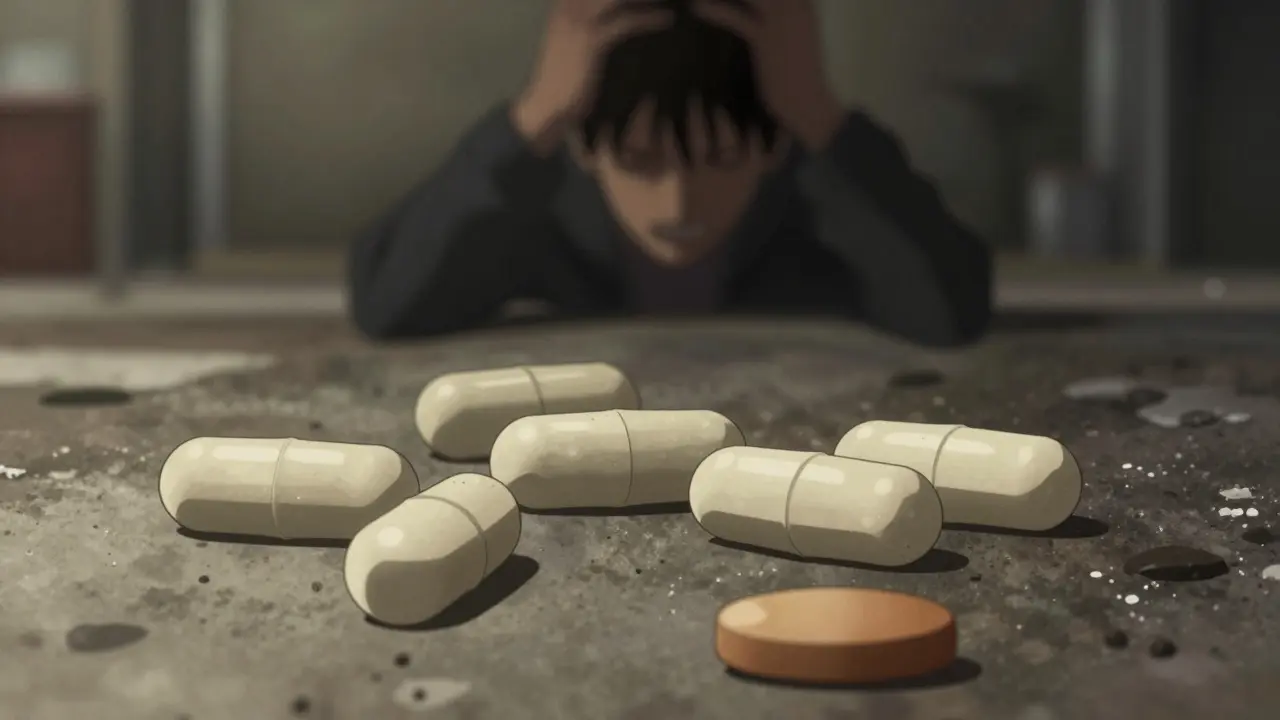
A growing concern in 2026 is the proliferation of illicitly manufactured benzodiazepines. Drugs like etizolam and clonazolam are flooding the market, often sold as counterfeit prescription pills. These substances are 3 to 10 times more potent than traditional benzodiazepines. The California Poison Control System reported that these illicit variants account for 68% of severe overdose cases in the Western U.S. Unlike pharmaceutical-grade drugs, their purity and dosage are unknown, making overdose prediction nearly impossible. This trend has led to a projected 40% increase in benzodiazepine-related emergency department visits by 2025, according to the American College of Medical Toxicology.
Frequently Asked Questions
What are the first signs of a benzodiazepine overdose?
Early signs include extreme drowsiness, confusion, slurred speech, poor coordination, and slowed breathing. As the overdose progresses, the person may become difficult to wake up, have pinpoint pupils (if mixed with opioids), or lose consciousness entirely. If breathing drops below 10 breaths per minute, it is a critical emergency.
Should I give activated charcoal for a benzo overdose?
Only if administered within 60 minutes of ingestion. Activated charcoal can reduce absorption by 45% during this window. After 60 minutes, it provides no benefit as benzodiazepines are rapidly absorbed. Modern guidelines from StatPearls state that routine use of activated charcoal plays no role in managing established benzodiazepine toxicity.
Is flumazenil safe to use at home?
No. Flumazenil is a hospital-only medication. It carries a high risk of inducing seizures, especially in people who take benzodiazepines regularly or have mixed overdoses. It should never be administered outside of a controlled medical setting with seizure management capabilities.
How long does it take for a benzodiazepine overdose to resolve?
For most healthy adults, symptoms resolve within 12 hours. However, elderly patients or those with liver/kidney issues may experience prolonged effects lasting 24 to 48 hours. Observation continues until the patient is fully alert and their coordination has returned to baseline.
What makes illicit benzodiazepines more dangerous?
Illicit benzodiazepines like clonazolam are significantly more potent (3-10x) than prescribed versions. Their manufacturing is unregulated, leading to inconsistent dosages. Users often do not know what they are taking, increasing the risk of accidental lethal doses, especially when combined with other drugs.