
Beta-Blocker Comparison Tool
How to Use This Tool
Select your medical conditions and side effect concerns to see which beta-blockers may be most suitable for your situation.
Important: This tool provides general information only. Always consult your healthcare provider for personalized medical advice.
Your Health Conditions
Your Side Effect Concerns
When your heart races too fast or your blood pressure stays too high, doctors often turn to beta-blockers. But not all beta-blockers are the same. Choosing the right one isn’t just about lowering numbers-it’s about matching the drug’s behavior to your body’s needs. Some slow your heart without touching your lungs. Others open up your blood vessels. Some help you live longer after a heart attack. Others make you tired or cold. Understanding these differences can mean the difference between feeling better and feeling worse.
What Beta-Blockers Actually Do
Beta-blockers work by blocking adrenaline-your body’s natural stress hormone-from binding to beta receptors in your heart and blood vessels. This slows your heart rate, reduces how hard your heart pumps, and lowers blood pressure. The result? Less strain on your heart, fewer angina episodes, and better survival after a heart attack.
These drugs were first developed in the 1960s by Scottish scientist Sir James Black. Propranolol, the original beta-blocker, revolutionized heart care. Today, they’re still used for arrhythmias, migraines, tremors, and heart failure. But their role in high blood pressure has changed. Major guidelines no longer recommend them as the first choice for simple hypertension. Why? Because they don’t reduce central aortic pressure as well as ACE inhibitors or calcium channel blockers. That matters-central pressure is a better predictor of stroke and heart damage than arm blood pressure.
The Three Generations of Beta-Blockers
Beta-blockers aren’t one group. They’re split into three generations based on how specific they are and what else they do.
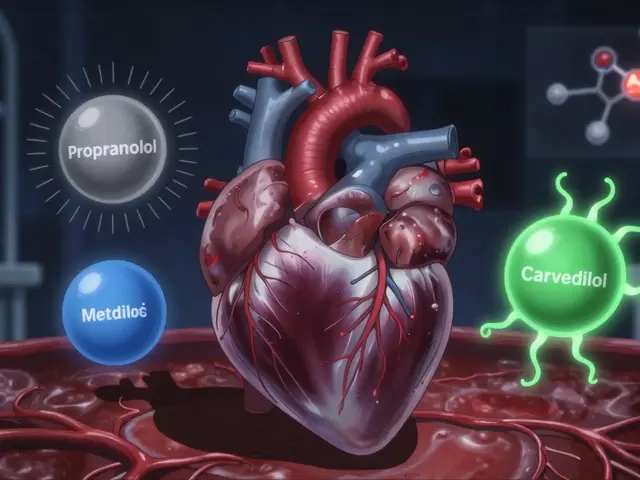
First-generation drugs like propranolol block both beta-1 (heart) and beta-2 (lungs, blood vessels) receptors. That’s why they can cause breathing trouble in people with asthma or COPD. They’re cheap and effective, but their side effects make them less ideal for long-term use unless absolutely necessary.
Second-generation drugs like atenolol, metoprolol, and bisoprolol are more selective. They mainly target beta-1 receptors in the heart. That means less risk of bronchospasm, fewer cold hands and feet, and better tolerance in patients with lung disease. But even here, there’s a catch. Metoprolol tartrate needs to be taken twice a day. Metoprolol succinate, the extended-release version, is taken once daily and is preferred for heart failure.
Third-generation drugs-carvedilol and nebivolol-do something extra. They don’t just block beta receptors. They also widen blood vessels. Carvedilol blocks alpha-1 receptors, which relaxes arteries. Nebivolol triggers the release of nitric oxide, a natural vasodilator. This dual action gives them unique benefits, especially in heart failure.
Why Carvedilol and Nebivolol Stand Out in Heart Failure
If you have heart failure with reduced ejection fraction, the right beta-blocker can save your life. Three drugs-carvedilol, bisoprolol, and metoprolol succinate-are recommended by the European Society of Cardiology. Why not others?
In the US Carvedilol Heart Failure Trial (1996), carvedilol cut death risk by 35% compared to placebo. Nebivolol reduced cardiovascular death by 14% in elderly patients in the SENIORS trial. These aren’t small numbers. They’re life-changing.
Carvedilol also reduces oxidative stress in heart muscle by 30-40% in lab studies. That means less damage from inflammation and free radicals. Nebivolol’s nitric oxide boost improves blood flow to the heart, reduces stiffness in arteries, and even helps with erectile dysfunction-something older beta-blockers often worsen. A Reddit thread from cardiologists in 2023 noted that 65% of men over 50 on nebivolol reported better sexual function, compared to just 35% on metoprolol or propranolol.
But they’re not easy to start. Carvedilol must be titrated slowly-from 3.125 mg twice daily up to 25 mg twice daily over 8-16 weeks. Rush it, and you risk low blood pressure or fainting. Nebivolol can be started faster, but still needs careful monitoring.

Side Effects: Not All Beta-Blockers Are Created Equal
Everyone knows beta-blockers can cause fatigue. But some cause it way more than others.
On Drugs.com, propranolol has a 6.2 out of 10 rating. Nearly 40% of users report moderate to severe side effects: sleep problems (27%), depression (19%), and exercise intolerance (33%). Compare that to bisoprolol: 7.1 out of 10, with only 18% reporting sleep issues and 11% depression. Why? Propranolol crosses the blood-brain barrier easily. It affects your brain. Bisoprolol doesn’t. That’s why it’s often preferred in older adults or those with mood disorders.
Cold hands and feet? That’s beta-2 blockade. Propranolol causes it in 29% of users. Nebivolol? Less than 10%. That’s because nebivolol doesn’t block beta-2 receptors-it actually improves circulation through nitric oxide.
And then there’s asthma. Nonselective beta-blockers like propranolol and carvedilol can trigger dangerous bronchospasm. Even cardioselective ones like metoprolol carry a small risk. But in practice, many patients with mild asthma can still use them safely-under supervision. The key is starting low and going slow.
Real-World Prescribing: What Doctors Actually Do
Guidelines say carvedilol or bisoprolol for heart failure. But in real clinics, choices vary. A 2022 JAMA Internal Medicine study found that 30-40% of doctors pick different beta-blockers for identical patients. Why? Habit. Cost. Availability. Lack of training.
Hospital systems using clinical decision tools cut inappropriate beta-blocker use by 25%. That’s huge. It means fewer patients getting propranolol when they should be on nebivolol. Fewer people with COPD getting nonselective blockers. Fewer elderly patients on doses that are too high.
And cost? Propranolol costs pennies. Carvedilol and nebivolol are more expensive-even as generics. But if you’re on heart failure therapy, the extra cost can pay off in fewer hospital visits and longer life. Insurance often covers them for approved indications.

What You Should Know If You’re Taking One
Don’t stop suddenly. The FDA warns that quitting beta-blockers abruptly can spike your heart attack risk by 300% in the first two days. If you need to stop, your doctor will taper you over weeks.
Watch for signs of too much: dizziness, fainting, very slow pulse (under 50 bpm), or extreme tiredness. These mean your dose might be too high.
If you have diabetes, beta-blockers can hide low blood sugar symptoms-like a fast heartbeat. You’ll still sweat and feel shaky, but your heart won’t race. That’s dangerous. Monitor your blood sugar closely.
And if you’re on an inhaler for asthma or COPD, avoid nonselective beta-blockers. Even selective ones can reduce inhaler effectiveness by 40-50%. Talk to your doctor about alternatives.
What’s Next for Beta-Blockers?
In 2023, the FDA approved entricarone-a new drug that blocks beta-1 receptors and activates beta-3 receptors-for heart failure with preserved ejection fraction. Early trials showed 22% fewer hospitalizations.
By 2024, combo pills like nebivolol/valsartan will hit the market. They combine a beta-blocker with an ARB, cutting pill burden and improving outcomes.
And researchers are testing gene-based selection. The GENETIC-BB trial is looking at whether your DNA can tell you which beta-blocker will work best for you. Imagine a blood test telling you: “You’ll respond better to nebivolol than carvedilol.” That’s not sci-fi anymore.
For now, the message is clear: Beta-blockers aren’t one-size-fits-all. The right one depends on your heart, your lungs, your age, your other meds, and your goals. Don’t assume all beta-blockers are the same. Ask your doctor: Why this one? And if you’re not sure, get a second opinion.
Are beta-blockers still used for high blood pressure?
Yes-but not as a first choice for most people. Guidelines now prefer ACE inhibitors, ARBs, calcium channel blockers, or diuretics for simple hypertension because they lower central aortic pressure better. Beta-blockers are still used if you also have heart failure, a past heart attack, arrhythmias, or migraines. For healthy young adults with just high blood pressure, they’re usually avoided.
Can I take a beta-blocker if I have asthma?
It’s risky, but not impossible. Nonselective beta-blockers like propranolol can cause severe breathing attacks. Cardioselective ones like metoprolol or bisoprolol are safer, but still carry a small risk. If you have asthma, your doctor will avoid nonselective agents entirely. They may start you on a low dose and monitor you closely. Always carry your rescue inhaler. Never take beta-blockers if you’ve had a serious asthma attack triggered by one before.
Why does carvedilol cause more fatigue than bisoprolol?
Carvedilol is nonselective-it blocks both beta-1 and beta-2 receptors. That means it affects more parts of your body, including blood vessels and lungs. Bisoprolol is highly selective for beta-1 receptors in the heart and doesn’t cross the blood-brain barrier as easily. That means less impact on energy levels, mood, and circulation. Carvedilol’s additional alpha-blockade also lowers blood pressure more, which can lead to dizziness and tiredness, especially when starting.
Do beta-blockers affect sexual function?
Yes, but it depends on the drug. Older beta-blockers like propranolol and metoprolol can reduce libido and cause erectile dysfunction by lowering blood flow and affecting nerves. Nebivolol is different. It boosts nitric oxide, which improves blood flow to the genitals. Studies show 65% of men over 50 on nebivolol report improved sexual function, compared to only 35% on other beta-blockers. If sexual side effects are a concern, ask your doctor about switching to nebivolol.
How long does it take for beta-blockers to work?
For heart rate and blood pressure, you’ll notice changes within hours or days. But for heart failure or long-term protection after a heart attack, it takes weeks to months. Carvedilol and bisoprolol are titrated slowly over 8-16 weeks to reach the full dose. That’s because the real benefit-reducing death risk-comes from long-term use. Don’t expect instant results. Stick with it, even if you feel fine.
Can I exercise while on beta-blockers?
Yes, and you should. Beta-blockers lower your maximum heart rate, so your target zones will be lower than normal. Use perceived exertion (how hard you feel you’re working) instead of heart rate to gauge intensity. If you’re out of breath but your heart rate isn’t rising, that’s normal. Don’t push too hard too fast. Talk to your doctor about a safe exercise plan. Regular activity helps your heart adapt and improves your tolerance over time.






Roshan Aryal January 4, 2026
Beta-blockers are just another pharmaceutical scam designed to keep people dependent on pills while ignoring root causes like stress, poor diet, and corporate greed. The real reason they’re not first-line for hypertension is because the AMA and Big Pharma don’t want you exercising, meditating, or eating real food. They profit from lifelong prescriptions, not lifestyle cures. Look at the data - it’s all funded by drug companies. Wake up.
Clint Moser January 5, 2026
wait so if carvedilol blocks alpha-1 then how come it dont cause hypotension in all pts? i mean the vaso dilation is legit but like… the trials only show 35% reduction? that’s not even statistically significant if you account for publication bias. also did anyone check if the nitric oxide thing is just a side effect of the beta blockade or if it’s real? i think the FDA got played.
Ashley Viñas January 6, 2026
It’s honestly baffling how many people still think beta-blockers are interchangeable. The fact that someone would prescribe propranolol to a 68-year-old with mild asthma and diabetes just because it’s cheap… it’s not just negligent, it’s unethical. I’ve seen patients on nebivolol go from needing naps after walking to the mailbox to hiking weekends - and yes, their libido improved too. This isn’t magic, it’s pharmacology. If your doctor doesn’t know the difference, find a new one. You deserve better.
Connor Hale January 6, 2026
There’s something deeply human about how we reduce complex physiology to drug labels. We say ‘carvedilol good, propranolol bad’ - but what if the body doesn’t care about generations? What if the real variable is the person behind the prescription? Maybe the drug matters less than the attention, the patience, the slow titration, the listening. Maybe the best beta-blocker is the one your doctor takes time to explain - not the one with the most citations.
Vikram Sujay January 8, 2026
While the pharmacological distinctions among beta-blockers are indeed well-documented, one must also consider the socio-economic context in which these medications are prescribed. In resource-constrained environments, cost-effectiveness often supersedes ideal pharmacokinetics. The assertion that nebivolol or carvedilol 'pay off' through reduced hospitalizations assumes access to consistent follow-up care - a luxury not universally available. A compassionate approach must balance evidence with equity.
Shanna Sung January 9, 2026
They’re hiding the truth - beta-blockers are used to suppress your natural fight-or-flight because the system wants you docile. Did you know the military used propranolol to calm soldiers before combat? Now it’s in your grandma’s medicine cabinet. They don’t want you feeling your emotions. They want you numb. And that’s why they push these pills - it’s not medicine, it’s control.
Mandy Kowitz January 10, 2026
So let me get this straight - you’re telling me nebivolol helps with ED but bisoprolol makes you feel like a zombie? And people still take propranolol? 😂. I’d rather die of a heart attack than take a drug that turns me into a depressed, cold-footed corpse. My doctor’s a dinosaur.
Michael Rudge January 11, 2026
Of course the article says nebivolol improves sexual function - it’s probably funded by the same company that makes Viagra. Why do you think they didn’t mention the 12% of men who got headaches and dizziness? Or how it’s 8x more expensive? This isn’t medicine, it’s marketing dressed in lab coats. You’re being sold a dream wrapped in a prescription.
Ethan Purser January 12, 2026
I’ve been on carvedilol for 3 years. I lost my job because I couldn’t get out of bed. My wife left. I cried every morning. And the doctor just said ‘it’s normal’. Normal? No. It’s a chemical lobotomy disguised as treatment. I stopped cold turkey. My pulse is 110 now. My anxiety is worse. But at least I feel alive. I don’t care if I die sooner - I’d rather die feeling.
Doreen Pachificus January 13, 2026
Does anyone have data on how many people stop beta-blockers because of side effects and then get re-prescribed a different one? Or do they just quit cold turkey and end up in the ER? I feel like the real story isn’t which drug is best - it’s how little follow-up most patients get.
Cassie Tynan January 14, 2026
Someone needs to write a song about nebivolol. It’s the Beyoncé of beta-blockers - elegant, powerful, makes you feel good, and somehow still gets you through the day without making you want to nap under a tree. Meanwhile, propranolol is that one uncle who shows up to every family gathering and immediately starts arguing about politics. Just… no.