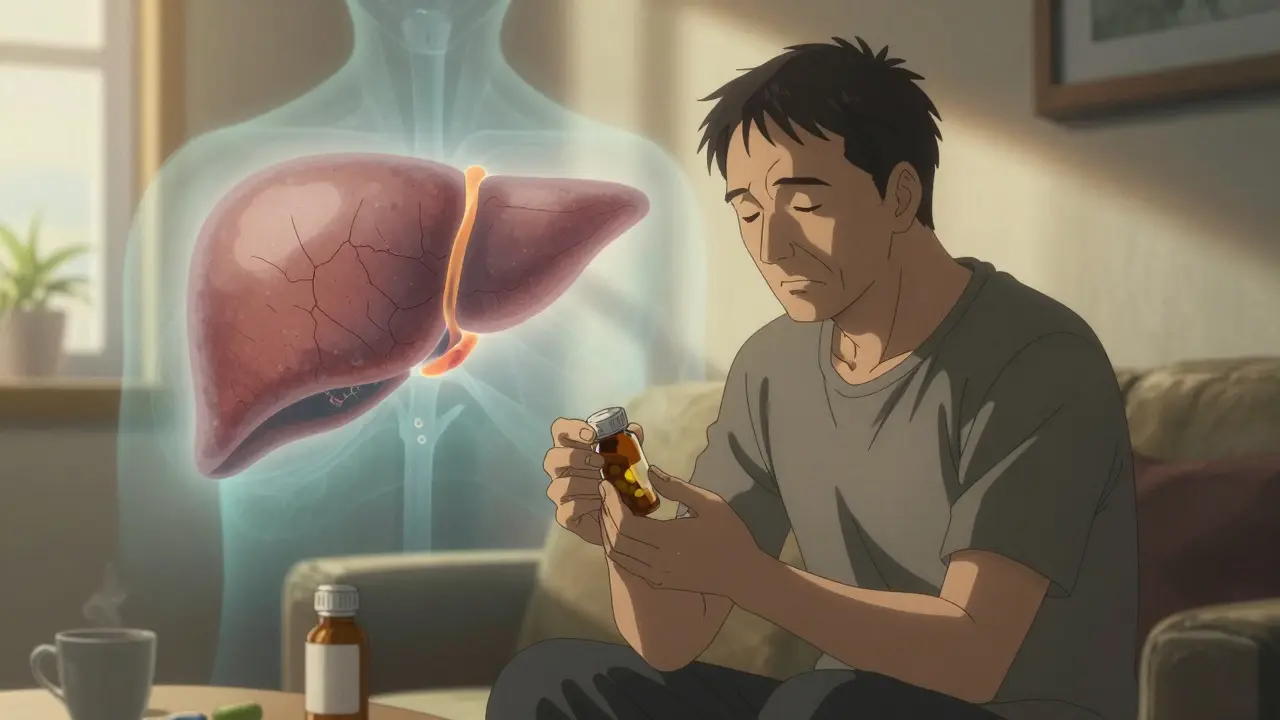
For decades, chronic hepatitis C was a silent killer. People lived with it for years, sometimes decades, without knowing. The virus crept into the liver, slowly damaging it until cirrhosis, liver failure, or cancer showed up-often too late. Then, around 2014, everything changed. Today, chronic hepatitis C isn’t just manageable-it’s curable. And the way it’s cured doesn’t involve needles, months of sickness, or broken dreams. It’s a simple 8- to 12-week pill regimen that works for more than 95 out of 100 people.
What Chronic Hepatitis C Actually Does to Your Liver
Hepatitis C isn’t just a virus. It’s a slow-motion attack on your liver. Once it takes hold, your immune system tries to fight it, but the virus hides and mutates. Over time, this constant battle turns healthy liver tissue into scar tissue-fibrosis. Left unchecked, that scar tissue builds up into cirrhosis. At that point, the liver can’t filter toxins, make proteins, or store energy the way it should. Some people develop liver cancer. Others end up needing a transplant. The scary part? Most people don’t feel anything until it’s advanced. No jaundice. No pain. Just fatigue that won’t go away. That’s why so many are diagnosed only after routine blood tests or when they’re already in late-stage disease.The Revolution: Direct-Acting Antivirals (DAAs)
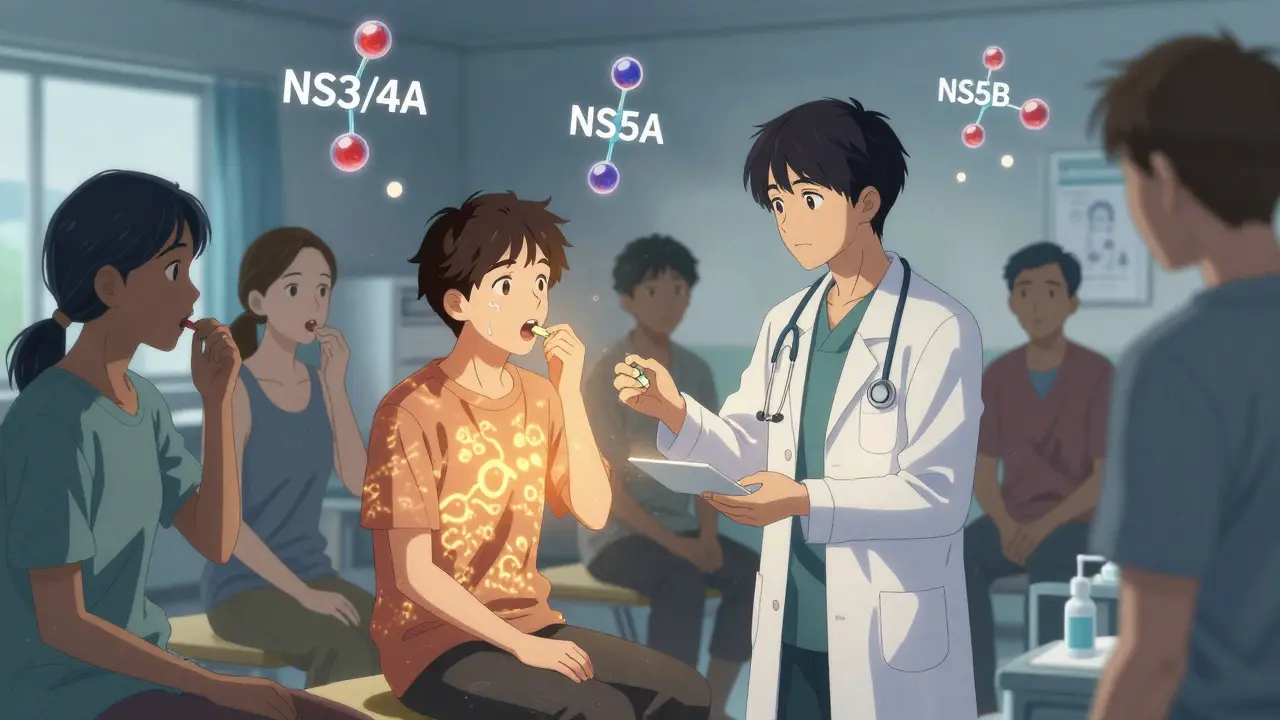
Before DAAs, treatment meant weekly interferon injections and daily ribavirin pills for up to a year. Side effects were brutal: severe flu-like symptoms, depression, anemia, weight loss. Cure rates? Only 40% to 80%, depending on your virus genotype. Many gave up. Others couldn’t tolerate it. Then came DAAs. These are oral medications that target specific parts of the hepatitis C virus’s life cycle. No injections. No hospital visits. Just one pill a day. Three main types work together:- NS3/4A protease inhibitors (like glecaprevir) stop the virus from making new proteins.
- NS5A inhibitors (like velpatasvir and pibrentasvir) block how the virus assembles and spreads.
- NS5B polymerase inhibitors (like sofosbuvir) break the virus’s ability to copy its RNA.
How Effective Are They Really?
The numbers speak for themselves. In clinical trials and real-world use, DAAs cure more than 95% of people. For those who’ve never been treated before, the success rate hits 97% to 99%. Even in people with cirrhosis, HIV co-infection, or who’ve failed older treatments, cure rates stay above 90%. The key measure? Sustained Virologic Response at 12 weeks, or SVR12. That means no detectable virus in your blood 12 weeks after finishing treatment. If you hit SVR12, you’re cured. The virus is gone. It doesn’t come back. One man on Reddit shared: “Cured in 12 weeks with Epclusa-only side effect was mild fatigue first week.” That’s the norm now. Not the exception.How Liver Protection Works After the Cure
Curing the virus doesn’t just mean you’re no longer infectious. It means your liver starts healing. Studies show that after successful DAA treatment:- 95% of patients stop getting worse-fibrosis progression halts completely.
- 70% see actual regression of scar tissue within five years.
- The risk of liver cancer drops by up to 75%.
- The chance of liver failure or needing a transplant falls dramatically.
Side Effects? Almost None
Unlike interferon, DAAs are gentle. Over 90% of patients experience no serious side effects. The most common? Mild fatigue or a headache for a few days. Some feel a bit nauseous. But nothing that stops people from working, driving, or spending time with family. The CDC reports that less than 5% of patients need to stop treatment because of side effects. That’s unheard of in chronic disease treatment.What About Cost? Yes, It’s Still a Hurdle
The good news? The drugs work. The bad news? They used to cost $94,500 for a 12-week course. Even today, in the U.S., prices hover around $74,700. That’s a barrier for many. But there’s hope. Generic versions are now available in low- and middle-income countries for as little as $50 per course. In the U.S., most insurance plans cover DAAs now, and manufacturer assistance programs help cover costs for uninsured patients-70% of those who apply get full financial aid. Insurance denials still happen. About 28% of patients face initial denials, but most win their appeals with help from patient advocates or their doctor’s office. The process isn’t perfect, but it’s doable.Who Can Get Treated Now?
The rules have changed. In 2022, the World Health Organization expanded treatment to children as young as 3. No more waiting until adulthood. No more saying “it’s too risky.” Treatment is now recommended for everyone with chronic hepatitis C, regardless of:- Age
- Stage of liver disease
- Drug use history
- HIV or kidney disease status
- Previous treatment failure
Why Primary Care Doctors Can Now Treat Hepatitis C
You don’t need a liver specialist anymore. Thanks to the simplicity of DAA regimens, primary care doctors can manage over 85% of cases. The CDC says the learning curve is minimal. Clinicians at the University of Washington needed just four hours of training to prescribe DAAs correctly 95% of the time. All you need is a positive HCV RNA test-no more genotype testing if you’re on a pan-genotypic drug like Epclusa or Mavyret. That cuts down delays and makes testing easier in community clinics.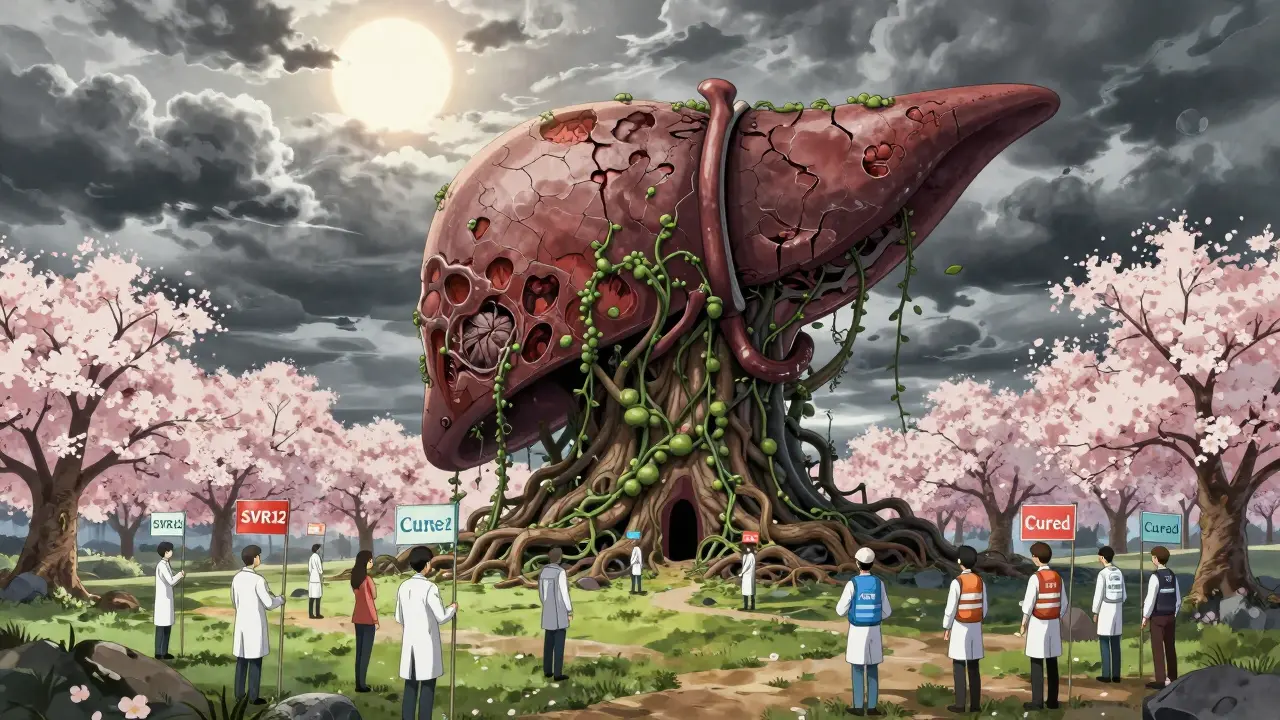
Where the Fight Still Isn’t Won
Here’s the truth: we have the cure. But we’re not curing enough people. Globally, only 20% of people with hepatitis C even know they’re infected. In low-income countries, just 15% of diagnosed patients get treatment. In the U.S., we treat about 200,000 people a year-but we need to treat 3.5 million to meet the 2030 elimination goal. Reinfection is another problem. Among people who inject drugs, 5% to 10% get reinfected each year. That’s why harm reduction-clean needles, opioid treatment, and ongoing testing-is just as important as the pills. And then there’s the 1% to 5% who fail multiple DAA courses. For them, newer combinations like Vosevi (sofosbuvir/velpatasvir/voxilaprevir) offer hope. But research is still catching up.The Bigger Picture: Can Hepatitis C Be Eliminated?
The World Health Organization wants to eliminate hepatitis C as a public health threat by 2030. That means 90% fewer new cases and 65% fewer deaths. We have the tools. We’ve cured over 10 million people since 2013. The challenge isn’t science. It’s access. It’s screening. It’s breaking down stigma. It’s making sure a homeless person, a person who uses drugs, or a migrant worker can get tested and treated without jumping through a thousand hoops. The Veterans Health Administration got it right: they embedded testing and treatment in primary care. They reached 95% treatment rates among diagnosed patients. Community clinics? They’re at 65%. The gap isn’t about drugs. It’s about systems.What You Should Do If You Think You Might Have It
If you’ve ever:- Used injection drugs (even once, decades ago)
- Received a blood transfusion before 1992
- Had long-term dialysis
- Been born to a mother with hepatitis C
- Had a tattoo or piercing with non-sterile equipment
- Had unprotected sex with someone who has hepatitis C
What’s Next?
The next five years will focus on reaching the untested, the uninsured, and the underserved. Generic drugs, mobile clinics, and community outreach are expanding fast. In 2025, Gilead plans to treat 1 million more people in low-income countries. We’re not just treating a virus anymore. We’re rewriting the story of a disease that stole decades from millions. And for the first time, we have the power to end it.Can chronic hepatitis C be cured completely?
Yes. Modern direct-acting antivirals (DAAs) cure more than 95% of people with chronic hepatitis C. A sustained virologic response (SVR12)-meaning no detectable virus 12 weeks after treatment-means you’re cured. The virus doesn’t return, and the risk of liver complications drops dramatically.
How long does hepatitis C treatment take?
Most treatment courses last 8 to 12 weeks. People without cirrhosis usually take 8 weeks. Those with cirrhosis or prior treatment failure may need 12 or sometimes 24 weeks. The exact length depends on the drug combo, liver health, and medical history. No one needs to be on treatment for a year anymore.
Do DAAs have serious side effects?
Most people have no side effects. The most common are mild fatigue or headache, especially in the first week. Less than 5% of patients stop treatment due to side effects. Unlike older interferon treatments, DAAs don’t cause depression, severe anemia, or flu-like symptoms. They’re among the safest chronic disease treatments ever developed.
Can I get treated if I still use drugs?
Yes. Current guidelines from the WHO and CDC say drug use is not a barrier to treatment. In fact, treating people who use drugs reduces transmission and improves health outcomes. Many clinics now offer treatment alongside harm reduction services like needle exchange or medication-assisted therapy for opioid use.
Is hepatitis C treatment covered by insurance?
Most private and public insurance plans in the U.S. cover DAA treatments, though prior authorization is often required. Many patients face initial denials, but appeals are frequently successful. Manufacturer assistance programs cover 70% of uninsured patients, and generic versions are available for under $50 in qualifying countries.
Will my liver heal after I’m cured?
Yes. After successful treatment, liver damage stops progressing in 95% of patients. In 70% of cases, scar tissue (fibrosis) begins to reverse within five years. Even people with cirrhosis can see improved liver function. The risk of liver cancer drops by up to 75%. Healing takes time, but it happens.
Can I get hepatitis C again after being cured?
Yes. Being cured doesn’t give you immunity. If you’re exposed again-through sharing needles, unsterile tattoos, or other high-risk behaviors-you can get infected again. That’s why ongoing prevention and harm reduction are critical, especially for people who inject drugs.
What if my first treatment didn’t work?
There are still options. Newer drug combinations like Vosevi (sofosbuvir/velpatasvir/voxilaprevir) are designed for people who failed previous DAA treatments. Success rates for retreatment are over 90%. Your doctor will test for resistance mutations and choose the best second-line regimen based on your history.




Tiffany Machelski December 17, 2025
i just got cured last year with epclusa... honestly the hardest part was getting insurance to approve it. side effects? maybe a little tired the first week. that's it. my liver feels like it's finally at peace. 🙏
James Rayner December 18, 2025
It's... astonishing, isn't it? We've gone from a death sentence wrapped in stigma, to a twelve-week pill that rewrites your future. The science is beautiful. But what's even more beautiful? The fact that we still don't treat enough people. We have the cure. But do we have the will?
Souhardya Paul December 18, 2025
I work in a community clinic, and I've seen this firsthand. We started offering HCV screening during routine check-ups. Within six months, we treated 47 people. Most had no symptoms. One guy was 68, never knew he had it. Now he's hiking with his grandkids. The biggest barrier? Fear. Not the virus. Fear of judgment. We need to normalize this. Like getting a flu shot.
Josias Ariel Mahlangu December 19, 2025
People who use drugs don't deserve to be cured. Why should taxpayers pay for their bad choices? This isn't a medical issue-it's a moral failure. Let them suffer the consequences.
anthony epps December 21, 2025
so... you just take pills? and you're good? no shots? no needles? no crazy side effects? wow.
Andrew Sychev December 21, 2025
They're lying. This is all a pharma scam. The real cure is vitamin C and detox tea. They want you dependent on $70k pills so they can keep raking in billions. They don't want you cured-they want you paying monthly. Look at the history of medicine. They bury the truth.
Dan Padgett December 23, 2025
In my village back home, people still whisper about hepatitis C like it’s a curse from the ancestors. But I told my uncle-he got tested last month. He’s on treatment now. He says he feels like a man reborn. The pills are cheap here, thanks to generics. No shame. No fear. Just medicine. And life. Life, my friend, is the greatest miracle.
Hadi Santoso December 23, 2025
i got tested after my cousin told me she had it. turns out i did too. took the pills. felt fine. now i'm helping my brother get screened. we're from a mixed background-dad's from indonesia, mom's from kentucky-and no one ever talked about this stuff. but now? we do. it's not just health. it's family.
Kayleigh Campbell December 24, 2025
So let me get this straight. We have a 95% cure rate for a disease that used to be a death sentence... but we still treat it like it's a dirty secret? 🤦♀️ Meanwhile, people are still getting tattoos in basements and thinking 'eh, it's fine.' Newsflash: your liver doesn't care how cool your tattoo artist is.
Dave Alponvyr December 25, 2025
They cured it. Now let's stop acting like it's a miracle. It's just medicine. Get tested. Take the pills. Move on.
Kim Hines December 26, 2025
I read this whole thing. I didn't comment. But I got tested today.
Cassandra Collins December 27, 2025
I think the government put the virus in the blood supply on purpose to control the population. That’s why they rushed the cure-it’s not to help us. It’s to make us trust them more before the next thing. The pills are tracking us. I read it on a forum. My cousin’s friend’s neighbor works at Gilead. They’re using the data to predict who’ll get sick next.
Ron Williams December 27, 2025
I used to work with folks who were homeless. We’d hand out test kits with sandwiches. One guy got cured, got housing, started volunteering. That’s the real win. Not just the science. The dignity. The chance to be seen as human again. We need more programs like this. Not just pills. People.
Kitty Price December 27, 2025
I was so scared to get tested. I thought I’d be judged. But my doctor just said, 'Let’s fix this.' And we did. Now I’m planning a trip to Japan. I never thought I’d be able to say that. Thank you for writing this. I needed to see it. 💖
Aditya Kumar December 29, 2025
Meh. Heard this before. Everyone says 'cured' but then they still get sick. Probably just placebo. I’ll wait till it’s free.