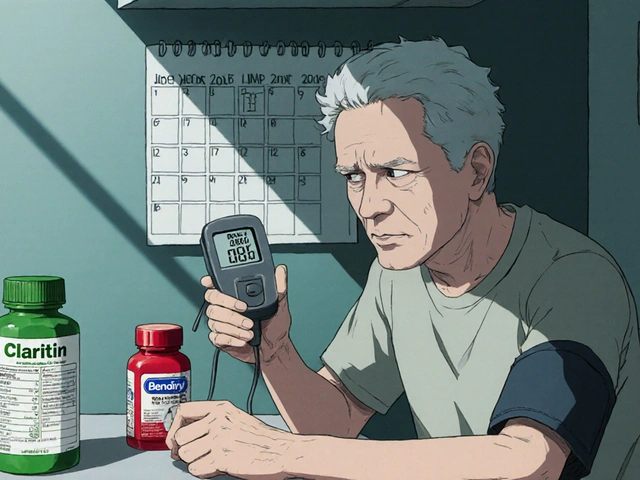
Glaucoma Medication Safety Checker
This tool helps you understand if your current allergy medications might be dangerous based on your glaucoma type. Always consult your eye doctor before making changes to your medications.
If you have glaucoma and reach for an over-the-counter allergy pill when your eyes start itching, you could be putting your vision at risk. It’s not a myth. It’s not a warning you’ll find on the box. And for many people, it’s a surprise they only learn after it’s too late.
Not All Glaucoma Is the Same
Glaucoma isn’t one disease. It’s a group of conditions that damage the optic nerve, often because fluid builds up inside the eye and raises pressure. But how that fluid builds up depends on the type you have. About 70% of people with glaucoma have primary open-angle glaucoma (POAG). Their drainage system is clogged slowly over time, like a sink with a slow leak. For these people, most common allergy meds - including loratadine, cetirizine, and fexofenadine - are generally safe. But the other 10% to 15% have narrow-angle glaucoma. Their drainage angle is physically narrow, like a door that’s almost shut. In these cases, even a small change - like a dilated pupil - can slam that door shut completely. That’s when things turn dangerous.How Antihistamines Can Trigger an Eye Emergency
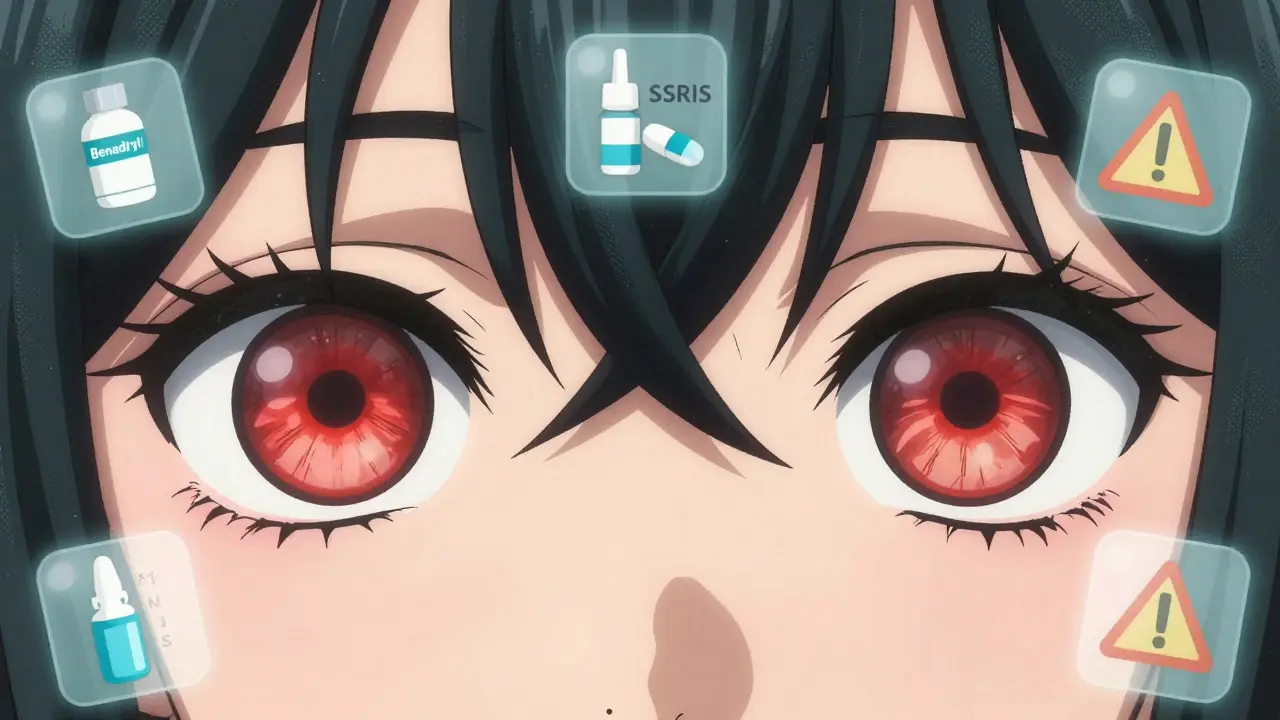
First-generation antihistamines like diphenhydramine (Benadryl) and chlorpheniramine don’t just stop sneezing. They also block signals in your nervous system that control pupil size. This causes your pupils to widen - a side effect called mydriasis. In someone with narrow angles, that dilation pushes the iris forward, blocking the drainage channel. Fluid can’t escape. Pressure spikes. In hours, you could lose vision. This isn’t theoretical. Studies show people with narrow angles who take these meds have up to a 5.8 times higher risk of acute angle-closure glaucoma. That’s not a small bump. That’s an emergency. Symptoms come fast: sudden blurry vision, severe eye pain, headache, nausea, seeing halos around lights. If you feel this, go to the ER. Every minute counts.Other Hidden Risks Beyond Antihistamines
It’s not just allergy pills. Many common meds can do the same thing:- Decongestants like pseudoephedrine and phenylephrine (found in cold and sinus meds) can raise eye pressure by tightening blood vessels around the eye.
- Antidepressants - especially SSRIs like sertraline and escitalopram - have been linked to angle closure. One study found daily use of SSRIs over 20 mg increased risk significantly.
- Anti-nausea drugs like Phenergan and Meclizine have anticholinergic effects that dilate pupils.
- Migraine meds like topiramate and sumatriptan can cause swelling in the eye’s fluid chambers, pushing the iris forward.
- Steroid sprays, drops, or pills - even if you’re using them for allergies - can slowly raise pressure over time, leading to open-angle glaucoma if used for more than 10 days without monitoring.
And it’s not just pills. Botulinum toxin injections near the eye - sometimes used for wrinkles or muscle spasms - can also increase pressure in people with narrow angles, according to recent clinical observations.
What’s Safe? The Clearer Alternatives
The good news? Not all antihistamines are created equal. Second-generation antihistamines - like loratadine (Claritin), cetirizine (Zyrtec), and fexofenadine (Allegra) - are designed to stay out of the brain and eyes. They don’t cause significant pupil dilation. For most people with glaucoma, these are the safer choice. But “safer” doesn’t mean “risk-free.” Everyone’s anatomy is different. Even these meds can cause issues in rare cases. That’s why you still need to talk to your eye doctor before taking anything.What If You’ve Had Laser Surgery?
Some people with narrow angles get a simple laser procedure called a peripheral iridotomy. A tiny hole is made in the iris to let fluid flow freely, preventing angle closure. If you’ve had this, your risk drops dramatically. Many patients can use antihistamines and decongestants safely afterward. But here’s the catch: you still need to tell your doctor you’ve had the procedure. Not all doctors assume you’ve had it. And if you’ve had cataract surgery or lens replacement, your risk is also reduced - but again, don’t assume. Always confirm.Why So Many People Don’t Know They’re at Risk
Most people with narrow angles don’t know it. They’ve never had symptoms. Their eye pressure is normal. Their vision is fine. They’ve never had a comprehensive eye exam that includes gonioscopy - the test that actually looks at the drainage angle. The American Academy of Ophthalmology recommends this test for everyone over 40, but many general eye exams skip it. That’s why so many people end up in the ER with sudden vision loss. They took Benadryl for a cold. They didn’t know they had glaucoma. They didn’t know the risk. They didn’t even know they had narrow angles.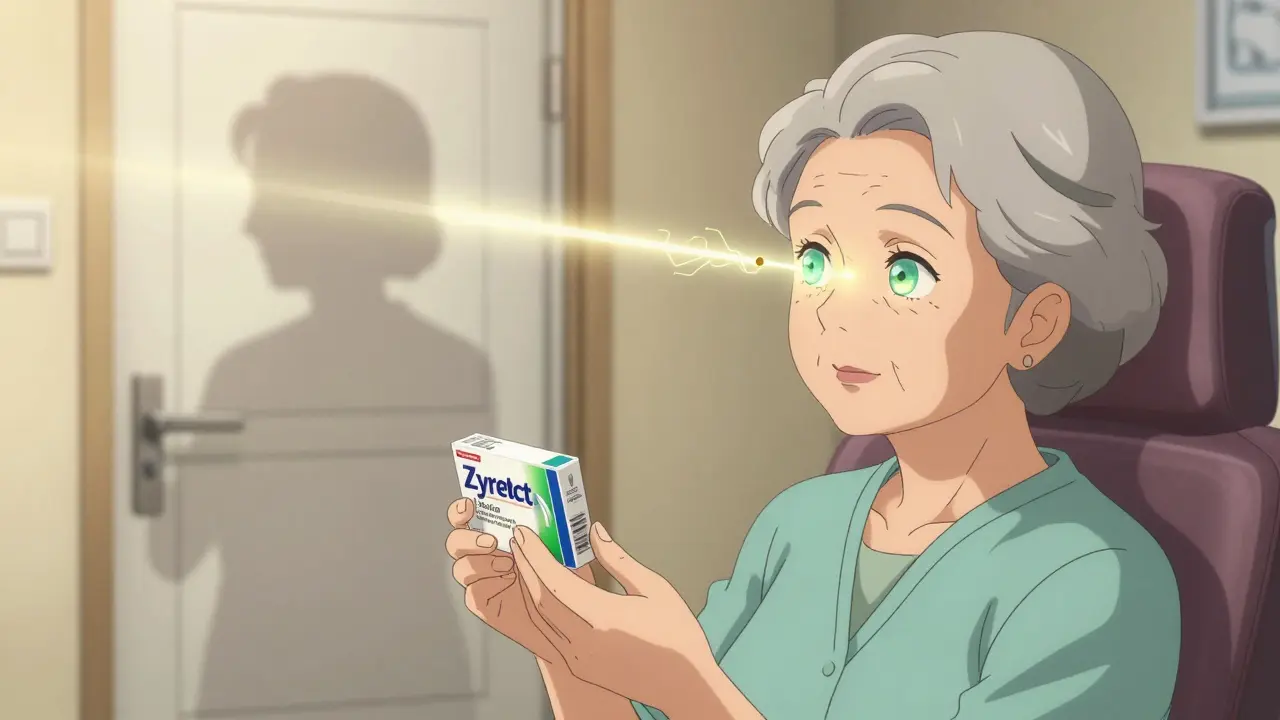
What You Should Do Right Now
If you have glaucoma:- Ask your eye doctor: “What type of glaucoma do I have?”
- If you have narrow-angle glaucoma, make a list of all meds you take - including OTC and supplements.
- Bring that list to your next appointment. Ask: “Which of these are dangerous for me?”
- Never take diphenhydramine or chlorpheniramine unless your doctor says it’s okay.
- If you use steroid nasal sprays or eye drops, don’t use them longer than 10 days without checking your eye pressure.
If you don’t have glaucoma but are over 40, ask your eye doctor for a gonioscopy. It’s quick, painless, and could save your vision.
What About Natural Remedies?
You’ll find tons of blogs touting “natural antihistamines” - quercetin, butterbur, vitamin C. But here’s the truth: there’s no solid evidence these are safer for glaucoma patients. Some may even interact with your other meds. And if you’re avoiding OTC antihistamines because you’re worried, don’t replace them with unproven supplements. Talk to your doctor first.The Bigger Picture
In the UK, about 3 million people have glaucoma. Between 300,000 and 450,000 of them have narrow-angle glaucoma. One in five people have hay fever. That means hundreds of thousands of people are taking allergy meds every day without knowing they’re playing Russian roulette with their vision. OTC drug labels don’t warn about glaucoma. Not clearly. Not consistently. The MHRA and FDA have been asked to change that. So far, nothing has changed. The only protection you have is knowledge. And a conversation with your eye doctor.Can I take Zyrtec or Claritin if I have glaucoma?
Yes, loratadine (Claritin) and cetirizine (Zyrtec) are generally safe for people with glaucoma because they don’t cause significant pupil dilation. They’re second-generation antihistamines designed to avoid crossing into the eyes and brain. But even these should be discussed with your eye doctor, especially if you have narrow-angle glaucoma or have never had your drainage angle checked.
Is Benadryl dangerous for glaucoma patients?
Yes. Diphenhydramine (Benadryl) is a first-generation antihistamine with strong anticholinergic effects. It causes pupil dilation, which can trigger acute angle-closure glaucoma in people with narrow drainage angles. This can lead to sudden, severe eye pain, blurred vision, and permanent vision loss. Avoid Benadryl entirely if you have narrow-angle glaucoma - and even if you don’t know your type, it’s safer to skip it.
Can steroid nasal sprays cause glaucoma?
Yes. Steroids - whether nasal sprays, eye drops, or pills - can increase eye pressure over time, even in people with open-angle glaucoma. This is called steroid-induced glaucoma. The mechanism isn’t fully understood, but it’s thought that proteins build up and block the eye’s drainage system. If you use steroid sprays for more than 10 days, get your eye pressure checked. Never use them long-term without monitoring.
What should I do if I suddenly have eye pain and blurry vision after taking allergy meds?
Go to the emergency room immediately. This could be acute angle-closure glaucoma - a medical emergency. Symptoms include sudden blurry vision, severe eye pain, headache, nausea, vomiting, and seeing rainbow-colored halos around lights. Delaying treatment can cause permanent vision loss within hours. Tell the staff you took an antihistamine or decongestant and have glaucoma or suspect you might.
Can I still use allergy meds if I’ve had laser surgery for glaucoma?
Yes, but only after confirming with your eye doctor. Laser peripheral iridotomy creates a small hole in the iris that allows fluid to flow freely, greatly reducing the risk of angle closure. Most patients can then safely use antihistamines and decongestants. But don’t assume - some cases still carry risk. Always check with your ophthalmologist before restarting any medication.
How do I know what type of glaucoma I have?
Your eye doctor must perform a test called gonioscopy. This involves using a special lens to look directly at the drainage angle of your eye. Standard eye pressure tests and vision checks won’t tell you this. If you’ve never had gonioscopy - especially if you’re over 40 - ask for it. Knowing your type is the only way to know which meds are safe.