Imagine waking up to find that a life-saving medication you depend on is simply gone from the shelves. For millions of patients, this isn't a hypothetical scenario; it's a recurring reality. The systems that get medicine from a lab to your pharmacy are surprisingly fragile. A single factory shutdown in India or a shipping delay in China can trigger a global crisis. We've spent decades optimizing for the lowest possible cost, but in doing so, we've stripped away the safety nets. Now, the industry is shifting its focus from "just-in-time" delivery to "just-in-case" stability. This shift toward pharmaceutical supply chain resilience is no longer just a business strategy-it's a matter of national security and public health.
The Real Cost of Fragility
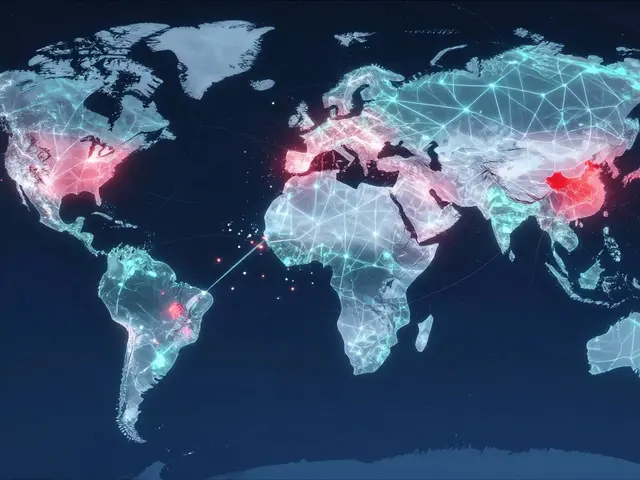
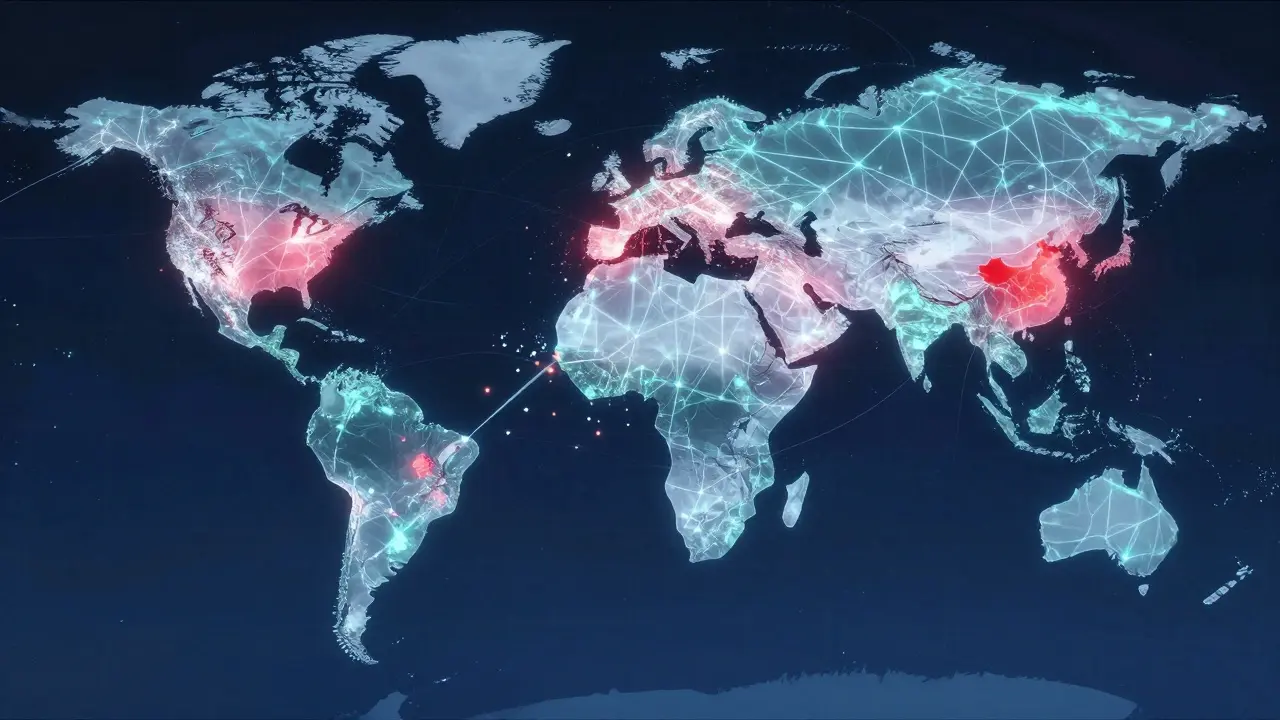
For a long time, the goal was lean efficiency. Companies chased the cheapest source for Active Pharmaceutical Ingredients (APIs)-the raw chemical components that make a drug work. This led to a dangerous concentration of production. Currently, about 80% of APIs and 40% of finished drugs used in the U.S. are made overseas. Specifically, China and India produce roughly 68% of the world's APIs. When you rely on a few geographic clusters for the majority of your raw materials, any local political tension or natural disaster becomes a global drug shortage.
The numbers show that this fragility is expensive. According to ZS Associates, companies that ignore resilience are losing millions during every major disruption. Conversely, firms that have invested in diversified networks see about 23% higher operational continuity. For a large pharma company, that translates to avoiding roughly $14.7 million in revenue losses per single disruption event. It turns out that spending a bit more on the front end saves a massive amount of money-and lives-on the back end.
The Three Pillars of Resilience
Building a resilient chain isn't about one single fix; it's about building a system that can bend without breaking. Experts generally divide this into three capabilities: preparedness, response, and recovery.
- Preparedness: This is the "lookout" phase. It involves monitoring global risks and scenario planning. Instead of hoping for the best, companies map their dependencies across 12 to 15 tiers of suppliers. If they know exactly who provides the chemical that provides the ingredient, they can spot a problem before it hits the news.
- Response: This is how a company functions *during* a crisis. It involves having pre-negotiated contracts and "buffer stocks." For essential medicines, a gold standard is now maintaining 60 to 90 days of inventory rather than just a few days' worth.
- Recovery: This is the speed of the bounce-back. Recovery is faster when companies have dual-sourcing agreements, meaning they have two different suppliers in two different parts of the world for the same critical component.
| Feature | Traditional (Lean) Model | Resilient (Diversified) Model |
|---|---|---|
| Primary Goal | Cost minimization | Risk mitigation & continuity |
| Inventory Strategy | Just-in-Time (Low stock) | Strategic Buffer (60-90 days) |
| Sourcing | Single-source (Lowest cost) | Dual or Multi-sourcing |
| Geographic Focus | Global hubs (e.g., China, India) | Regional balanced networks |
| Operational Cost | Baseline | 10-15% Higher |
Modernizing the Factory Floor
One of the most exciting ways to fix these gaps is through Continuous Manufacturing. For decades, drugs were made in "batches"-like baking a cake, where you finish one step before starting the next. If something goes wrong in a batch, the whole lot is tossed. Continuous manufacturing is more like a conveyor belt; materials flow constantly, and the system monitors quality in real-time.
The technical benefits are huge: a 30-40% reduction in the facility's physical footprint and about 20-25% lower energy use. More importantly, these plants can be modular. Instead of spending five years building a massive concrete factory, companies can deploy container-based facilities in 12 to 18 months. This allows a country to quickly spin up production of a specific antibiotic or sterile injectable if a foreign source is cut off.
However, it's not all easy. Setting up one of these systems costs between $50 million and $150 million-way more than a traditional batch plant. There is also a regulatory hurdle. As of early 2025, the FDA had granted only about a dozen approvals for continuous manufacturing compared to over 10,000 for batch processes. The technology is ready, but the paperwork is still catching up.
The Strategic Tug-of-War: Onshoring vs. Diversification
There is a loud debate right now about "onshoring"-bringing all manufacturing back to the home country. In the U.S., there have been executive orders and billions in funding (like the CHIPS and Science Act) to encourage domestic production. On paper, making everything at home sounds safe. But is it actually more resilient?
Some experts argue that extreme onshoring is a mistake. If you move everything from China to a single domestic hub, you haven't removed the risk; you've just moved it. A single domestic disaster or labor strike could then wipe out your entire supply. The smarter play is a "regional balance." This means having some production at home, some in North America, and some in other stable global zones. This strategy accepts a 10-15% increase in costs in exchange for a 50-70% reduction in the risk of a total shutdown.
We are seeing this shift happen. North American companies reduced their dependency on Chinese APIs from 38% in 2022 to 29% by 2025. While domestic production rose to 28%, the rest of that gap was filled by diversifying into other regions, not just bringing it home.
Implementing a Resilience Roadmap
If a pharmaceutical company wants to stop reacting to crises and start preventing them, they usually follow a four-step process. First, they spend three to six months on a vulnerability assessment-basically, a deep dive into where every single raw material comes from. Next, they move into strategic scenario planning: "What happens if this port closes?" or "What if this supplier goes bankrupt?"
After that comes investment prioritization. Since you can't make every single drug highly resilient (it's too expensive), companies focus on the most critical ones-things like insulin or emergency antibiotics. Finally, they move to execution, which often involves implementing AI-powered predictive analytics. These tools can now forecast disruption risks with 85-90% accuracy up to 90 days in advance, giving managers enough time to pivot to a backup supplier.
Looking Toward 2030
The next few years will be a transition period. By 2027, nearly half of all new manufacturing capacity is expected to use continuous technology. We will also see a bigger push toward blockchain-enabled traceability, which doesn't just stop shortages but also cuts counterfeit drugs by up to 75% by ensuring every single vial can be traced back to the source.
But the biggest bottleneck isn't technology-it's people. We are looking at a shortage of about 250,000 skilled manufacturing workers by 2027. You can have the smartest AI and the fastest modular factories, but if there isn't a trained technician to run them, the supply chain remains broken. The future of medicine depends as much on vocational training as it does on chemical engineering.
Why are most drug ingredients made in China and India?
For decades, pharmaceutical companies prioritized low costs and high volume. China and India offered lower labor costs, fewer environmental restrictions for chemical waste, and massive economies of scale. This created a "lean" system that was incredibly cheap but left the world vulnerable to any disruption in those two regions.
Will building resilient supply chains make my medicine more expensive?
In the short term, yes. Diversifying suppliers and maintaining larger buffer stocks increases operational costs by roughly 10-15%. However, these costs are often offset by the massive savings from avoiding drug shortages and the efficiencies gained from new technologies like continuous manufacturing.
What is a "Strategic API Reserve"?
It is a government-managed stockpile of critical active pharmaceutical ingredients. Much like a strategic oil reserve, its goal is to ensure that if global trade is interrupted, the country has enough raw materials (typically a 90-day supply) to keep producing essential medicines domestically.
How does AI help prevent drug shortages?
AI can analyze thousands of data points-from weather patterns and shipping manifests to geopolitical news-to predict a disruption before it happens. This allows companies to order extra stock or switch suppliers 60 to 90 days before a shortage actually hits the pharmacy shelves.
Is onshoring the only solution to supply chain risks?
No. While bringing production home helps, total onshoring can actually create new risks by creating a single point of failure. The most effective strategy is a "regional balance," combining domestic production with diversified sources across several different geographic zones to ensure that no single event can stop the flow of medicine.