
What Counts as a Severe Drug Reaction?
Not every rash or stomach upset after taking medicine is dangerous. But some reactions can kill you in minutes-or leave you permanently scarred. A severe adverse drug reaction isn’t just a side effect. It’s your body screaming for help. The FDA defines a serious reaction as one that causes death, threatens your life, sends you to the hospital, disables you, or damages your body for good. And it’s more common than you think. Anticoagulants, diabetes drugs, and opioids are the top three culprits, causing bleeding, low blood sugar, and breathing failure respectively. These aren’t rare outliers. They’re preventable emergencies that happen every day.
Signs You Need to Call 911 Right Now
If you or someone else takes a new medication and suddenly can’t breathe, your face swells up, or your skin starts peeling, don’t wait. Don’t text a friend. Don’t Google it. Call 911. Here’s what to watch for:
- Difficulty breathing or wheezing-like you’re drowning in air
- Swelling of the lips, tongue, throat, or face-this can block your airway
- Hives or rash that spreads fast, especially if it’s itchy and red
- Dizziness, fainting, or a rapid, weak pulse-signs your blood pressure is crashing
- Blistering or peeling skin-especially around the mouth, eyes, or genitals
- Fever with rash that appears weeks after starting a new drug
These aren’t "maybe" symptoms. They’re red flags. The Resuscitation Council UK says: don’t wait for a diagnosis. If you see trouble with breathing, circulation, or airway, give epinephrine and call for help. Every minute counts.
Anaphylaxis: The Silent Killer
Anaphylaxis is the most dangerous type of drug reaction. It’s an IgE-mediated immune explosion-your body treats the drug like a deadly invader. It can start within minutes of taking a pill, getting an injection, or even inhaling a powder. Symptoms include sudden swelling, wheezing, vomiting, and a drop in blood pressure so fast you pass out before you realize what’s happening.
Untreated, anaphylaxis kills 0.3% to 1% of people. That’s not a small risk. The only thing that stops it is epinephrine. Not antihistamines. Not steroids. Not Benadryl. Epinephrine. Injected into the outer thigh. The dose? 0.01 mg per kg of body weight-up to 0.5 mg total. If symptoms don’t improve in 5 minutes, give a second shot. People who’ve had anaphylaxis before should carry two auto-injectors at all times. And they must know how to use them. No excuses. If you’re unsure, practice with a trainer device. Watch a video. Ask your doctor to demonstrate. Lives depend on this.
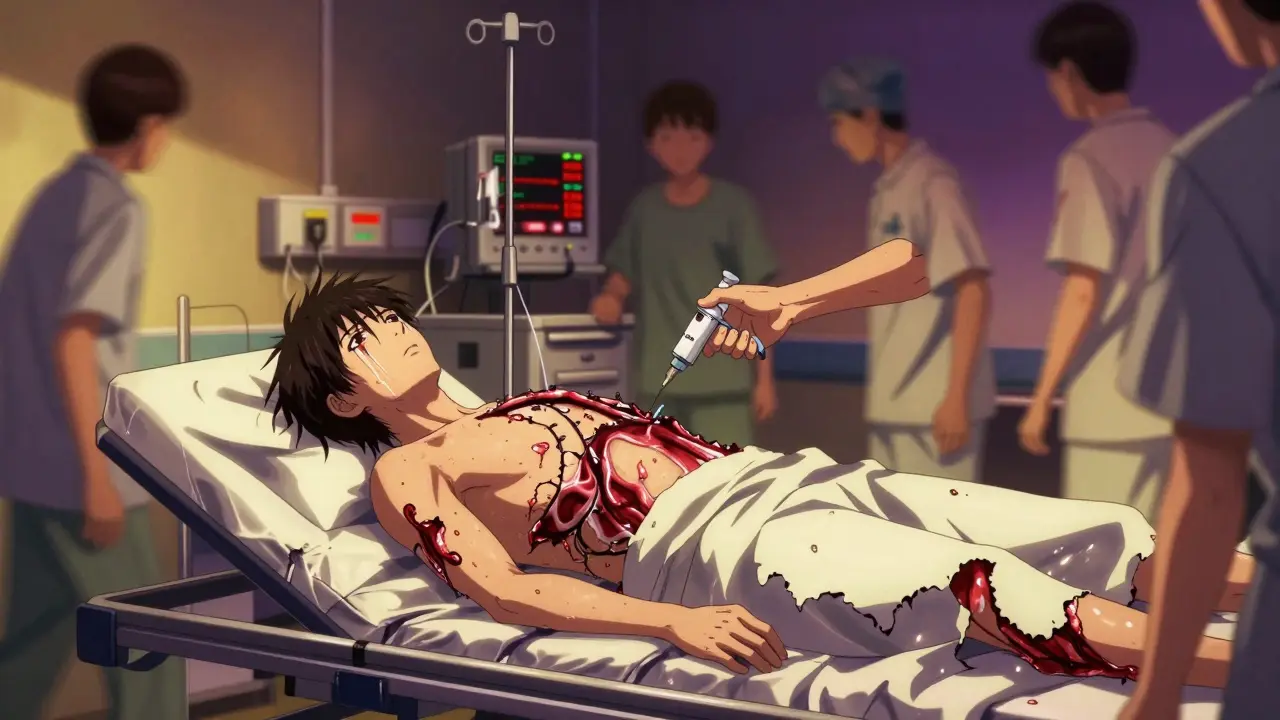
Stevens-Johnson Syndrome and Toxic Epidermal Necrolysis: Skin That Falls Off
Then there’s the other nightmare: skin reactions that look like burns. Stevens-Johnson Syndrome (SJS) and Toxic Epidermal Necrolysis (TEN) are rare but deadly. They usually show up 1-4 weeks after starting a new drug. You get a painful red rash that turns into blisters. Then your skin starts dying. In SJS, less than 10% of your skin detaches. In TEN, it’s over 30%. That’s like a third-degree burn over your whole body. And it’s not just skin. Your eyes, mouth, and genitals can be covered in sores.
Mortality? 10% for SJS. Up to 50% for TEN. Why so high? Because your body loses its barrier. Infection floods in. Fluids leak out. Organs fail. Treatment? Not a cream. Not a pill. You need a burn unit. IV fluids. Pain control. Infection prevention. And you need it yesterday. No ER can handle this alone. You need specialists. And the sooner you get there, the better your odds.
What to Do If You Suspect a Severe Reaction
Here’s the step-by-step when things go wrong:
- Stop the drug. Immediately. Don’t wait for confirmation. Don’t call your doctor first. Just stop taking it.
- Call 911. Say: "I think I’m having a severe drug reaction." Don’t say "I think I’m allergic." Say "severe reaction." That gets you the right response.
- If you have epinephrine, use it. Inject into the outer thigh. Even if you’re not sure. Better to use it and be fine than wait and die.
- Stay still. Lie down. Elevate your legs if you’re dizzy. Don’t stand up. Don’t walk to the car. You could collapse.
- Bring the medicine. Take the pill bottle or vial with you to the hospital. The doctors need to know exactly what you took.
Don’t try to drive yourself. Don’t wait to see if it gets better. This isn’t a cold. This is a medical emergency. Every second you delay reduces your chance of survival.
Who’s at Risk-and How to Prevent It
Anyone can have a severe reaction. But some people are more vulnerable. If you’ve had one before, you’re at higher risk. If you’re on multiple medications, especially older adults, your chances go up. Certain drugs are more likely to cause trouble: antibiotics like penicillin, sulfa drugs, NSAIDs like ibuprofen, seizure meds like carbamazepine, and gout meds like allopurinol.
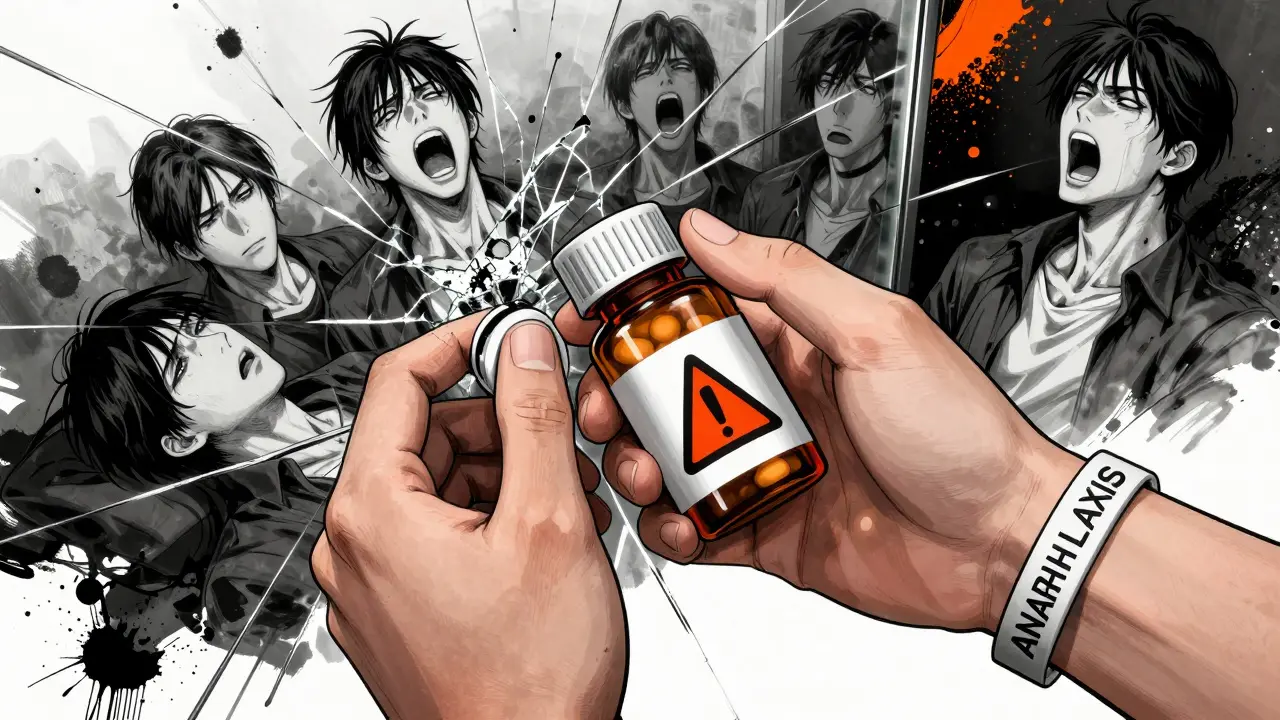
Prevention starts with knowing your history. Tell every doctor, dentist, and pharmacist about every drug reaction you’ve ever had-even if it was years ago. Write it down. Put it in your phone. Tell your family. If you’ve had anaphylaxis, carry epinephrine. Get an allergy bracelet. Ask for a written emergency plan. Some hospitals now use electronic alerts in your chart to flag drug allergies. But you can’t rely on that. You’re your own best advocate.
What Happens After the Emergency
Surviving a severe reaction doesn’t mean you’re done. You’ll need follow-up. An allergist will test you to confirm what caused it. They might do skin tests or blood work. You’ll get a list of drugs to avoid forever. And you’ll learn how to recognize early signs so you never get caught off guard again.
Some people need to carry epinephrine for life. Others may be able to safely take the drug again under strict supervision-only if it’s medically necessary and no alternatives exist. But that’s rare. Most severe reactions mean permanent avoidance.
Reporting your reaction matters too. The FDA and WHO track these events to spot dangerous drugs early. If you had a reaction, report it. Your experience could save someone else’s life.
Myths That Could Kill You
Let’s clear up the dangerous lies:
- Myth: "Benadryl will fix it." Truth: It helps mild itching. It does nothing for anaphylaxis. Delaying epinephrine to give Benadryl increases death risk.
- Myth: "I’ve taken this drug before with no problem." Truth: Reactions can happen anytime-even on the 10th dose. Your immune system changes.
- Myth: "It’s just a rash. I’ll wait and see." Truth: SJS/TEN can start as a mild rash and turn deadly in 24 hours.
- Myth: "I don’t need epinephrine if I feel okay." Truth: Symptoms can crash fast. Epinephrine is a safety net. Use it early.
Final Warning: Don’t Be the One Who Waited
People die from severe drug reactions because they thought it was "just a side effect." They waited for it to pass. They called their doctor instead of 911. They didn’t carry epinephrine. They didn’t know the signs. You don’t have to be one of them.
Know your meds. Know your risks. Know the signs. Carry epinephrine if you’re at risk. Speak up. Act fast. This isn’t about being dramatic. It’s about survival. One decision-when to act-can mean the difference between life and death. Don’t wait for a second opinion. Don’t hope it gets better. If you see the signs, act now. Your life depends on it.






Kuldipsinh Rathod December 27, 2025
I never realized how fast things can go south with meds. My uncle had a reaction to ibuprofen and ended up in ICU-no warning, just a rash that turned into a nightmare. I carry epinephrine now. No excuses.
Joanne Smith December 29, 2025
So let me get this straight-we’re telling people to inject adrenaline into their thigh like it’s a video game power-up… but half the population doesn’t even know what an auto-injector looks like? Welcome to American healthcare, where the cure is free but the education costs your life.
Prasanthi Kontemukkala December 30, 2025
This is such an important post. I work with elderly patients and so many are on five or six meds at once. They don’t know what’s causing what. I always tell them: if something feels *off*, don’t wait. Don’t rationalize it. Don’t blame stress. Just stop the drug and call for help. It’s not overreacting-it’s survival.
SHAKTI BHARDWAJ December 31, 2025
OMG I JUST HAD THIS HAPPEN TO ME AND NOBODY LISTENS!!! I TOOK AMOXICILLIN AND MY FACE SWELLED UP AND I WAS LIKE "OH SHIT" AND THEN I DRANK A GLASS OF WATER AND IT WENT AWAY?? SO LIKE… IS THIS POST JUST FEARMONGERING??
Matthew Ingersoll January 2, 2026
In India, we call this "meds ka asar"-the effect of medicine. But here’s the thing: in rural areas, people take antibiotics like candy. No prescription. No warning. And when it goes wrong, they go to the local chemist, not the hospital. This post should be translated into 10 regional languages and posted on every pharmacy wall.
carissa projo January 3, 2026
There’s a quiet tragedy in how we normalize medical ignorance. We’re raised to trust pills like they’re magic beans-swallow it, wait, hope for the best. But the body doesn’t negotiate. It doesn’t care if you’re busy, scared, or broke. It just reacts. And when it screams, the only thing louder than the alarm is the silence of the system that didn’t prepare you to hear it.
josue robert figueroa salazar January 4, 2026
Benadryl is a placebo with a prescription. Epinephrine is the only thing that doesn’t lie. Stop wasting time.
david jackson January 6, 2026
I read this whole thing and I’m still not sure if I’m allergic to my own shadow. I took Tylenol once in 2018 and felt a little tingly in my left pinky-was that the beginning of SJS? Did I almost die and not know it? Now I’m terrified to take anything. Even water. What if my body thinks water is a drug? What if my tears trigger anaphylaxis? I need to see a specialist. Or a priest. Or both.
Jody Kennedy January 6, 2026
THIS. IS. LIFE. OR DEATH. No cap. If you’re on anything that’s not a vitamin, you need to know this. Share this with your mom. Your dad. Your roommate who takes 12 pills a day. If you don’t, you’re not just being lazy-you’re risking lives. Go. Do it now. I’ll wait.
christian ebongue January 7, 2026
my dr told me to carry epi pen but i lost it and now i just carry benadryl bc its cheaper and i dont wanna spend 500 on something i hope i never use
jesse chen January 7, 2026
Thank you for writing this with such clarity. I’ve had two anaphylactic reactions, and no one ever told me to carry two pens. I only had one. I survived-but I’ve never forgiven myself for not being more prepared. Please, if you’re reading this: get two. Practice with the trainer. Teach your kids. Your partner. Your dog, if they’re trained to press the button. This isn’t fear. This is responsibility.
Alex Ragen January 8, 2026
One cannot help but observe the epistemological crisis of modern pharmacology: the individual is rendered a passive vessel of chemical determinism, while the medical-industrial complex commodifies survival through auto-injectors that cost more than a month’s rent. Are we truly free when our autonomy is contingent upon the purchase of a $600 device? And yet… I carry two. Because logic, like epinephrine, must be administered before the mind can comprehend its necessity.