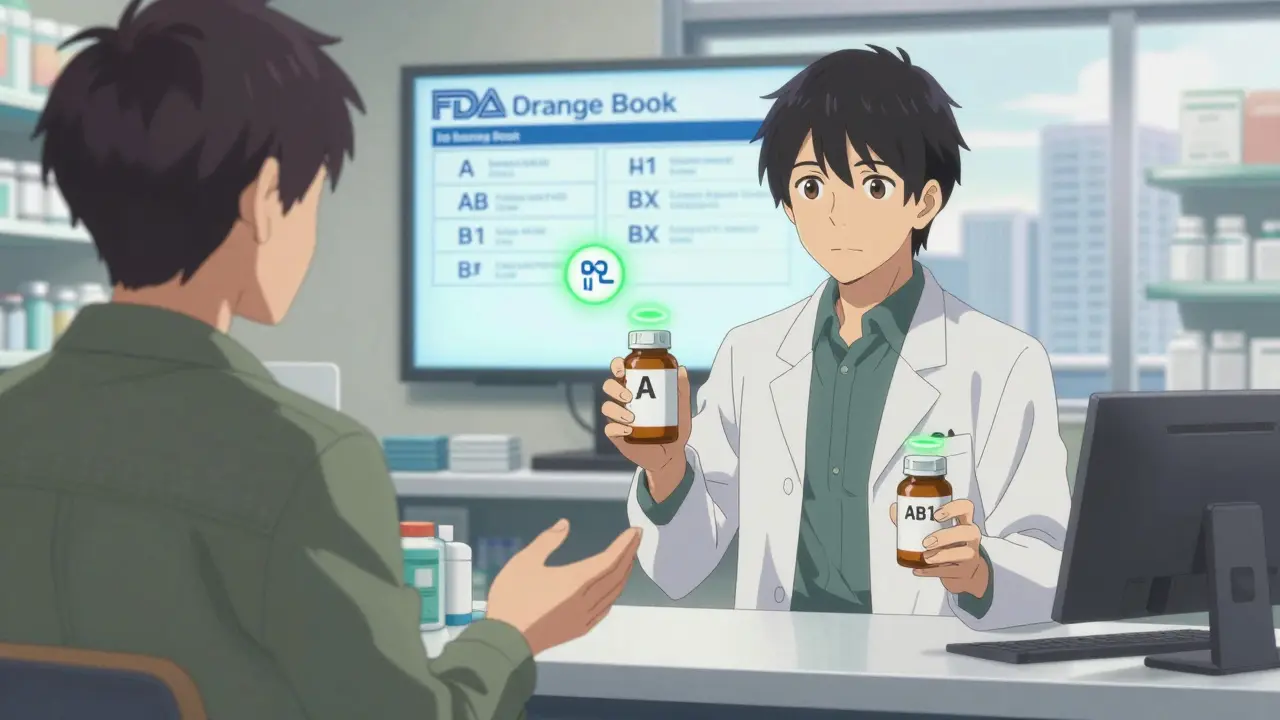
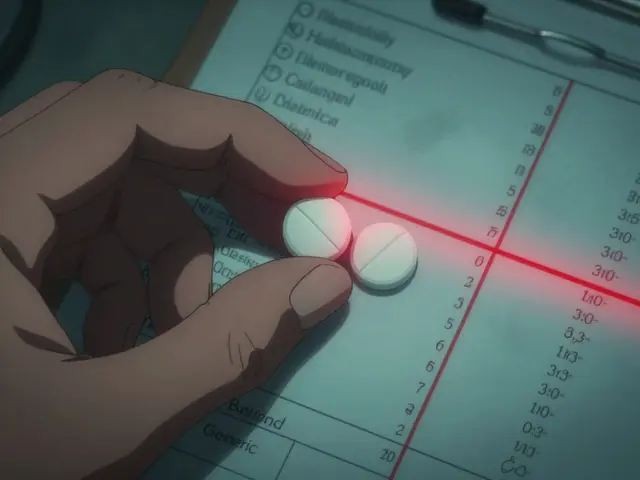
When you pick up a prescription at the pharmacy, you might not realize that the pill in your hand could be a generic version of the brand-name drug your doctor prescribed. But here’s the real question: can you be sure it will work the same way? That’s where therapeutic equivalence codes come in. These aren’t just letters and numbers on a label-they’re the FDA’s official way of telling pharmacists and doctors which generic drugs can be swapped in without risking your health or treatment outcome.
What therapeutic equivalence really means
Therapeutic equivalence isn’t about matching price or packaging. It’s about matching clinical results. The FDA defines it this way: two drugs are therapeutically equivalent if they have the same active ingredient, strength, dosage form, and route of administration, and they produce the same clinical effect and safety profile when used under the same conditions. That means if you switch from the brand-name drug to a generic with the same therapeutic equivalence code, you should expect the same results-no surprises, no drop in effectiveness, no increase in side effects.This system was created after the Hatch-Waxman Act of 1984, which aimed to speed up access to cheaper generics without compromising safety. Before that, many generics entered the market with little proof they worked like the original. Today, the FDA evaluates every generic drug using strict standards, and assigns a code based on that evaluation. This code appears in the Approved Drug Products with Therapeutic Equivalence Evaluations, commonly called the Orange Book. It’s updated monthly and used daily by pharmacists across the country.
The ABCs of TE codes
The codes are simple but packed with meaning. The first letter tells you the big picture:- A = Therapeutically equivalent. This is the gold standard. You can substitute this generic without hesitation.
- B = Not yet determined to be equivalent. These need more scrutiny. Don’t assume they’re unsafe-just that the evidence isn’t clear enough for automatic substitution.
But it doesn’t stop there. After the first letter, you’ll often see numbers or extra letters. For example:
- AB = Bioequivalent to the reference drug. This is the most common rating for simple oral tablets.
- AB1, AB2, AB3 = These mean there are multiple brand-name drugs used as reference points. AB1 means it matches the first reference listed, AB2 the second, and so on. If you’re switching between generics, you need to match the AB number.
- BC = Extended-release products with potential bioequivalence issues.
- BT = Topical products (like creams or gels) where skin absorption is hard to measure.
- BN = Inhalers or nebulizer products.
- BX = Not enough data to make a call. These are often new or complex products still under review.
Here’s the key takeaway: Only products with an 'A' code are automatically substitutable under most state laws. If you see a 'B', it doesn’t mean the drug doesn’t work-it means the FDA hasn’t confirmed it’s interchangeable with the brand. That’s why pharmacists double-check before swapping.
Why some generics get 'B' codes-even if they seem identical
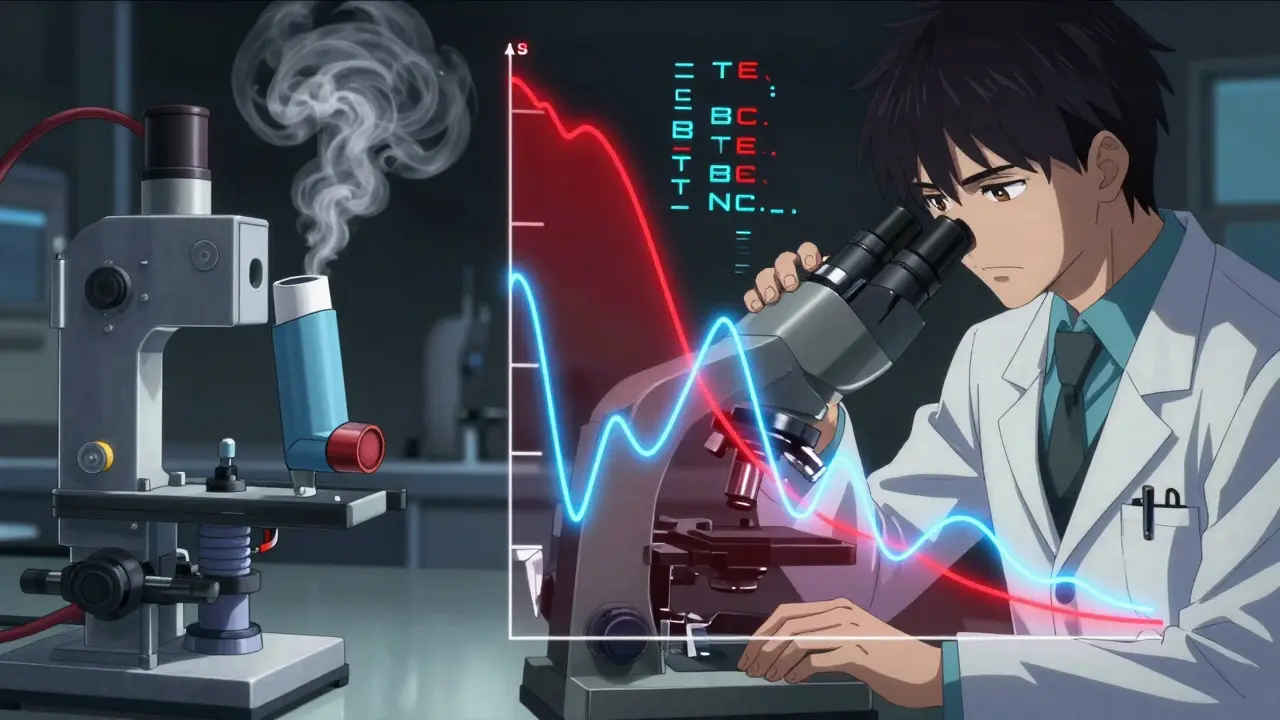
You might wonder: if two pills have the same ingredients and strength, why isn’t one automatically equal to the other? The answer lies in how the drug behaves in your body.For simple tablets, bioequivalence is easy to prove. You give volunteers the brand and the generic, measure blood levels over time, and if the curves match within strict limits, it’s an 'A'. But for complex products-like inhalers, injectables, or topical creams-the body doesn’t absorb the drug the same way. A cream might look identical, but if it doesn’t penetrate the skin at the same rate, it won’t work the same.
That’s why products like corticosteroid creams, insulin inhalers, or certain arthritis injections often get 'B' codes. The FDA doesn’t have reliable tests to prove they’re interchangeable. A 2021 study in the AAPS Journal found that over 60% of topical generics received 'B' ratings, even though they were chemically identical to the brand. This isn’t a flaw in the product-it’s a flaw in the current testing method.
And here’s the catch: some 'B'-rated products may be just as effective. But because the FDA can’t confirm it, pharmacists are legally required to hold off on substitution unless the prescriber says it’s okay. This causes confusion. A 2022 AMA survey showed that 42% of physicians didn’t understand how to interpret 'B' codes. Some refused to let pharmacists substitute them, even when the patient had been stable on the generic for years.
How pharmacists use the Orange Book every day
For pharmacists, the Orange Book isn’t a reference guide-it’s a daily tool. Every time a generic prescription comes in, they check the TE code. According to a 2022 survey by the National Community Pharmacists Association, 87% of pharmacists rely on the Orange Book weekly. They spend an average of 2.7 minutes per prescription verifying substitution eligibility.That might sound like a lot, but it saves time overall. In 2023, the American Pharmacists Association estimated that proper use of TE codes saved the U.S. healthcare system $1.2 billion annually by ensuring the right generics were used without unnecessary brand switches. States have laws that back this up: 49 out of 50 allow pharmacists to substitute 'A'-rated generics without asking the doctor. Only in New York do you need explicit permission for any substitution.
But things get messy with 'B' codes. Thirty-eight states require pharmacists to notify the prescriber if they want to substitute a 'B'-rated product. Some pharmacists will call the doctor. Others will wait for the patient to return with a new prescription. It adds friction-but it’s designed to protect patients.
What the FDA is doing to fix the gaps
The system works well for simple pills, but it’s struggling with modern medicines. Between 2018 and 2022, the number of 'B'-rated applications for complex products jumped 22%. That’s because more drugs are being developed as inhalers, patches, and injectables-products that are harder to test.In 2022, the FDA released a draft guidance proposing changes. They’re now working on Product-Specific Guidances (PSGs)-over 1,850 as of August 2023-that give manufacturers detailed instructions on how to prove equivalence for each specific drug. These aren’t one-size-fits-all rules. They’re tailored to each medicine’s chemistry and delivery method.
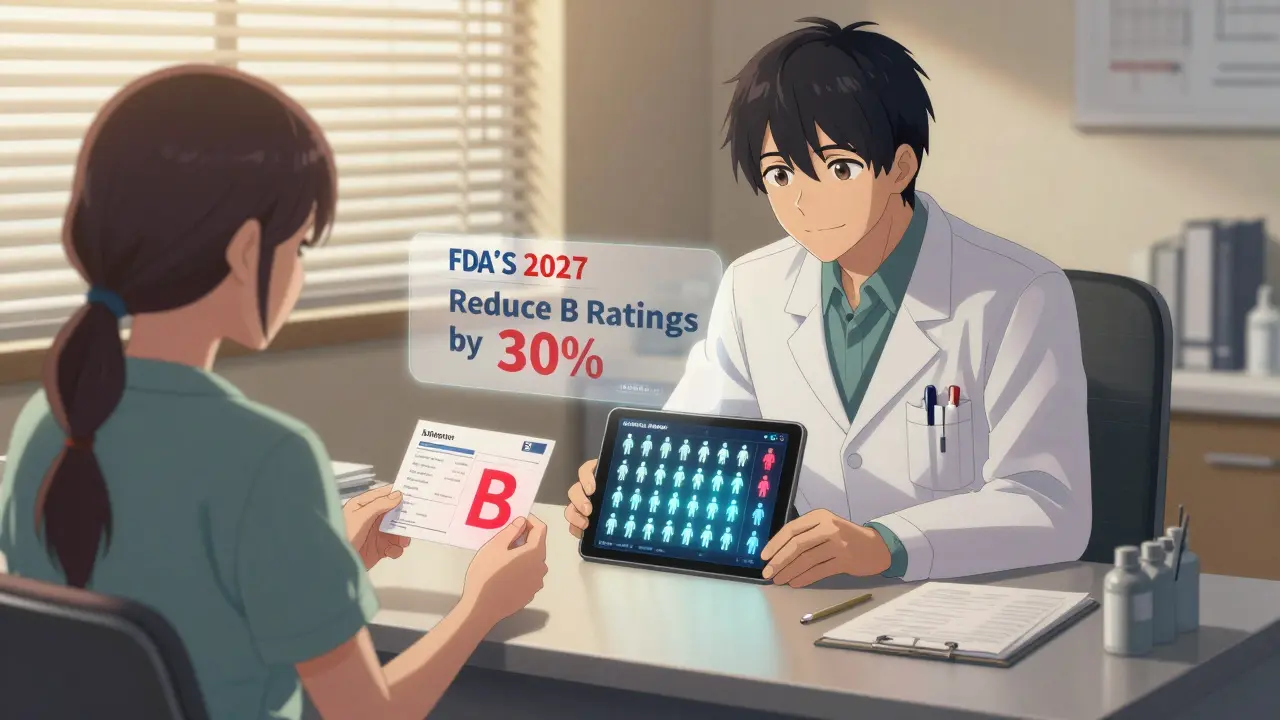
The goal? Reduce 'B' ratings for complex generics by 30% by 2027. That means more accurate codes, fewer unnecessary restrictions, and more access to affordable alternatives. The FDA is also exploring real-world data-like patient outcomes from electronic health records-to supplement lab tests. If a generic has been used safely by thousands of patients for years, maybe that’s evidence enough.
What this means for you as a patient
If you’re on a generic drug and it’s working fine, don’t panic if your pharmacist switches it to another generic. As long as the TE code stays 'A', it’s safe. You don’t need to ask for the brand unless you notice a change in how you feel.But if you’re prescribed a 'B'-rated product, ask your doctor: Is this the only option? Is there an 'A'-rated alternative? Some patients end up paying more because their prescriber doesn’t realize a cheaper, equivalent option exists. On the flip side, if you’ve been on a 'B'-rated drug for months with no issues, don’t assume it’s unsafe. Sometimes, the code reflects a lack of testing-not a lack of safety.
The bottom line: therapeutic equivalence codes exist to give you access to affordable drugs without compromising your care. They’re not perfect, but they’re the best system we have. And they’re getting better.
Are all generic drugs assigned a therapeutic equivalence code?
No. Only multisource prescription drugs-that is, generics with multiple manufacturers-get TE codes. Single-source generics (made by only one company) and over-the-counter (OTC) drugs are not rated. Also, brand-name drugs are listed as Reference Listed Drugs (RLDs) but don’t receive TE codes themselves.
Can I trust a generic drug with an 'A' rating?
Yes. An 'A' rating means the FDA has confirmed the generic is pharmaceutically and bioequivalent to the brand. Since the system began, there have been no documented cases of therapeutic failure caused by switching to an FDA-approved 'A'-rated generic. Millions of patients rely on these daily.
Why do some generics have different AB numbers (like AB1 vs AB2)?
This happens when there’s more than one brand-name drug used as a reference. For example, if two different brands of a drug were approved years apart, each becomes a separate reference. Generics are tested against each one, and assigned AB1 if they match the first reference, AB2 if they match the second. You can only substitute between generics with the same AB number.
Do state laws affect how TE codes are used?
Yes. All 50 states require pharmacists to check the Orange Book before substituting. Forty-nine allow automatic substitution of 'A'-rated generics without doctor approval. But for 'B'-rated drugs, 38 states require the pharmacist to notify the prescriber before switching. Some states even require written consent from the patient.
Is the FDA planning to change how TE codes are assigned?
Yes. The FDA is updating its methods, especially for complex products like inhalers, topical creams, and injectables. They’re expanding Product-Specific Guidances and exploring the use of real-world patient data to supplement lab tests. The goal is to reduce 'B' ratings for these products by 30% by 2027, making more affordable alternatives available.





tamilan Nadar March 16, 2026
Interesting read. In India, we call generics 'copy drugs' - and everyone uses them. No one checks the Orange Book here, but somehow, no one dies either. The system works because people trust the manufacturers, not the code. Maybe the FDA overcomplicates things with AB1, AB2 - in rural India, we just ask, 'Does it work?' If yes, we keep taking it. 🌏
Emma Deasy March 17, 2026
Let me just say this: THE FDA IS NOT YOUR FRIEND. THEY’RE A CORPORATE PUPPET. Did you know? The Orange Book is written by lobbyists who used to work for Pfizer! AB ratings? They’re just bribes in disguise! I’ve seen patients switch from brand to 'AB1' generic - and then they had seizures! Coincidence? I think NOT! Someone’s hiding something - and it’s not the generics. It’s the system!
Sally Lloyd March 19, 2026
Okay, but have you ever noticed that the same generic from the same manufacturer sometimes works differently? I’ve been on the same prescription for years. Last refill? I felt dizzy. Next refill? Fine. The code says AB1. But my body says otherwise. I don’t trust the letters. I trust my symptoms. And I always ask for the original - even if it costs $20 more. Better safe than sorry.
Adam M March 21, 2026
B codes are just FDA’s way of saying 'we don’t feel like testing this.'
Noluthando Devour Mamabolo March 23, 2026
As a pharmacist in Cape Town, I can confirm: B-rated topicals are a nightmare. Patients come in with cortisone cream labeled 'B' - they’ve been using it for 3 years. No issues. But we can’t swap it. Legal liability. So we call the prescriber. Again. And again. 😩 Also - emoji time: 🤦♀️💊
Leah Dobbin March 24, 2026
How quaint. The FDA still thinks bioequivalence is about blood curves in 12 healthy young men. Real-world pharmacokinetics? Patient-reported outcomes? No. Just lab rats and $500,000 trials. Meanwhile, in Europe, they use real-world data from 500,000 patients to approve generics. Here? We’re stuck in 1984. How… colonial.
Ali Hughey March 24, 2026
THEY’RE LYING TO US!!! I’ve been following this for DECADES. The FDA doesn’t test generics properly. They rely on industry-funded studies. And the Orange Book? It’s a graveyard of hidden dangers. I know a guy - his wife died after switching to an 'AB1' generic. The autopsy? Toxic metabolites. But the FDA says 'no correlation.' That’s because they don’t test for it! 🔥🚨 #FDAcorruption #GenericDeathTrap
Alex MC March 24, 2026
This was actually really well explained. I used to be skeptical about generics too - until I saw how much money my mom saved switching to AB-rated ones. She’s on 6 meds now. All generics. No side effects. No issues. I think the system works better than people give it credit for. The B codes? Yeah, they’re frustrating - but they exist for a reason. Maybe the real issue is that we expect every pill to be perfect. Medicine’s messy. The FDA’s trying.
rakesh sabharwal March 25, 2026
How is it that a country with 300 million people still relies on a 1984 law to regulate modern biologics? The Orange Book is a relic. AB1? AB2? Please. This is 2024. We have AI-driven pharmacokinetic modeling. We have real-world EHR data. Yet we’re still using blood concentration curves from 12 white males? This isn’t science - it’s bureaucratic theater. And don’t get me started on the 'A' rating for inhalers - that’s just fraud dressed up as regulation.
Rosemary Chude-Sokei March 27, 2026
Thank you for this thoughtful breakdown. As someone who works in clinical pharmacy, I appreciate the nuance here. The system isn’t perfect - but it’s the most rigorous we’ve ever had. The 'B' codes? They’re not a failure. They’re a caution. And pharmacists aren’t just code-checkers - we’re patient advocates. When a patient asks why we didn’t substitute, we explain it. Not because we’re slow - but because we care. That’s the real story behind the Orange Book.