
Theophylline-Ciprofloxacin Interaction Calculator
How This Calculator Works
Ciprofloxacin can increase theophylline levels by 40-80%. This calculator shows your estimated theophylline level after taking ciprofloxacin.
Theophylline has a narrow therapeutic range: 10-20 mg/L is therapeutic. Above 20 mg/L, side effects begin. 25-30 mg/L can cause dangerous heart rhythms. Above 30 mg/L, seizures become possible.
Imagine you’re on the right medicine for your COPD - your theophylline keeps your airways open, and you’re feeling stable. Then you get a bad cough. Your doctor prescribes ciprofloxacin to fight the infection. Sounds simple, right? But here’s the hidden risk: ciprofloxacin can turn your lifesaving theophylline into a poison.
What’s Really Happening in Your Body?
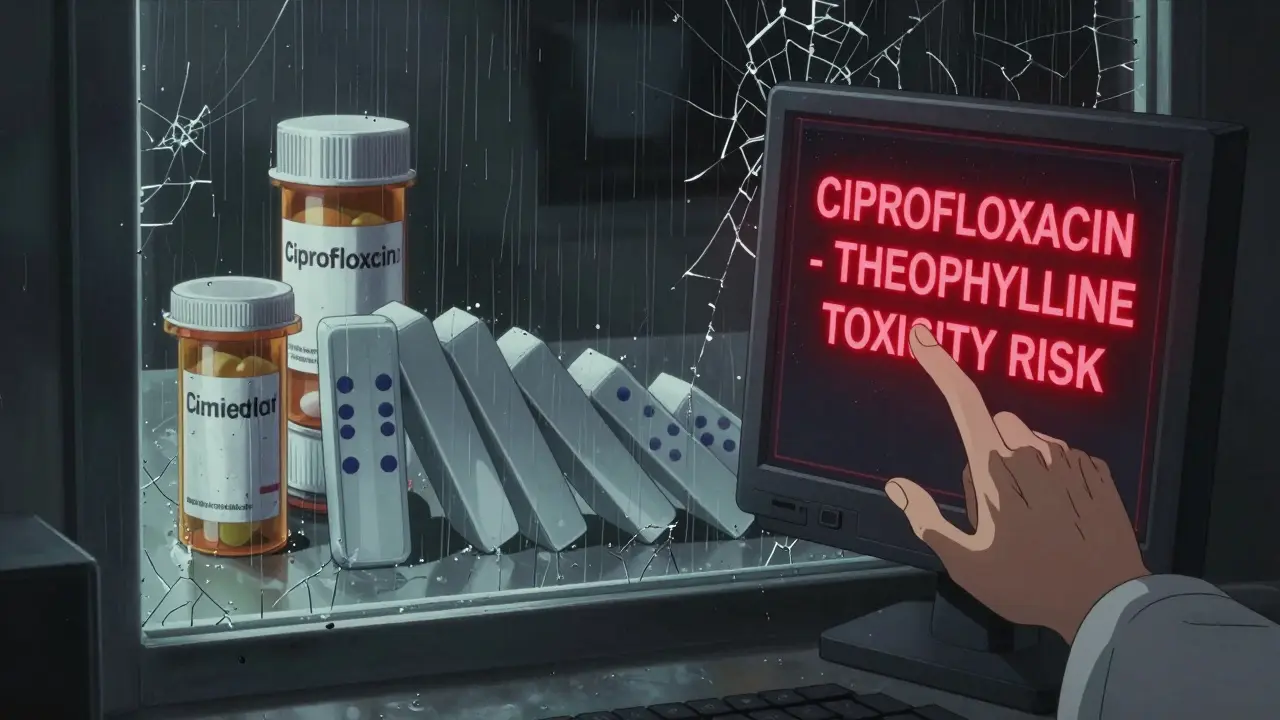
Ciprofloxacin doesn’t just kill bacteria. It also shuts down a key liver enzyme called CYP1A2. This enzyme is the main way your body breaks down theophylline. When ciprofloxacin blocks it, theophylline doesn’t get cleared from your system. It builds up. Fast.
Theophylline has a razor-thin safety margin. A level between 10 and 20 mg/L is therapeutic. Go over 20 mg/L, and you start seeing side effects. At 25-30 mg/L, your heart can go into dangerous rhythms. Above 30 mg/L, seizures become a real possibility - even in people who’ve never had one before.
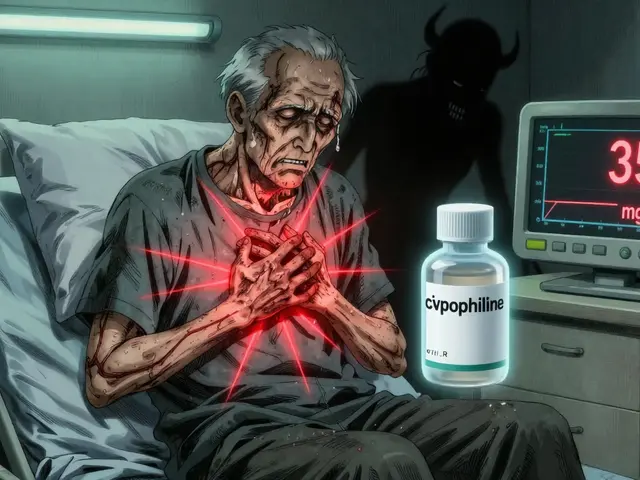
Studies show ciprofloxacin can boost theophylline levels by 40% to 80%. That’s not a small bump. That’s the difference between safe and life-threatening. In one case from 1990, a 93-year-old woman had a grand mal seizure after starting ciprofloxacin. Her theophylline level? Over 35 mg/L. She had no history of epilepsy. Just a common antibiotic combo.
It’s Not Just a Theory - People Are Getting Hospitalized
This isn’t a rare lab finding. It’s a real-world problem. A 2011 study tracked over 77,000 older adults in Ontario who were taking theophylline. Of the 180 who were hospitalized for theophylline toxicity, nearly twice as many had been prescribed ciprofloxacin. The odds? 1.86 times higher. And it wasn’t just any antibiotic. Levofloxacin? No spike in risk. Amoxicillin? Safe. Cefuroxime? Fine.
That’s the kicker: this interaction is specific to ciprofloxacin. Other fluoroquinolones like levofloxacin and moxifloxacin barely touch theophylline metabolism. So why does ciprofloxacin keep getting prescribed?
Because doctors know the risks - but sometimes they override the warnings. A 2017 study found that nearly 7 out of 10 electronic alerts about this interaction were ignored. Why? 78% of the time, it was because the doctor thought the infection was urgent. Another 12% said, “The patient took it before and was fine.” But here’s the problem: your body changes. Your liver slows down with age. Your kidneys aren’t what they used to be. What was safe last year might kill you this year.
Who’s Most at Risk?
If you’re over 65, you’re already at higher risk. Your liver clears theophylline slower to begin with. Add ciprofloxacin, and clearance drops by 45% on average. That’s why guidelines say: reduce the theophylline dose by 30-50% when starting ciprofloxacin. But even that’s not always enough.
Older adults often take multiple medications. They might be on a diuretic, a beta-blocker, or even a common antacid like cimetidine - all of which can also interfere with theophylline. Add ciprofloxacin on top? You’re stacking risks.
And it’s not just the elderly. People with liver disease, smokers (who metabolize theophylline faster), and those with genetic variants in the CYP1A2 enzyme are also more vulnerable. New research from the University of Toronto is looking at a specific gene variant - CYP1A2*1F - that makes people 65% more sensitive to this interaction. Imagine being genetically wired to react badly to a common antibiotic. That’s not hypothetical anymore.
What Should You Do If You’re on Theophylline?
If you’re taking theophylline for asthma or COPD, here’s what you need to know:
- Never start ciprofloxacin without checking your theophylline level. Get a blood test before the first dose.
- Ask your doctor for an alternative. Amoxicillin-clavulanate, azithromycin, or doxycycline are safer for respiratory infections in this group.
- If ciprofloxacin is unavoidable, your theophylline dose must be cut by 30-50%. Don’t guess - let your pharmacist or doctor calculate it.
- Get your theophylline level checked again within 24-48 hours after starting ciprofloxacin. Levels can spike fast.
- Know the warning signs: Nausea, vomiting, rapid heartbeat, jitteriness, or trouble sleeping. These aren’t just “side effects.” They’re red flags.
And if you feel like your heart is racing or you’re having tremors or confusion - go to the ER. Don’t wait. Theophylline toxicity doesn’t wait.
What Are the Safer Antibiotic Options?
You don’t have to risk your life just because you have a chest infection. Here are antibiotics that won’t mess with your theophylline:
- Amoxicillin-clavulanate - First-line for bacterial bronchitis and pneumonia. No interaction.
- Azithromycin - Good for atypical infections. Minimal effect on CYP1A2.
- Doxycycline - Safe for respiratory infections, especially if you’re allergic to penicillin.
- Levofloxacin or Moxifloxacin - If you absolutely need a fluoroquinolone, these are safer. Levofloxacin raises theophylline by only 10-15% - not enough to be dangerous if monitored.
And here’s the thing: ciprofloxacin isn’t even the best choice for most lung infections. Guidelines from the American Thoracic Society and the American College of Chest Physicians say to avoid it in theophylline users - period. So if your doctor reaches for ciprofloxacin, ask: “Is there a safer option?”

Why Is This Still Happening in 2026?
It’s been over 35 years since the first case was reported. The FDA added a black box warning in 1994. Guidelines have been updated repeatedly. Yet in 2018, over 12% of older adults on theophylline were still getting ciprofloxacin. In the U.S., that’s about 4,200 hospitalizations a year - all preventable.
Why? Because prescribing habits die hard. Because antibiotics are fast. Because patients expect a script. Because electronic alerts are annoying and get turned off.
But here’s the truth: no infection is worth a seizure or cardiac arrest. And no doctor should assume “it’s fine because it worked before.” Your body isn’t the same as it was last year. Your liver doesn’t work the same way it did in your 40s.
What’s Next? Personalized Medicine Could Help
Research is moving toward precision dosing. Scientists are testing whether genetic testing for CYP1A2 variants can predict who’s most at risk. If you have the *1F variant, you might need a 60% dose reduction - not 30%. That’s the future: not just avoiding the combo, but tailoring the dose to your genes.
Until then, the rules are simple: if you’re on theophylline, don’t take ciprofloxacin unless you’ve had your levels checked, your dose adjusted, and you’re being watched closely.
Can I take ciprofloxacin if I’m on theophylline?
It’s not recommended. Ciprofloxacin can cause dangerous buildup of theophylline, leading to seizures, heart rhythm problems, or even death. If you must take it, your theophylline dose must be reduced by 30-50%, your blood levels must be checked within 24-48 hours, and you need to be monitored for symptoms like nausea, rapid heartbeat, or confusion. Safer antibiotics like azithromycin or amoxicillin-clavulanate are preferred.
What are the early signs of theophylline toxicity?
Early signs include nausea, vomiting, upset stomach, headache, restlessness, trembling, and a fast or irregular heartbeat. These symptoms can start within hours of taking ciprofloxacin. Don’t wait for seizures or collapse - if you feel off, get checked immediately. Theophylline levels can rise quickly and dangerously.
Why is ciprofloxacin still prescribed to people on theophylline?
Many clinicians override electronic alerts because they think the infection is urgent or assume the patient tolerated it in the past. But aging, liver changes, and other medications alter how your body handles drugs. What was safe five years ago may be deadly now. This interaction is well-documented, yet human error and habit keep it happening.
Are all fluoroquinolones equally dangerous with theophylline?
No. Ciprofloxacin is the worst offender, increasing theophylline levels by 40-80%. Levofloxacin and moxifloxacin cause only a 10-15% increase, which is usually not dangerous if levels are monitored. But ciprofloxacin remains the most common cause of theophylline toxicity among antibiotics. Avoid it unless no other option exists.
How often should theophylline levels be checked when taking ciprofloxacin?
Check the level right before starting ciprofloxacin, then again within 24-48 hours after the first dose. Levels can rise rapidly. Continue monitoring every few days until ciprofloxacin is stopped, and then again a few days after stopping, since levels may take time to normalize. Don’t assume one test is enough.
Can I just lower my theophylline dose on my own?
No. Never adjust your theophylline dose without medical supervision. Too little can cause your breathing to worsen. Too much can be fatal. Only a doctor or pharmacist, with access to your blood levels and medical history, can safely adjust the dose. Always consult your provider before making any changes.









shivam utkresth January 26, 2026
Bro, this is wild. I’m in India and we just throw cipro around like candy. My uncle was on theophylline for COPD, doc gave him cipro for a cough - he ended up in the ER with heart palpitations. No one even checked his levels. We need better awareness here. This isn’t just a US problem.
Pharmacists need to be louder. Like, scream it from the rooftops. Cipro + theophylline = bad vibes. Period.
John Wippler January 28, 2026
It’s not just about the drug interaction - it’s about how we treat aging bodies like they’re interchangeable parts. We give the same scripts to 65-year-olds as we do to 35-year-olds and then act shocked when things go sideways.
The liver isn’t a factory that runs forever. It slows down. It gets tired. It forgets how to clean up after itself. And we keep feeding it poison because it’s easier than thinking.
This isn’t medicine. It’s negligence dressed in white coats.
Kipper Pickens January 29, 2026
Pharmacokinetic interaction via CYP1A2 inhibition is well-documented in the literature, with ciprofloxacin exhibiting a Ki value of approximately 2.1 μM, significantly lower than levofloxacin’s 18.7 μM - indicating higher affinity for the enzyme.
Therapeutic drug monitoring (TDM) of theophylline is mandatory in polypharmacy elderly patients, particularly when fluoroquinolones are introduced. The AUC increase can reach 78% per FDA pharmacovigilance data from 2019.
Also, concomitant use of proton pump inhibitors like omeprazole may further reduce clearance - a triple whammy.
Aurelie L. January 30, 2026
My dad died from this.
Joanna Domżalska January 31, 2026
So we’re just supposed to panic every time someone gets an antibiotic? What’s next, are we gonna ban all meds because one guy got unlucky?
People die from coffee overdoses too. Should we stop drinking it? This is fearmongering dressed up as science.
Faisal Mohamed February 2, 2026
bro this is wild 🤯
so like... if you got the CYP1A2*1F variant, you’re basically a walking time bomb with cipro? 😳
we need genetic screening for all COPD patients like... ASAP. like, why isn’t this in the EHR already? 🤔
also, why is cipro even still a thing?? 🤡
Josh josh February 4, 2026
this is insane i had a friend on theo and got cipro and he was fine but then again he was 28 and a smoker so maybe his liver was on fire lmao
bella nash February 5, 2026
It is imperative to underscore the clinical significance of this pharmacodynamic interaction, as it represents a preventable adverse drug event with potentially fatal consequences. The pharmacokinetic alteration induced by ciprofloxacin necessitates rigorous therapeutic drug monitoring, particularly in geriatric populations exhibiting diminished hepatic metabolic capacity.
Geoff Miskinis February 6, 2026
Let’s be honest - most of these ‘guidelines’ are written by academics who’ve never seen a real patient in their life. The real world doesn’t have time for 48-hour blood tests. Sometimes you need to kill the infection before the patient dies of pneumonia.
And yes, some of us have been prescribing this combo for decades. Most patients are fine. The outliers get headlines. That’s not medicine - that’s performative caution.
Sally Dalton February 6, 2026
OMG I’m so glad someone finally said this. My mom had this happen last year - she got cipro and started shaking like crazy and couldn’t sleep. We rushed her in and they found her theo level was 37. She cried for hours because she felt so stupid for not knowing.
Doctors don’t explain this stuff. They just say ‘take this.’ We need better communication. Like, seriously - why aren’t there warning stickers on the pill bottles? 🥺
Betty Bomber February 7, 2026
my grandma’s on theo and her doc gave her cipro last year. she’s fine. so maybe it’s not that big a deal? idk. just saying.
Mohammed Rizvi February 7, 2026
So let me get this straight - we have a drug combo that’s been killing people since the 80s, and the only thing keeping it alive is doctors being lazy and patients not asking questions?
Meanwhile, azithromycin is right there, cheap, safe, and doesn’t turn your heart into a drum solo.
It’s not rocket science. It’s just… human laziness wrapped in a white coat.
eric fert February 8, 2026
Look, I get it. Theophylline is a finicky beast. Ciprofloxacin is a blunt instrument. But let’s not pretend this is some groundbreaking revelation. This has been in every pharmacology textbook since 1990.
The real issue? The healthcare system is broken. Doctors are overworked. Pharmacies are understaffed. Patients don’t read the pamphlets. And everyone’s too tired to double-check.
So we get this. Again. And again. And again.
It’s not the drugs. It’s the system. And until we fix that, no amount of ‘guidelines’ or ‘alerts’ will stop the next 93-year-old from seizing in her kitchen because her doctor clicked ‘ignore’ one too many times.
Ryan W February 9, 2026
Why are we even talking about this? In America, we have the best medical system in the world. If you can’t handle a simple antibiotic interaction, maybe you shouldn’t be on theophylline at all.
Other countries have this problem? That’s why they’re falling behind. We don’t need more rules - we need people to stop being so fragile.