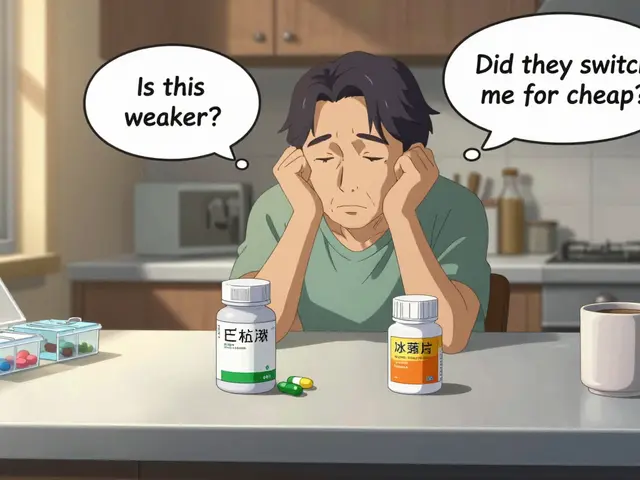
Imagine you have just started a new medication for high blood pressure. You feel optimistic about taking control of your health. But after two weeks, you notice persistent nausea or dizziness. Do you push through it, or do you quietly stop taking the pill? If you chose the latter, you are not alone. In fact, you are part of a massive global trend where medication adherence is defined as the voluntary cooperation of the patient in taking drugs or medicine as prescribed, including timing, dosage, and frequency. According to the National Library of Medicine's Medical Subject Headings (MeSH) database 2025 descriptor, this definition sounds simple, but the reality is complex.
The World Health Organization’s landmark 2003 report by Sabaté established that approximately 30% to 50% of patients do not take their medications as recommended. Nearly two decades later, current data from 2025 confirms this troubling statistic remains largely unchanged. U.S. Pharmacist (2025) reports that adherence to chronic medications hovers around 50%, while ISPOR’s May 2025 report states nonadherence prevalence can be as high as 50%. The WHO emphasizes that improving adherence may have a greater impact on population health than any specific medical treatment. Yet, side effects remain a critical, underreported driver of why people stop their meds.
The Hidden Cost of Skipping Pills
When we talk about not taking our medicine, we often think of forgetfulness. But side effects are a much more insidious barrier. AssistRx.com (2025) identifies that even those who value their treatment plan may resist adherence due to fears about drug interactions or side effects. This fear is not unfounded. Frontiers in Pharmacology (2025) provides a nuanced view: approximately one-fifth of patients do not initiate treatment at all. Of those who start, 30% to 50% do not implement the treatment as prescribed. Over long follow-up periods in some conditions, 80% to 100% of patients discontinue entirely, with side effects being a primary driver.
The consequences of this drop-off are severe. Medication nonadherence accounts for up to 50% of treatment failures, approximately 125,000 deaths annually, and up to 25% of hospitalizations in the United States. PharmDLive.com (2025) notes that non-adherence contributes to up to 69% of medication-related hospitalizations. The economic burden is equally staggering. ISPOR reports annual adjusted costs per person ranging from $949 to $44,190 (in 2015 US$). For individuals, the cost isn't just financial; it's measured in lost quality of life and preventable health crises.
| Stage | Definition | Non-Adherence Rate / Statistic | Primary Driver |
|---|---|---|---|
| Initiation | Filling the first prescription | 4% - 31% fail to fill | Cost, Fear, Complexity |
| Implementation | Taking meds as prescribed initially | 30% - 50% deviate | Schedule, Side Effects |
| Persistence | Continuing treatment long-term | 80% - 100% discontinue in some cases | Chronic Side Effects, Lack of Relief |
Why Side Effects Break the Habit
Let’s look at the progression. Data from the a:care congress 2024 reveals specific patterns: for every 100 prescriptions written, only 50% to 70% are filled. Of those, 48% to 66% are picked up. Only 25% to 30% are taken as prescribed, and a mere 15% to 20% are refilled as directed. Side effects significantly contribute to this dramatic drop-off at later stages. When a medication causes discomfort, the immediate benefit of feeling better is outweighed by the daily annoyance of nausea, fatigue, or brain fog.
This relationship is particularly pronounced in mental health treatment. One study cited by AssistRx found that patients with depression were twice as likely to skip treatment compared to those without symptoms. Skipping mental health medications often correlates with decreased adherence across all prescribed therapies. If you stop your antidepressant because of sexual side effects, you might also stop taking your cholesterol medication. The domino effect is real.
Furthermore, there is a concerning gap in documentation. The British Journal of Clinical Pharmacology (2025) reveals that pharmacists were least likely to document nonadherence (52.0%) compared with physicians (70%) and nurses (85%). This lack of documentation means healthcare providers often don’t know *why* a patient stopped taking their meds. They assume forgetfulness, when the root cause was actually an unmanaged side effect.

Proven Strategies to Manage Side Effects
You don’t have to suffer in silence. There are effective ways to manage side effects and stay on track. The most promising interventions are data-driven, clinically intelligent, and digitally connected. Here is how you can approach this:
- Engage Your Pharmacist Early: Pharmacist-led interventions have proven particularly effective. PharmDLive reports up to a 40% increase in adherence with pharmacist-led interventions. They can suggest timing changes (e.g., taking a med with food) or alternative formulations.
- Track Your Symptoms: Keep a simple log. Note when side effects occur relative to your dose. This data helps your doctor distinguish between temporary adjustment issues and permanent intolerance.
- Simplify Your Regimen: Complex schedules lead to errors. Ask if once-daily dosing is possible. Use pill organizers or smartphone apps to reduce cognitive load.
- Address Cost Concerns: Sometimes "side effects" are confused with cost barriers. Offer cost-transparency and access pathways. If a brand-name drug causes issues, ask about generics or therapeutic alternatives.
U.S. Pharmacist (2025) provides detailed intervention efficacy data, showing that face-to-face methods were most successful (83%), followed by hospital discharge (67%), clinic-based interventions (47%), and phone calls (38%). Notably, interventions specifically addressing side effect management showed improved outcomes. One study demonstrated that significantly higher adherence was apparent in the collaborative intervention group compared with usual care (89.3% vs. 73.9%, P = .003) when pharmacists worked with patients to manage side effects.

The Role of Technology and AI
As we move into 2026, technology is playing a bigger role. AssistRx.com (2025) states that AI can improve adherence challenges through time-sensitive medication management and personalized side effect mitigation strategies. Imagine an app that predicts when you are likely to experience a side effect based on your history and alerts you to take a mitigating action, like drinking water or eating a snack. This is the future of personalized adherence interventions.
Medicare Star Ratings provide a critical quality metric directly tied to adherence. JMCP (2025) reports that among plans achieving 5 stars on any adherence measure, 85% to 90% of them achieved at least a 4-star overall rating. This demonstrates the systemic importance of adherence. Healthcare systems are increasingly shifting toward value-based care models, where medication adherence, including side effect management, has become a critical performance metric impacting CMS Star Ratings, HEDIS metrics, and payer contracts.
Building a Sustainable Plan
To stay on track, you need a plan that fits your life. Typically, adherence rates of 80% or more are needed for optimal therapeutic efficacy. If you are struggling, remember that nonadherence is not a moral failing; it is a clinical issue. Combined patient and physician incentives have demonstrated significantly improved clinical goals. For example, one study showed more pronounced LDL-C reductions (33.6 vs. 25.1, P = .002) when addressing adherence barriers including side effects.
Start by having an open conversation with your provider. Say, "I am experiencing side effects that make it hard to continue." Don’t wait until you’ve already stopped. Proactive management leads to better ROI, fewer readmissions, and stronger care continuity. By treating side effects as a manageable part of therapy rather than a reason to quit, you can achieve the health outcomes you deserve.
What is the most common reason for medication non-adherence?
While forgetfulness is often cited, side effects are a primary driver of discontinuation, especially over long-term treatment. Other major factors include cost, complexity of the regimen, and lack of perceived benefit.
How can pharmacists help with medication adherence?
Pharmacists can provide face-to-face counseling, which has an 83% success rate in interventions. They can adjust timing, suggest alternatives, and monitor for side effects, leading to up to a 40% increase in adherence.
Is it safe to stop medication if I experience side effects?
You should never stop medication abruptly without consulting your healthcare provider. Sudden cessation can cause withdrawal symptoms or worsening of the underlying condition. Instead, report the side effects so your provider can adjust the dose or switch medications.
What percentage of patients adhere to their medication regimen?
Current data indicates that only about 50% of patients adhere to chronic medications as prescribed. For optimal therapeutic efficacy, adherence rates of 80% or more are typically needed.
How does AI help with medication adherence?
AI can improve adherence through time-sensitive medication management and personalized side effect mitigation strategies. It uses predictive analytics to flag high-risk patients and offer tailored support.