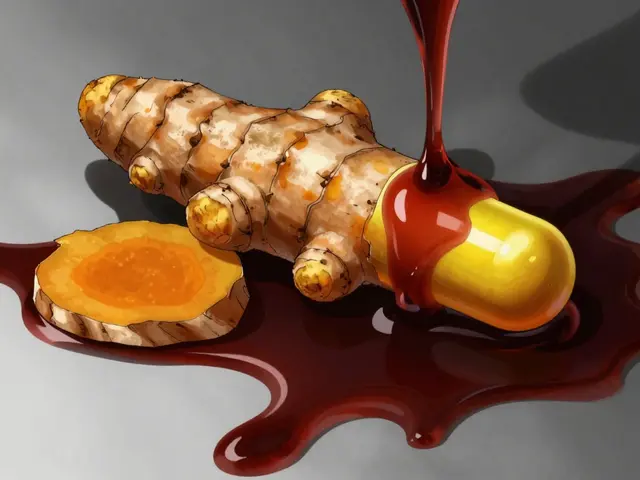
You might be taking a prescription blood thinner to keep your heart safe or prevent dangerous clots. You also love cooking with turmeric because it’s healthy and delicious. It feels natural to combine them, right? But here is the hard truth: mixing high-dose turmeric or curcumin supplements with blood-thinning medication can turn a routine health habit into a medical emergency.
This isn't just theoretical caution. Real patients have ended up in hospitals with dangerously high bleeding risks after adding this golden spice to their regimen. If you are on drugs like warfarin, rivaroxaban, or even daily aspirin, you need to understand exactly how these compounds interact before you pop that next capsule or sprinkle that powder.
The Hidden Danger in the Spice Jar
Turmeric (Curcuma longa, a perennial flowering plant of the ginger family used as a spice and traditional medicine) has been used for centuries in curry and Ayurvedic medicine. The bright yellow color comes from curcumin, the primary bioactive compound in turmeric responsible for its anti-inflammatory and antioxidant properties. In raw turmeric root, curcumin makes up only about 2% to 8% of the weight. However, most supplements contain concentrated extracts where curcumin levels can hit 95%.
Here is why that concentration matters. Curcumin doesn't just sit there; it actively interferes with how your blood clots. A study published in PubMed (PMID: 22531131) showed that curcumin significantly prolongs activated partial thromboplastin time (aPTT) and prothrombin time (PT). In plain English, this means it takes longer for your blood to clot. When you add this effect to a drug designed specifically to stop clotting, you aren't just adding benefits-you're stacking risks.
How Curcumin Messes With Your Clotting Factors
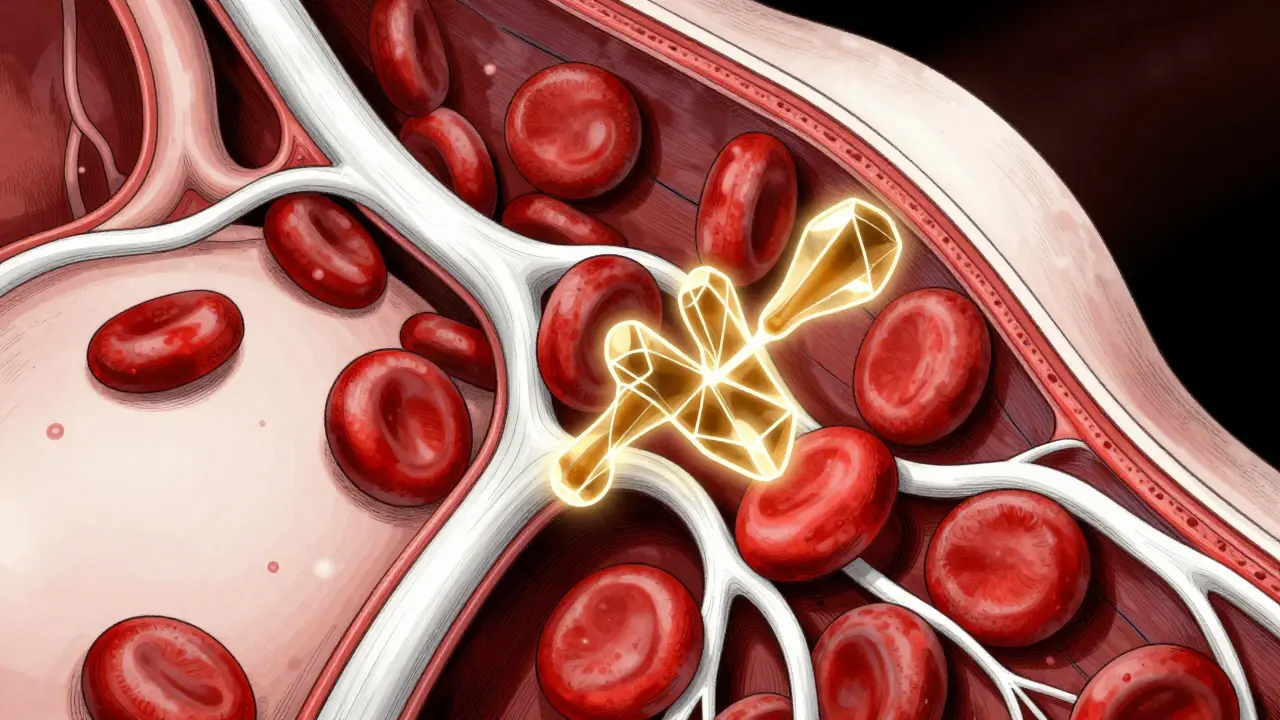
To understand the risk, you have to look at what happens inside your body. Prescription blood thinners work in specific ways. Warfarin blocks vitamin K recycling, while newer direct oral anticoagulants (DOACs) like rivaroxaban directly inhibit Factor Xa. Curcumin, however, is a bit of a wild card. It hits multiple targets at once.
- Inhibits Thrombin: Thrombin is an enzyme essential for converting fibrinogen into fibrin, which forms the mesh of a blood clot. Curcumin slows this down.
- Blocks Factor Xa: This overlaps with how some modern blood thinners work, potentially doubling the effect.
- Reduces Platelet Aggregation: Platelets are the cells that stick together to plug leaks in blood vessels. The Welsh Medicines Information Centre (WMIC) noted in 2021 that turmeric decreases platelet aggregation by inhibiting platelet-activating factor.
When you take a blood thinner, you are already suppressing one or two of these pathways. Adding curcumin suppresses the others. This creates a "dual" or even "triple" anticoagulant effect, making spontaneous bleeding much more likely.
Real Cases: When INR Spikes Out of Control
Data tells a scary story if you ignore the warnings. Medsafe New Zealand issued a formal warning on April 17, 2018, detailing a patient who was stable on warfarin therapy. Their International Normalized Ratio (INR)-the measure of how long it takes blood to clot-was within the therapeutic range of 2.0 to 3.5. After starting a turmeric supplement, their INR skyrocketed to over 10.
An INR above 4.5 usually requires immediate medical attention to reverse the effects with vitamin K or plasma. An INR over 10 puts you at severe risk for internal bleeding, including intracranial hemorrhage (bleeding in the brain), which has a mortality rate of up to 50% in some hematology literature. The WMIC updated their guidance in October 2024, confirming that raised INR levels associated with serious bleeding risks were reported in people taking warfarin alongside turmeric products.
It’s not just warfarin. While DOACs don’t require INR monitoring, they still carry bleeding risks. The British Heart Foundation (2023) explicitly warns that high doses of turmeric supplements could interact with both DOACs and warfarin. Because DOACs have fixed doses without routine blood tests, you might not know your clotting time is dangerously extended until you experience symptoms like unusual bruising or nosebleeds.
Supplements vs. Food: Is Cooking Safe?
This is the question everyone asks. Can I still eat curry? The answer is generally yes, but with caveats. The WMIC notes that it is unlikely turmeric poses significant risks when used in small quantities as a culinary spice. The issue arises with standardized supplements, capsules, or powders taken in medicinal doses.
| Method | Typical Curcumin Content | Interaction Risk Level | Recommendation |
|---|---|---|---|
| Culinary Use (Cooking) | Low (2-8% in root) | Low to Moderate | Generally safe; monitor for unusual bruising. |
| Powdered Spice (Daily Teaspoons) | Moderate | Moderate | Caution advised; inform your doctor. |
| Standardized Supplements (Capsules) | High (up to 95%) | High | Avoid unless strictly monitored by a specialist. |
| Concentrated Extracts (Phytosome) | Very High | Very High | High risk of significant INR elevation. |
The problem with supplements is variability. Unlike pharmaceutical drugs, which undergo rigorous clinical testing for dosage consistency, turmeric supplements vary wildly. One brand might give you a mild effect, while another sends your INR through the roof. There are no comprehensive human trials establishing a "safe" dose of curcumin for patients on anticoagulants.
Metabolic Interactions Beyond Clotting
Curcumin doesn't just affect clotting factors; it affects how your liver processes drugs. The WMIC documented a case where a transplant patient developed acute nephrotoxicity (kidney injury) and dangerously high tacrolimus levels (29 nanogram/mL) after taking "15 or more spoonfuls" of turmeric powder daily for ten days. This suggests turmeric moderately inhibits CYP3A4, an enzyme responsible for breaking down many medications.
If your blood thinner or other critical meds rely on CYP3A4 for clearance, turmeric can cause those drugs to build up in your system. For example, sulfasalazine plasma concentrations were found to be 3.2 times higher when taken with a 2g daily dose of curcumin in a small study. While this wasn't a blood thinner, it proves the metabolic pathway interference is real and potent.

What Doctors Are Saying Now
The medical consensus has shifted from "be careful" to "avoid." Medsafe stated clearly that concurrent use of turmeric/curcumin containing natural health products with blood thinners "should be avoided" due to prolonged bleeding times. Dr. Oracle’s analysis (2023) emphasized that the evidence indicates a significant risk, particularly for warfarin users due to its narrow therapeutic index-the tiny window between effective treatment and toxic overdose.
The Mayo Clinic Health System (2023) advises stopping turmeric supplements at least two weeks before any surgery. Why? Because the bleeding risk extends beyond daily life into procedural safety. If you are scheduled for dental work, cataract surgery, or colonoscopy, hiding your turmeric use could lead to catastrophic bleeding during the procedure.
Practical Steps for Patients on Blood Thinners
If you are currently taking warfarin, apixaban, rivaroxaban, dabigatran, heparin, clopidogrel, or even daily low-dose aspirin, follow these steps to stay safe:
- Ditch the Supplements: Unless your hematologist explicitly approves it, stop taking curcumin capsules or high-potency extracts. The risk outweighs the anti-inflammatory benefit.
- Keep Cooking, But Monitor: Using turmeric in food is likely fine, but keep portions consistent. Don't start drinking turmeric lattes daily if you haven't before.
- Watch for Red Flags: Look out for easy bruising, pink or brown urine, red or black tarry stools, nosebleeds that won't stop, or coughing up blood. These are signs your blood is too thin.
- Inform All Providers: Tell your dentist, surgeon, and GP that you consume turmeric. They need to know for surgical planning and emergency care.
- Get Extra INR Checks: If you are on warfarin and decide to introduce more turmeric into your diet, ask for more frequent INR testing. Catching a spike early prevents a hospital visit.
Remember, "natural" does not mean "harmless." Curcumin is a potent biological agent. When mixed with the powerful machinery of anticoagulant drugs, it demands respect and caution.
Can I eat turmeric if I am on warfarin?
Yes, using turmeric as a culinary spice in normal cooking amounts is generally considered safe. However, you should avoid high-dose supplements or concentrated extracts, as these can significantly raise your INR and increase bleeding risk. Always maintain consistent intake so your doctor can adjust your warfarin dose accurately.
Does turmeric interact with Eliquis (apixaban) or Xarelto (rivaroxaban)?
Yes, it can. While these Direct Oral Anticoagulants (DOACs) do not require regular INR monitoring like warfarin, they still carry a risk of bleeding. Curcumin inhibits platelet aggregation and clotting factors, which can amplify the blood-thinning effect of Eliquis or Xarelto. High-dose supplements should be avoided unless approved by your doctor.
How quickly does turmeric affect blood clotting?
Effects can appear relatively quickly. In documented cases, such as the one cited by Medsafe, INR levels spiked to dangerous levels (over 10) within weeks of starting supplementation. Because curcumin affects multiple clotting pathways, changes in clotting time can happen faster than with dietary changes alone.
Is black pepper extract (piperine) safe with blood thinners?
Black pepper extract is often added to turmeric supplements to increase absorption. Piperine itself inhibits liver enzymes (like CYP3A4) that break down many drugs. This can increase the concentration of blood thinners in your bloodstream, further raising bleeding risk. It is best to avoid supplements combining curcumin and piperine if you are on anticoagulants.
What are the signs of excessive bleeding from turmeric interaction?
Watch for unexplained bruising, bleeding gums, frequent nosebleeds, heavy menstrual periods, pink or brown urine, red or black tarry stools, coughing up blood, or severe headaches. If you experience any of these, seek medical attention immediately, as they may indicate your blood is too thin.