You take a pill for your blood pressure. It’s cheap, it works, and you don’t think twice about which company made it. That’s the power of generic small-molecule drugs. But when you switch to an injection for rheumatoid arthritis or diabetes, the rules change completely. You can’t just swap one brand for another identical copy. Why? Because biologic drugs are not like traditional pills. They are living things, in a sense, grown inside cells rather than built by chemical reactions. This fundamental difference means there is no such thing as an exact copy of a biologic.
If you’ve ever wondered why your doctor hesitates to switch you from Humira to a cheaper alternative, or why Ozempic costs what it does, the answer lies in how these medicines are made. The complexity isn’t just marketing fluff; it’s biology. Let’s break down why biologics are unique, how they are manufactured, and what this means for patients and the healthcare system in 2026.
The Living Factory: How Biologics Are Made
To understand why copies are impossible, you first have to see how the original is created. Traditional drugs, known as small molecules, are synthesized chemically. Think of baking a cake with precise measurements of flour and sugar. If you follow the recipe, every batch looks and tastes exactly the same. You can analyze the final product and know exactly what atoms are where.
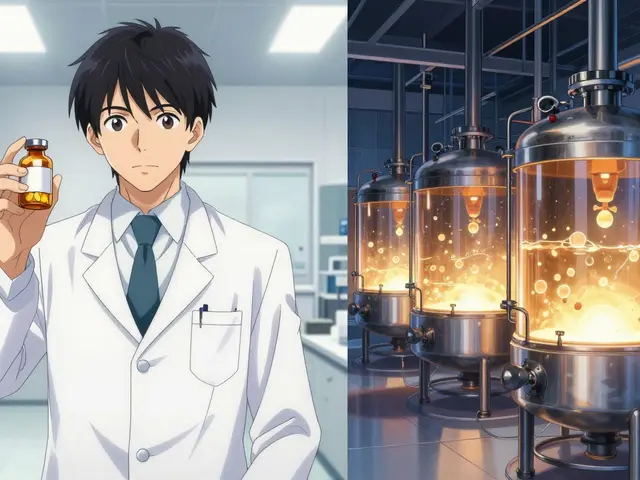
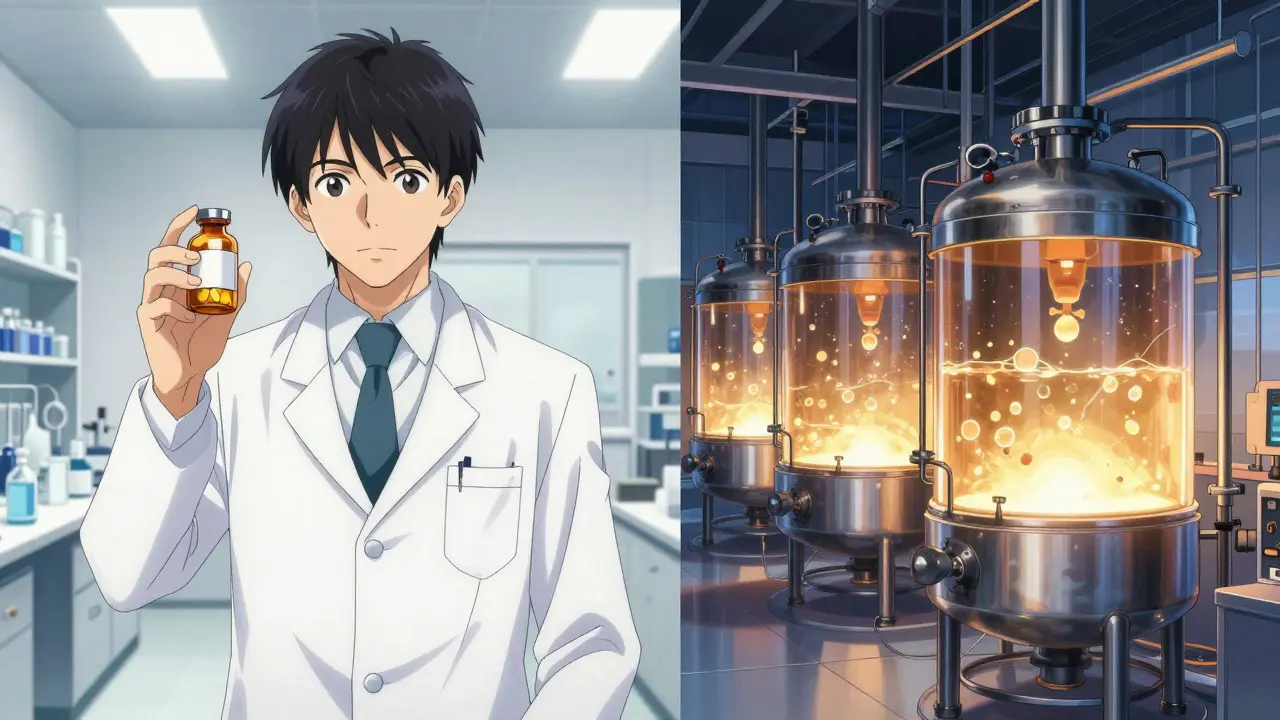
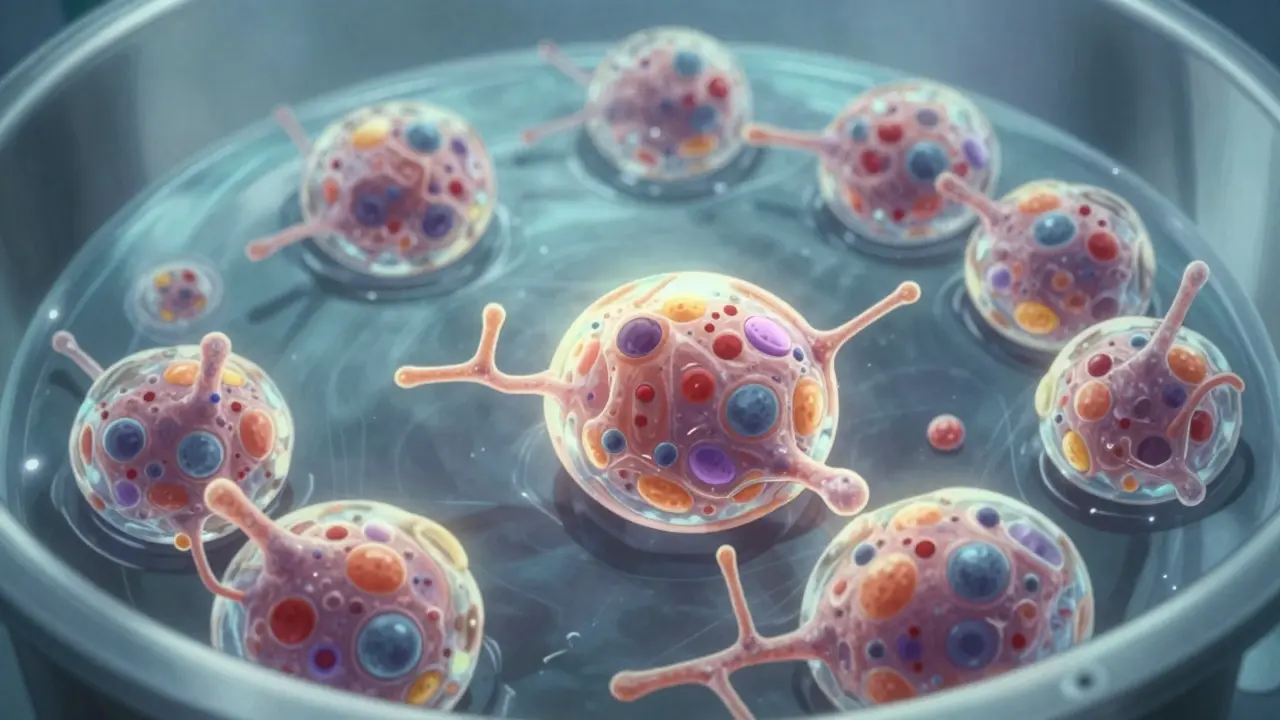
Biologic drugs, however, are therapeutics produced using living organisms such as microorganisms, plant cells, or animal cells. Instead of mixing chemicals in a beaker, scientists genetically engineer host cells-often Chinese Hamster Ovary (CHO) cells-to produce therapeutic proteins. These cells become tiny factories. They eat nutrients, breathe oxygen, and excrete the medicine we need.
This process happens in massive stainless steel tanks called bioreactors, which can hold up to 15,000 liters of fluid. The conditions must be perfect. The temperature stays between 36-37°C. The pH is locked at 7.0-7.4. Oxygen levels are monitored second by second. If the temperature drops by even half a degree, or if the nutrient mix shifts slightly, the cells stress out. And stressed cells make different proteins. They might add extra sugar molecules (glycosylation) or fold the protein incorrectly. Since the structure determines the function, a slight change can alter how the drug works in your body.
Because the manufacturer uses living systems, the FDA notes that "slight modifications, or inherent variations, to the protein are expected as a natural process of manufacturing." You cannot control nature perfectly. Therefore, two batches of the same biologic drug are never 100% identical at the molecular level. They are highly similar, but not clones.
Small Molecules vs. Biologics: A Clear Comparison
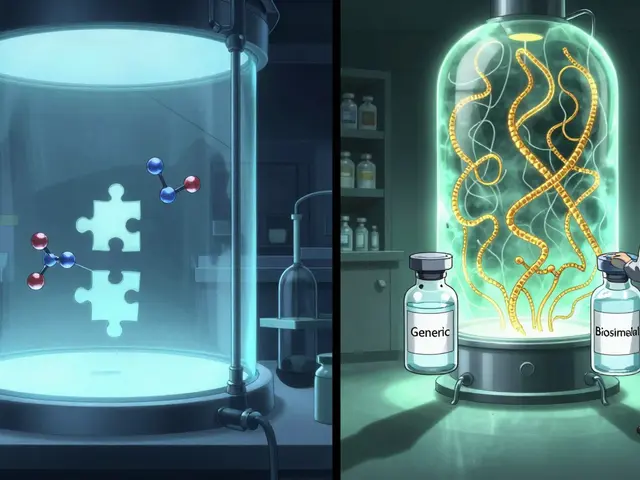
The distinction between these two classes of drugs is often blurred in public discussion, but the scientific gap is huge. Small molecule drugs are simple. They weigh less than 900 Daltons. You can fully characterize them with standard lab tests. When their patents expire, other companies can buy the raw ingredients and synthesize an exact copy. These are generics.
Biologics are monsters in comparison. They can be up to 1,000 times larger than small molecules. A monoclonal antibody, the most common type of biologic, is a complex Y-shaped protein. Current analytical methods can only characterize about 60-70% of its structural attributes. We simply don’t have the technology to map every single atom and bond interaction in real-time during production.
| Feature | Small Molecule Drugs | Biologic Drugs |
|---|---|---|
| Production Method | Chemical Synthesis | Living Cell Culture |
| Molecular Size | Small (<900 Daltons) | Large (Up to 1,000x larger) |
| Copyability | Exact Copies (Generics) | No Exact Copies (Biosimilars) |
| Batch Consistency | Identical across batches | Inherent minor variations |
| Manufacturing Time | Weeks | 3-6 Months |
| Quality Control Cost | 5-10% of total cost | 30-40% of total cost |
This table highlights why the pharmaceutical industry treats these two categories differently. For small molecules, the active ingredient is everything. For biologics, the manufacturing process itself becomes part of the product definition. As Dr. Susan Dana Jones, CEO of Biologics Consulting Group, points out, you cannot separate the drug from the factory that made it.
The Biosimilar Solution: Highly Similar, Not Identical
So, if you can’t make an exact copy, how do we get affordable alternatives? Enter biosimilars. A biosimilar is not a generic. It is a biological product that is highly similar to an already approved reference biologic. There are no clinically meaningful differences between the biosimilar and the reference product in terms of safety, purity, and potency.
Developing a biosimilar is not like reverse-engineering a pill. It requires starting from scratch. Scientists must create a new cell line, optimize a new manufacturing process, and then prove through extensive testing that the result behaves the same way in the human body as the original drug. This involves:
- Analytical Studies: Comparing the physical and chemical properties of the biosimilar to the reference product.
- Non-Clinical Studies: Testing in animals to check for toxicity or immune responses.
- Clinical Trials: Human trials to demonstrate comparable efficacy and safety.
The regulatory pathway for biosimilars is rigorous. In the US, the FDA requires extensive data to demonstrate "biosimilarity." In Europe, the EMA has similar strict guidelines. This is why biosimilars still cost more than generics, though significantly less than the original branded biologic. The global biosimilars market reached $10.5 billion in 2023 and is projected to hit $30 billion by 2028. They offer a vital cost-saving option, but they require careful medical oversight when switching patients.
The High Stakes of Manufacturing
Manufacturing biologics is expensive and risky. The entire cycle from cell line initiation to final product release takes 3 to 6 months. Compare that to weeks for small molecules. During this time, anything can go wrong. Contamination is the biggest enemy. According to BioPlan Associates, contamination accounts for approximately 35% of all manufacturing issues. A single bacterial intrusion into a bioreactor can ruin a batch worth millions of dollars.
Scale-up is another nightmare. Moving a process from a 2,000-liter tank to a 15,000-liter tank changes the physics of mixing and oxygen transfer. One senior engineer at Amgen noted that scaling up required 17 months of re-optimization and cost $22 million in delayed revenue. This complexity drives up prices. Capital investment for a dedicated biologics facility ranges from $100 million to $500 million.
Quality control is intense. Manufacturers must test every batch for purity (aiming for 95-98%), viral safety, and correct protein folding. Documentation is exhaustive. The FDA mandates records exceeding 10,000 pages per product, tracking every raw material and process parameter. This bureaucracy is necessary because the consequences of error are high. An improperly folded protein could trigger an immune reaction in a patient, rendering the drug ineffective or causing harm.
Why This Matters for Patients in 2026
As we move through 2026, biologics dominate the treatment landscape for cancer, autoimmune diseases, and rare genetic conditions. Monoclonal antibodies alone represent 70% of biologics sales. Drugs like Humira, Keytruda, and Ozempic have revolutionized care. But their complexity creates challenges for access and affordability.
Patients should understand that switching from a reference biologic to a biosimilar is not always automatic. While many countries allow automatic substitution (interchangeability), others require physician approval. Your doctor needs to monitor you closely after a switch to ensure your body responds similarly. Immunogenicity-the risk that your immune system will attack the new version of the drug-is a real concern, though modern biosimilars are designed to minimize this risk.
Furthermore, supply chain fragility is a growing issue. Because biologics manufacturing is so specialized and slow, disruptions can lead to shortages. Unlike small molecules, you can’t just ramp up production quickly. If a bioreactor fails, it takes months to replace the lost inventory. This underscores the importance of robust manufacturing standards and diversified supply chains.
The Future: Innovation and Sustainability
The industry is evolving. Continuous manufacturing, where cells flow through a system rather than sitting in static tanks, is being adopted in 15% of new facilities. This approach improves consistency and reduces waste. Artificial intelligence is also entering the picture, helping to predict optimal process parameters and detect anomalies in real-time.
However, sustainability remains a challenge. Biologics manufacturing uses 10-15 times more water per dose than small molecule production. As demand grows, the environmental footprint will expand. Companies are investing in green chemistry and recycling technologies to mitigate this impact.
For patients, the future holds more effective therapies, including bispecific antibodies and cell and gene therapies. These next-generation biologics are even more complex than today’s monoclonal antibodies. The principle remains the same: they are living products, grown with precision, and incapable of being exactly copied. Understanding this helps set realistic expectations about cost, availability, and treatment options.
What is the main difference between a generic drug and a biosimilar?
A generic drug is an exact chemical copy of a small-molecule brand-name drug. A biosimilar is a highly similar version of a biologic drug, but not an exact copy due to the complexity of biological manufacturing processes.
Can biosimilars be automatically substituted for brand-name biologics?
It depends on local regulations and whether the biosimilar has been designated as "interchangeable." In many cases, physician approval is required to ensure patient safety and monitor for any adverse reactions.
Why are biologic drugs so expensive?
Biologics are expensive due to complex manufacturing involving living cells, long production cycles (3-6 months), high failure rates, stringent quality control, and significant capital investment in specialized facilities.
Are biosimilars as safe and effective as the original biologic?
Yes, biosimilars undergo rigorous testing to demonstrate no clinically meaningful differences in safety, purity, and potency compared to the reference product. Regulatory agencies like the FDA and EMA enforce strict standards.
How long does it take to manufacture a biologic drug?
The manufacturing cycle typically spans 3 to 6 months from cell line initiation to final product release, which is approximately 10 times longer than small molecule drug production.