
Blurred vision isn't always just tired eyes or a need for new glasses. For millions of people taking common medications, it’s a warning sign that something deeper is going on. If you’ve noticed your vision getting fuzzy after starting a new pill, you’re not imagining it. And you’re not alone.
Why Do Medications Cause Blurry Vision?
It sounds simple: you take a pill to treat high blood pressure, acne, or migraines. But your eyes? They’re not just along for the ride. Many drugs interfere with how your eyes work-sometimes in ways you’d never expect.
Some medications dry out your eyes. Others change the shape of your lens or cause fluid to build up in the cornea. A few even damage the retina or optic nerve over time. The effect isn’t always immediate. Sometimes it takes months or even years. But when it happens, it can be serious.
Over 100 prescription drugs are known to cause blurred vision. That’s not a small number. It’s not rare. And it’s not always listed in bold on the warning label.
Medications That Commonly Cause Blurry Vision
Not all drugs affect vision the same way. Here are the most common offenders-and how they do it.
- Topiramate (Topamax): Used for epilepsy and migraines, this drug can trigger acute angle-closure glaucoma. Symptoms include sudden blurred vision, severe eye pain, headache, and nausea. This isn’t a slow problem. It can cause permanent vision loss in under 48 hours if not treated immediately.
- Isotretinoin (Accutane, Absorica): This powerful acne treatment dries out your tear film in 45-60% of users. Dry eyes mean blurry vision, especially when reading or driving. Some people report vision so unclear they can’t safely operate a vehicle.
- Amiodarone (Cordarone): Prescribed for heart rhythm problems, this drug causes a swirling pattern of deposits on the cornea in over 70% of long-term users. The result? Glare, halos around lights, and persistent blurriness. In 1-2% of cases, it damages the optic nerve-often permanently.
- Corticosteroids (prednisone, dexamethasone): These anti-inflammatory drugs raise eye pressure in 30-40% of people with glaucoma. Even in healthy people, long-term use can cause posterior subcapsular cataracts. Diabetics are 3.2 times more likely to develop these cataracts from steroids.
- Tamsulosin (Flomax): Used for enlarged prostate, this drug causes a condition called intraoperative floppy iris syndrome. If you ever need cataract surgery while taking it, your iris will behave unpredictably during surgery. Surgeons need to know you’re on it-ideally four weeks before the procedure.
- Hydroxychloroquine (Plaquenil): Commonly used for lupus and rheumatoid arthritis, this drug can cause irreversible retinal damage. The risk is low-about 1 in 5,000 after five years-but once the damage is done, it’s permanent. It often starts as a subtle blind spot you don’t notice until it’s too late.
- NSAIDs (ibuprofen, naproxen): Long-term daily use (over two years) increases the risk of retinal bleeding and cataracts by 28%. It’s not the occasional painkiller. It’s the daily pill for arthritis or chronic back pain.
- Beta-blockers and calcium channel blockers: Blood pressure meds like metoprolol or amlodipine reduce blood flow to the eye. About 8-12% of new users report blurry vision in the first month. It usually clears up as your body adjusts, but not always.
Who’s at Highest Risk?
Not everyone who takes these drugs will have vision problems. But some people are far more vulnerable.
If you have diabetes, you’re at higher risk from corticosteroids. If you have narrow anterior chamber angles (a structural eye trait), you’re more likely to get acute glaucoma from Topamax. If you’re over 60 and taking amiodarone for heart issues, your chances of corneal or optic nerve damage rise sharply.
And here’s something many don’t realize: your risk doesn’t disappear when you stop the drug. Amiodarone stays in your body for months. Flomax can affect cataract surgery up to 18 months after you’ve quit taking it. Your eyes don’t forget.
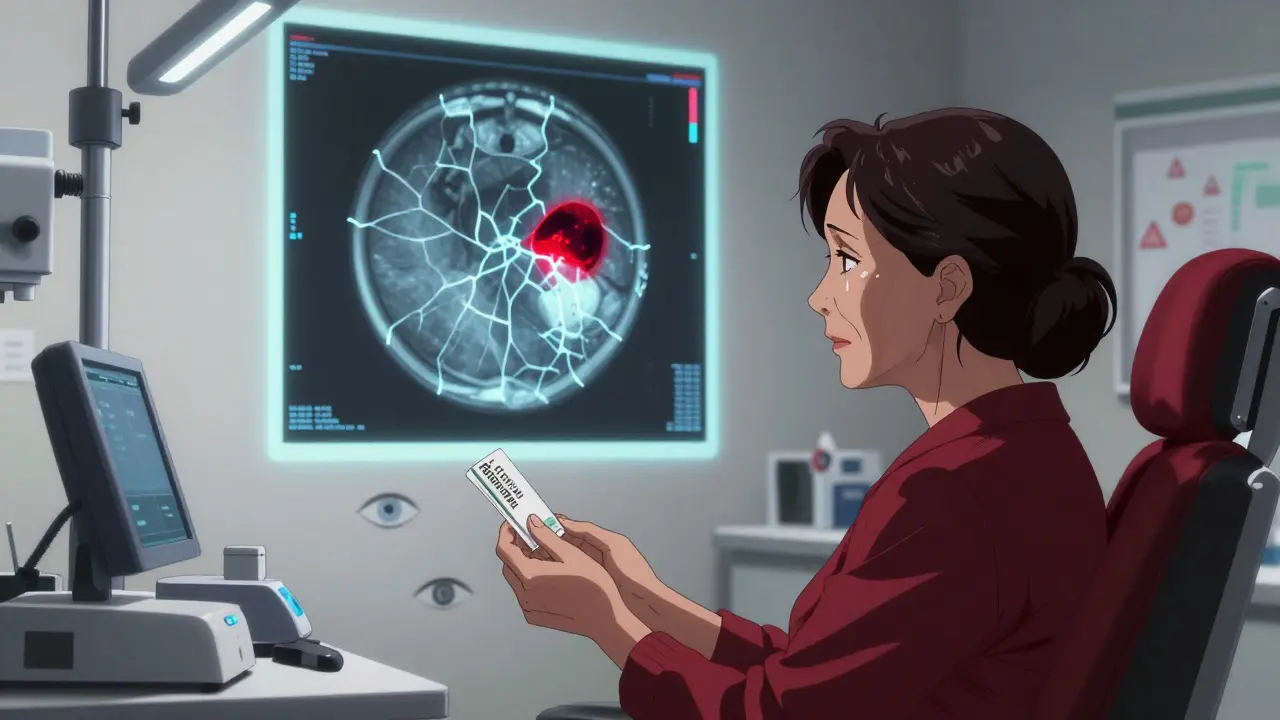
When Should You Worry?
Not every bit of blurriness is an emergency. But some signs mean you need to act fast.
Call your doctor or go to an eye clinic immediately if you have:
- Sudden blurred vision in one or both eyes
- Eye pain, redness, or swelling
- Seeing halos or rainbow rings around lights
- Blind spots or tunnel vision
- Headache with blurred vision (especially with nausea)
- Blurred vision that doesn’t improve after a few days
If you’re on Topamax and get sudden eye pain with blurred vision, don’t wait. This could be angle-closure glaucoma. Left untreated, it can blind you in less than two days.
If you’re on Plaquenil and notice blurry vision after five or more years of use, you need a retina scan-now. The damage can be silent until it’s advanced.
What Should You Do If You Notice Blurry Vision?
Don’t panic. But don’t ignore it either.
Step 1: Don’t stop your medication on your own. Some drugs, like beta-blockers or amiodarone, can cause serious health problems if stopped suddenly. Talk to your doctor first.
Step 2: Make an appointment with an ophthalmologist. Your primary care doctor might not know how to check for drug-induced eye damage. An eye specialist will use tools like optical coherence tomography (OCT) and visual field tests to spot early changes you can’t feel.
Step 3: Bring your full medication list. Include supplements, over-the-counter pills, and eye drops. Many people forget that antihistamines or sleep aids can also dry out their eyes.
Step 4: Ask about alternatives. If your drug is causing vision problems, there may be another option. For example, some migraine patients switch from Topamax to CGRP inhibitors, which have far fewer eye side effects.

How to Protect Your Vision While on Medication
Prevention is the best defense.
- If you’re on Plaquenil, amiodarone, or long-term steroids, get a baseline eye exam before you start-and then at least once a year. Some patients need scans every six months.
- For Accutane users: Use preservative-free artificial tears 4-6 times a day. If dryness is severe, your eye doctor may recommend punctal plugs or Restasis.
- If you’re on Flomax: Tell your cataract surgeon at least four weeks before surgery. They’ll adjust their technique to avoid complications.
- For anyone on daily NSAIDs: Talk to your doctor about whether you really need them long-term. There are safer alternatives for chronic pain.
- Monitor your vision at home. Cover one eye at a time. Read a book or look at a grid. If lines look wavy or blurry, write it down and show your doctor.
What’s Changing in Eye Care?
Doctors are getting better at catching these problems early.
In 2023, the FDA approved an AI-powered visual field analyzer that spots early Plaquenil damage with 94.7% accuracy-much better than older methods. The American Academy of Ophthalmology also lowered the safe daily dose of Plaquenil from 5.0 mg/kg to 2.3 mg/kg based on new research.
Hospitals now have mandatory eye screening protocols for high-risk drugs. Ophthalmology residents get 24 hours of training on drug-induced eye damage-up from just 8 hours in 2010.
And soon? Genetic tests may tell you if you’re at higher risk for vision damage from certain drugs. That means your doctor could choose a safer medication before you even start.
Real People, Real Stories
On Reddit, a user wrote: “Topamax ruined my vision permanently. I thought it was just dry eyes. By the time I saw a doctor, the damage was done.” Another said: “I was on Accutane for six months. I couldn’t drive at night. My eyes felt like sandpaper.”
These aren’t rare. In one survey, 41% of migraine patients stopped Topamax because of vision problems. Nearly one in five Accutane users said their blurred vision made driving dangerous.
These stories aren’t meant to scare you. They’re meant to make you aware. Your vision matters. And you have the right to know how your meds might affect it.
Medications save lives. But they can also harm your eyes-and often quietly. The key isn’t avoiding treatment. It’s staying informed, asking questions, and getting regular eye checks.
If you’re on any of these drugs, don’t wait for symptoms to get worse. Talk to your eye doctor. Get screened. Protect your sight before it’s too late.
Can blurry vision from medication be reversed?
It depends on the drug and how long you’ve been taking it. For drugs like Topamax or NSAIDs, vision often improves after stopping the medication. But with amiodarone or Plaquenil, damage to the cornea or retina can be permanent. Early detection is critical-once the retina is scarred, vision loss usually can’t be undone.
How long does it take for medication to cause blurred vision?
It varies. Some drugs cause blurriness within days-like Topamax triggering acute glaucoma. Others, like Plaquenil or steroids, take months or years. Amiodarone can cause corneal changes within weeks, but optic nerve damage usually appears after six months or more. Always monitor your vision closely during the first few months of starting any new medication.
Do over-the-counter drugs cause blurred vision?
Yes. Antihistamines (like diphenhydramine), decongestants, and even some sleep aids can cause dry eyes and blurry vision. NSAIDs like ibuprofen and naproxen, if taken daily for over two years, increase the risk of retinal bleeding and cataracts. Don’t assume “over-the-counter” means “safe for your eyes.”
Should I stop my medication if my vision gets blurry?
No-not without talking to your doctor. Stopping some medications suddenly can be dangerous. For example, quitting beta-blockers or amiodarone abruptly can trigger heart problems. Always consult your prescribing doctor and an ophthalmologist before making changes. They can help you weigh the risks and find safer alternatives if needed.
What eye tests should I ask for if I’m on high-risk medications?
For Plaquenil, ask for a 10-2 visual field test and spectral-domain OCT (SD-OCT). For amiodarone, request a slit-lamp exam to check for corneal deposits. If you’re on steroids, your eye pressure should be checked every 2-4 weeks during the first month. For anyone on long-term meds, a comprehensive dilated eye exam at least once a year is essential.
Can I still take my medication if I have glaucoma?
You can, but with caution. Corticosteroids are especially risky for glaucoma patients-they can spike eye pressure in 30-40% of cases. If you have glaucoma and need a steroid (for asthma, arthritis, etc.), your eye doctor must monitor your pressure closely. Tell all your doctors about your glaucoma before starting any new medication.







steve rumsford January 7, 2026
I was on Topamax for migraines and didn't think twice until I couldn't read my dashboard while driving. Thought it was fatigue. Turns out it was acute glaucoma. Got lucky it was caught in time. Never take blurry vision lightly if you're on meds.
Anthony Capunong January 9, 2026
This is why America needs to stop letting Big Pharma get away with burying side effects in tiny print. We're guinea pigs for their profit. I bet the FDA knew about this for decades and did nothing. Wake up people.
Vince Nairn January 10, 2026
So let me get this straight - you're telling me I can't take ibuprofen for my back pain without risking retinal bleeding? And I'm supposed to believe this isn't just a scare tactic? I've been popping Advil for 15 years and my vision is fine. Maybe it's not the drug, maybe it's the fear-mongering.
Kyle King January 12, 2026
They're lying. The real reason they don't warn you is because they want you to need cataract surgery. Hospitals make bank off these procedures. Accutane? Plaquenil? All part of the eye surgery industrial complex. They even put it in your toothpaste now - you just don't know it.
Kamlesh Chauhan January 12, 2026
This is so much drama. I take amiodarone and my vision is fine. Why are you all acting like its the end of the world? Just stop being so dramatic. People in India take way worse meds and still see just fine. Stop whining.
Emma Addison Thomas January 14, 2026
I'm from the UK and we have similar concerns here. The NHS does annual eye checks for Plaquenil users, but not everyone gets referred. I think the real issue is access - if you can't afford an ophthalmologist, you're stuck hoping for the best. This isn't just medical, it's socioeconomic.
Mina Murray January 15, 2026
You people need to stop being lazy. If you're on a drug that has a known risk, you get your eyes checked. It's not rocket science. I've been on prednisone for 3 years. I get my IOP checked every 6 weeks. I don't need a blog post to tell me to do the bare minimum. Also, stop misspelling 'cornea'. It's not 'cornia'.
Christine Joy Chicano January 16, 2026
The most chilling part isn't the drugs - it's how silent the damage is. Plaquenil doesn't scream. It whispers. A blind spot here, a flicker there. You think you're just tired. Then one day, you realize you can't recognize your own face in the mirror. That's not just side effect - that's a slow-motion betrayal by medicine itself. And the AI tools? They're a band-aid on a bullet wound. We need systemic change, not better scanners.
Adam Gainski January 16, 2026
Great breakdown. I'm a pharmacist and I see this every day. Patients come in panicked about blurry vision, but they haven't told their doctor they're on Flomax. Or they're on Accutane and using generic tears that have benzalkonium chloride - which makes it worse. The key is communication. Your eye doc needs your full med list, including that melatonin gummy you take every night. Small details matter.