Statin-Grapefruit Interaction Checker
Check if your statin medication has dangerous interactions with grapefruit or related citrus fruits. Many people don't realize this interaction can cause serious health risks.
If you're taking a statin to lower your cholesterol, drinking grapefruit juice might seem like a healthy choice. But for some statins, it’s not just a bad idea-it can be dangerous. The interaction between grapefruit and certain statins isn't a myth or a warning on a label you can ignore. It’s a real, well-documented, and potentially life-threatening pharmacological event that has been studied for over 25 years. The problem isn't grapefruit itself-it's what's inside it. And the stakes are higher than most people realize.
Why Grapefruit Changes How Statins Work
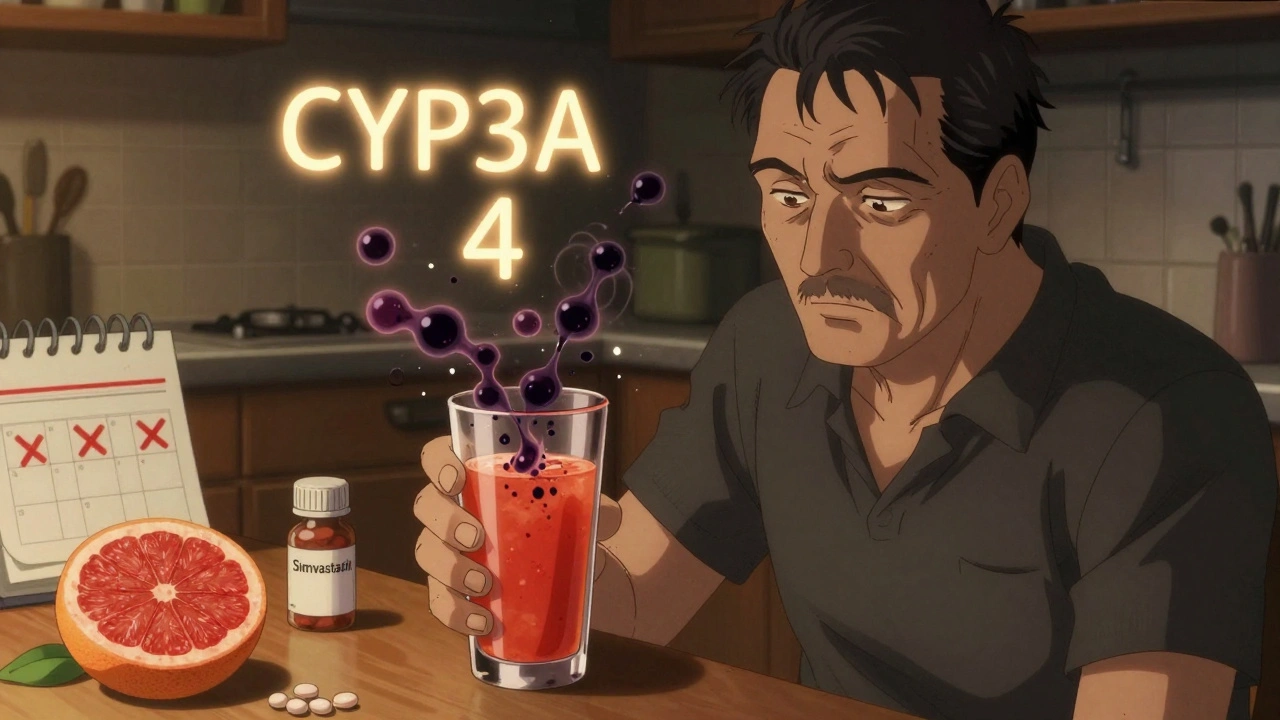
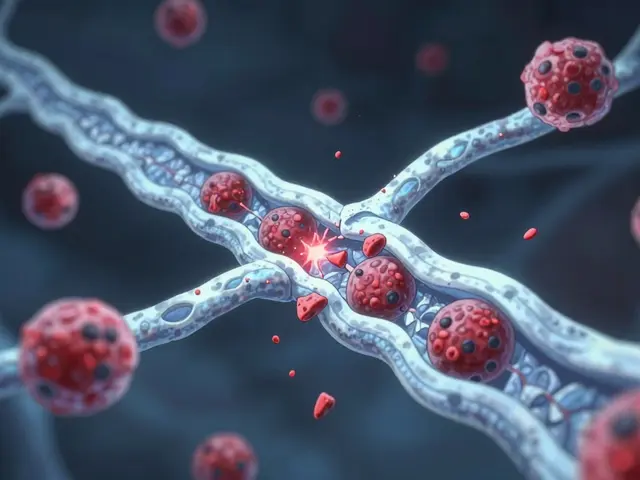
Grapefruit doesn't make statins stronger by accident. It actively interferes with how your body processes them. The culprits are chemicals called furanocoumarins, found naturally in grapefruit, Seville oranges, and pomelos. These compounds don't just slow down metabolism-they shut it down permanently, at least for a few days. Here’s how it works: When you take a statin by mouth, it passes through your small intestine before entering your bloodstream. There, an enzyme called CYP3A4 breaks down most of the drug before it even gets to your liver. This is called first-pass metabolism. It’s your body’s way of preventing too much drug from circulating. Furanocoumarins in grapefruit bind to CYP3A4 in the gut and destroy it. Once the enzyme is gone, your body can't break down the statin properly. The result? Up to 16 times more of the drug enters your bloodstream than it should. This isn’t a small increase. A 1998 study in Clinical Pharmacology & Therapeutics showed that just 200 mL of double-strength grapefruit juice, taken three times a day for two days, boosted simvastatin levels by 9-fold in peak concentration and 16-fold in total exposure. That’s not a little extra-it’s the equivalent of taking a much higher dose without knowing it.Which Statins Are Affected?
Not all statins react the same way. The risk depends entirely on how much the drug relies on CYP3A4 for breakdown. Statins that are heavily metabolized by this enzyme are the ones you need to avoid with grapefruit.- High risk: Simvastatin (Zocor), lovastatin (Mevacor), and atorvastatin (Lipitor). These are the most affected. Simvastatin is the worst offender-its interaction with grapefruit is so strong that the FDA lists it as a contraindication.
- Moderate risk: Atorvastatin can still be affected, especially at higher doses (40 mg or more). Some doctors allow a small amount (like one small grapefruit or 8 oz of juice per week) if you’re on a low dose and have no other risk factors.
- Low to no risk: Fluvastatin (Lescol), pitavastatin (Livalo), pravastatin (Pravachol), and rosuvastatin (Crestor). These are processed through other pathways and don’t interact significantly with grapefruit.
The Real Danger: Rhabdomyolysis
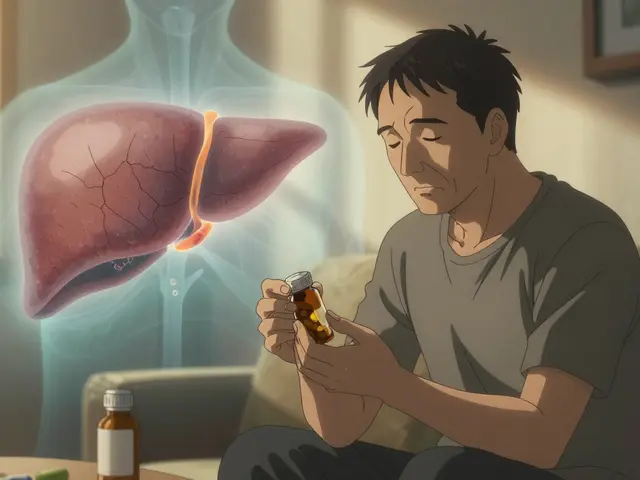
Most people know statins can cause muscle aches. That’s common, and usually harmless. But when grapefruit amplifies the statin dose, the risk jumps from mild discomfort to a rare but deadly condition called rhabdomyolysis. Rhabdomyolysis happens when muscle cells break down rapidly, spilling a protein called myoglobin into your blood. Your kidneys can’t handle the overload. This can lead to acute kidney failure, electrolyte imbalances, and even death. While it affects fewer than 1 in 10,000 statin users per year, that risk can spike dramatically with grapefruit. A documented case from 2022 involved a 40-year-old woman who developed rhabdomyolysis after eating grapefruit daily for 10 days while taking simvastatin. She didn’t have other risk factors-no alcohol use, no intense exercise, no other medications. Just grapefruit and her statin. Her creatine kinase (CK) levels, a marker of muscle damage, soared to over 100,000 U/L (normal is under 200). She required hospitalization and IV fluids to protect her kidneys. Symptoms to watch for:- Severe, unexplained muscle pain or weakness
- Dark, tea-colored urine
- Fatigue or feeling generally unwell

Who’s Most at Risk?
It’s not just about what you eat-it’s about who you are. Certain factors make grapefruit-statin interactions even more dangerous:- Age: People over 65 metabolize drugs slower and are more sensitive to elevated levels.
- Dose: Simvastatin 80 mg carries the highest risk. The FDA has restricted this dose for new patients because of this interaction.
- Other medications: If you’re also taking drugs like amiodarone, clarithromycin, or cyclosporine, your risk multiplies.
- Chronic kidney or liver disease: These conditions reduce your body’s ability to clear statins, making grapefruit even more dangerous.
- Genetics: Some people naturally have lower CYP3A4 activity, making them more sensitive to the grapefruit effect.
What Should You Do?
If you're on a statin and you like grapefruit, here’s what to do:- Check your statin name. If it’s simvastatin or lovastatin, stop grapefruit entirely. No exceptions.
- If you’re on atorvastatin, talk to your doctor. You might be able to have a small amount (one grapefruit or 8 oz juice per week) if you’re on a low dose and have no other risk factors.
- Switch statins if needed. Pravastatin or rosuvastatin are safe alternatives. Many patients switch without losing cholesterol control.
- Don’t assume other citrus is safe. Only grapefruit, Seville oranges, and pomelos contain enough furanocoumarins to cause this interaction. Regular oranges, lemons, and limes are fine.
- Ask your pharmacist. They see your full medication list and can flag hidden risks. A 2021 study found pharmacist interventions reduced dangerous grapefruit-statin combinations by 78%.
Why This Problem Still Exists
You’d think this would be common knowledge by now. But here’s the truth: a 2021 survey found that only 42% of primary care doctors routinely ask patients about grapefruit consumption when prescribing high-risk statins. And only 28% of patients say they were told about the risk at all. Part of the problem is that grapefruit is marketed as a superfood. It’s low in calories, high in vitamin C, and often promoted for weight loss or detox. People don’t think of it as a drug-interfering substance. They think, “It’s healthy, so it must be fine.” Another issue is confusion. Many patients believe that if they take their statin at night and drink grapefruit juice in the morning, they’re safe. They’re not. The enzyme damage lasts for days. Timing doesn’t matter.What’s Next?
Researchers are working on a long-term fix. Scientists at the University of Florida have been breeding grapefruit varieties with dramatically lower levels of furanocoumarins. Early results show these new types retain the taste and nutritional benefits but don’t interfere with CYP3A4. If successful, this could eliminate the interaction entirely within the next 5 to 10 years. Until then, the solution is simple: know your statin. Know your fruit. And don’t guess.Can I have grapefruit if I take rosuvastatin (Crestor)?
Yes. Rosuvastatin is not metabolized by the CYP3A4 enzyme, so grapefruit does not significantly affect its levels in your blood. You can safely eat grapefruit while taking rosuvastatin. The same applies to pravastatin, pitavastatin, and fluvastatin. These are the safest options if you regularly consume grapefruit.
Is it safe to drink grapefruit juice once a week if I’m on simvastatin?
No. Even one serving of grapefruit juice can inhibit CYP3A4 enzymes for up to 72 hours. That means if you drink juice on Monday, your body is still unable to properly process simvastatin on Wednesday. There is no safe amount for simvastatin or lovastatin. The interaction is not dose-dependent in a way that allows for moderation-it’s all or nothing. Avoid it completely.
What if I accidentally ate grapefruit while on simvastatin?
If it was a one-time, small amount, the risk of serious harm is low-but not zero. Stop eating grapefruit immediately. Monitor for muscle pain, weakness, or dark urine over the next few days. If any of these symptoms appear, contact your doctor right away. In most cases, no emergency treatment is needed, but it’s important to inform your provider so they can assess your risk and possibly adjust your medication.
Are all citrus fruits dangerous with statins?
No. Only grapefruit, Seville oranges (used in marmalade), and pomelos contain high levels of furanocoumarins. Regular oranges, tangerines, lemons, and limes do not interfere with statins and are safe to eat. Don’t avoid all citrus-just these three specific types.
Can I switch statins if I love grapefruit?
Yes, and many people do. If you regularly eat grapefruit and are on simvastatin or lovastatin, switching to pravastatin or rosuvastatin is often the best solution. These statins are just as effective at lowering cholesterol and don’t interact with grapefruit. Talk to your doctor about whether a switch makes sense for you. You won’t lose your cholesterol control-you’ll just gain peace of mind.
Does grapefruit affect statins taken as injections?
No. All statins are taken orally, so this doesn’t apply. But the mechanism matters: grapefruit only affects statins absorbed through the gut, where CYP3A4 is located. If a statin were ever given intravenously (which none currently are), grapefruit wouldn’t interfere. That’s why the interaction is specific to oral medications.
How long does the grapefruit effect last?
The enzyme inhibition lasts about 72 hours after consuming grapefruit. That means if you drink grapefruit juice on Monday, your body still can’t properly break down statins on Wednesday. Even occasional consumption can keep your statin levels elevated. That’s why timing doesn’t help-you can’t just separate the juice and the pill by a few hours.
Can grapefruit interact with other medications besides statins?
Yes. Grapefruit affects many drugs metabolized by CYP3A4, including some blood pressure medications (like felodipine), anti-anxiety drugs (like buspirone), immunosuppressants (like cyclosporine), and certain anti-arrhythmics. Always check with your pharmacist or doctor if you’re on any other prescription drugs and regularly consume grapefruit.






Michael Robinson December 8, 2025
It's wild how something so simple like grapefruit can mess with your meds like that. We treat food like it's harmless, but biology doesn't care if it's 'healthy'-it just reacts. This isn't conspiracy stuff, it's chemistry. And we're still surprised when it bites us.
Maybe we need to stop calling things 'superfoods' and start calling them 'bioactive substances with side effects.' Less hype, more honesty.
Kathy Haverly December 10, 2025
Oh please. This is just Big Pharma pushing their agenda. They want you to switch to their expensive statins so they can keep raking in cash. Rosuvastatin? More like 'ro-suck-your-wallet.' Grapefruit's been around for centuries-your body can handle it. They just need you scared so you'll take their 'safer' drugs.
And don't get me started on 'pharmacists'-they're just pharmacy sales reps in lab coats.
Andrea Petrov December 10, 2025
Did you know the FDA has been quietly suppressing data on this for years? Furanocoumarins are just a cover. The real issue is that grapefruit triggers epigenetic changes that make statins accumulate in mitochondria-something the pharmaceutical lobby doesn’t want you to know because it would expose how poorly they test drug interactions.
And why is this only being 'studied' since 1998? Because that’s when the patent on simvastatin was about to expire. Coincidence? I think not.
Also, if you’re on statins, avoid all citrus. Even oranges. They’re genetically modified to mimic grapefruit’s chemical profile. The FDA knows. They just won’t tell you.
PS: I’ve been researching this since 2010. I’ve seen the documents. You’re being lied to.
Suzanne Johnston December 10, 2025
This is such an important post. I wish more people understood how drugs and food interact-it’s not just about allergies or sugar. It’s about enzyme systems that evolved over millennia, and we’re now casually smashing them with trendy smoothies.
And I love that the article ends with a hopeful note about low-furanocoumarin grapefruit. Science working for us, not against us. That’s the kind of innovation we should celebrate.
To everyone panicking: don’t stop your statin. Talk to your doctor. Switch if needed. But don’t let fear replace knowledge. Knowledge is the real superfood here.
Graham Abbas December 11, 2025
I’ve been on atorvastatin for five years. I used to drink a whole grapefruit every morning like it was my personal ritual. Then I read this and nearly cried. Not because I was scared-but because I realized I’d been treating my body like a machine that didn’t have feelings.
I switched to pravastatin. No more grapefruit. And guess what? I feel better. Not because of the drug change, but because I finally started listening.
It’s not about giving up fruit. It’s about respecting your biology. And that’s a lesson I needed to learn the hard way.
Haley P Law December 12, 2025
OMG I JUST ATE A GRAPEFRUIT THIS MORNING AND I’M ON SIMVASTATIN 😱😱😱
IS IT TOO LATE?? I’M GOING TO DIE??
MY MUSCLES ARE TINGLING?? IS THAT IT??
SEND HELP OR JUST A GIF OF A CAT
PS I’M NOT DYING RIGHT?? PLEASE SAY I’M NOT DYING
Andrea DeWinter December 12, 2025
Hey I’m a nurse and I see this all the time. People think if they take their pill at night and juice in the morning they’re fine. Nope. The enzyme gets wrecked for days. I had a patient last month who drank grapefruit juice every Sunday and ended up in the ER with rhabdo. He didn’t even know it was a problem.
Bottom line: if you’re on simva or lova-skip it. No exceptions. If you’re on rosuva or prava-you’re golden. And if you’re not sure? Ask your pharmacist. They’ll tell you for free.
And yes, regular oranges are fine. You can still have your OJ. Just ditch the grapefruit.
Stay safe out there
Chris Marel December 13, 2025
This is the kind of information that should be taught in schools. Not just for statins but for all medications. We grow up learning about vitamins and calories but never about how our bodies process chemicals. It’s like being handed a car manual in another language.
I’m from Nigeria and here, people use citrus fruits in traditional medicine all the time. I’ve seen elders mix bitter orange with hypertension pills. No one warns them. This post could save lives beyond just the West.
Thank you for writing this clearly. I’m sharing it with my family.
Nikhil Pattni December 14, 2025
Let me break this down for the uneducated because clearly most of you don’t understand pharmacokinetics. CYP3A4 is a cytochrome P450 isoform expressed primarily in the enterocytes of the small intestine and hepatocytes. Furanocoumarins irreversibly inhibit this enzyme via mechanism-based inactivation, leading to reduced first-pass metabolism and increased bioavailability of substrates like simvastatin. The AUC increases up to 16-fold because the drug bypasses hepatic extraction. This is basic clinical pharmacology. If you didn’t know this, you shouldn’t be taking statins without supervision. Also, why are you drinking grapefruit juice anyway? It’s acidic, high in fructose, and promotes insulin resistance. You’re probably on statins because you’re metabolically unhealthy. Stop drinking sugar water and eat kale instead. Also, the University of Florida research is peer-reviewed, not some corporate PR stunt. You’re welcome.
Elliot Barrett December 15, 2025
So basically, the whole thing is: don’t eat grapefruit if you’re on a statin. That’s it? You wrote 2000 words to say that? Could’ve just been a tweet.
Also, I’ve been eating grapefruit with my simvastatin for 3 years. Still alive. So maybe the science is overblown?
Tejas Bubane December 17, 2025
Bro the FDA says simvastatin 80mg is banned for new patients because of grapefruit? That’s because they want you on Lipitor. Atorvastatin is way more profitable. They don’t care if you live or die-they care if your insurance pays for the brand name. This whole thing is a money grab disguised as a warning.
Also I read the 1998 study. Only 12 people. Small sample. Also they used double-strength juice. No one drinks that. This is fearmongering.
Ajit Kumar Singh December 18, 2025
Indian people they eat grapefruit every day with their statins and they live to 90 why you think you know better? In India we don’t believe in this western science nonsense. My uncle he take simvastatin and grapefruit every morning since 1995 and he still play cricket! You think your enzyme thing work same for everyone? No! Our body different! You think we are all American? Ha! This is cultural imperialism in medicine!
Also I eat grapefruit with my blood pressure pills too and my BP is perfect! So what is the problem? You just want to sell more drugs!
Maria Elisha December 20, 2025
wait so i can have orange juice? cool. i was scared i had to give up all citrus. phew. also i still eat grapefruit on weekends. no big deal right? lol
Michael Robinson December 20, 2025
Elliot, you’re alive because you got lucky. Not because the science is wrong. One person surviving a dangerous interaction doesn’t disprove a well-documented, replicated pharmacological effect that’s been studied in thousands.
And Kathy? If you think this is Big Pharma, why are you so mad about grapefruit? Why not just say ‘I like grapefruit and I’ll risk it’? Why the conspiracy nonsense? You’re not fighting the system-you’re just scared of being wrong.
This isn’t about profit. It’s about people dying because they thought ‘it’s just fruit.’