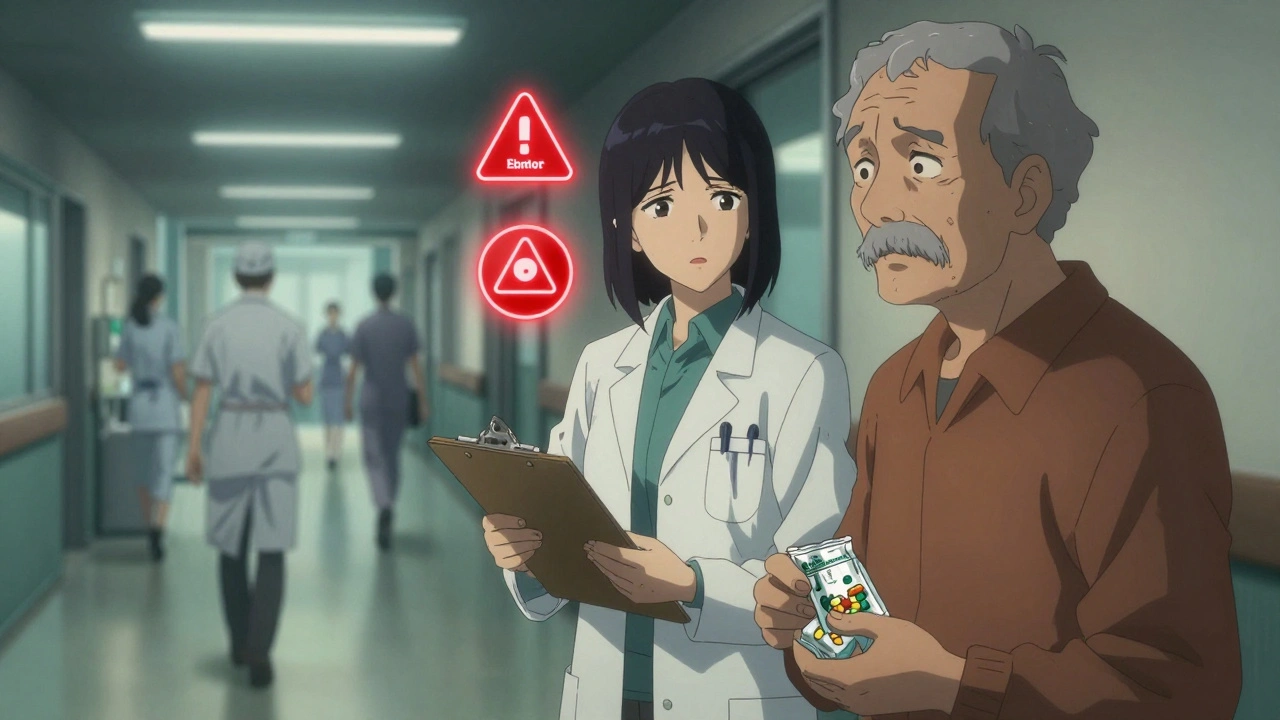
Every year, hundreds of thousands of patients are harmed because their medication list gets lost or mixed up when they move from hospital to home, or from one doctor to another. These aren’t small mistakes. They’re life-threatening. A patient on blood thinners gets prescribed a new painkiller that interacts dangerously. An elderly person goes home with two pills that do the same thing - and ends up back in the hospital with internal bleeding. This isn’t rare. It’s routine. And it’s preventable.
Why Medication Errors Happen During Transitions
Medication errors spike during transitions - when patients move between care settings. The Agency for Healthcare Research and Quality (AHRQ) found that nearly 60% of all medication errors happen during these handoffs. Why? Because information doesn’t travel with the patient. A hospital’s electronic system doesn’t talk to the community pharmacy. The nurse doesn’t have time to verify every pill. The patient forgets what they’re taking, or doesn’t know why they’re taking it. At admission, many hospitals don’t even check what the patient was taking before they arrived. At discharge, prescriptions are printed without confirming they match what the patient was on. And by the time the patient gets home, the list is wrong - sometimes dangerously so. A 2023 study in the Journal of the American Pharmacists Association showed that when pharmacists lead medication reconciliation, post-discharge errors drop by 57%. That’s not a suggestion. That’s proof.What Medication Reconciliation Actually Means
Medication reconciliation isn’t just writing down a list. It’s a four-step process:- Get the most accurate list possible of what the patient is actually taking - at home, in the nursing home, wherever they came from.
- Write down what the care team plans to prescribe during this stay or transition.
- Compare the two lists side by side. Look for duplicates, omissions, dosage errors, or dangerous interactions.
- Make clear clinical decisions: stop something, change the dose, add a new drug - and explain why.
The Tech That Works - and the Tech That Makes Things Worse
Technology was supposed to fix this. Computerized Physician Order Entry (CPOE), barcode scanning, and electronic health records (EHRs) were supposed to eliminate human error. And they do - in some cases. A 2022 Cochrane review found that when these tools are used correctly, medication errors drop by 48% in hospitals. But here’s the catch: when EHRs are poorly implemented, they make things worse. The MARQUIS study in JAMA Internal Medicine found that during the first six months after a new EHR launch, medication discrepancies increased by 18%. Why? Because staff were trained to copy-paste old lists instead of verifying them. Or because the system auto-filled doses based on defaults, not actual patient history. Even worse, only 37% of U.S. hospitals can electronically share medication data with community pharmacies. That means pharmacists still have to call 10 different clinics just to find out if a patient is taking metoprolol 25mg or 50mg. One pharmacist on Reddit said: “I spend half my shift on the phone. It’s 2025. Why am I still doing this?”
Who Should Be Doing This - And Why Pharmacists Are Key
Doctors are busy. Nurses are stretched thin. But pharmacists? They’re trained for this. The American Society of Health-System Pharmacists (ASHP) says hospitals with dedicated transition pharmacists see 53% fewer adverse drug events. Why? Because they’re not just checking boxes - they’re asking questions. A pharmacist will ask: “You said you take lisinopril. What dose? When do you take it? Did your doctor change it last week?” They’ll spot that the discharge script says “hydrochlorothiazide 25mg daily” but the patient was on 12.5mg for years. They’ll catch that the new antibiotic conflicts with the patient’s warfarin. In one case from a Melbourne hospital, a pharmacist caught a duplicate anticoagulant order - a mistake that would have caused a major bleed. “That’s why I do this work,” the pharmacist said. That kind of vigilance doesn’t happen when a nurse has five patients to discharge in an hour.The Human Factor: Communication Breakdowns
Dr. Tejal Gandhi of the National Patient Safety Foundation says 78% of medication errors during transitions come from communication gaps. Not technology failures. Not bad intent. Just poor handoffs. A patient is discharged from the ICU to a medical ward. The ICU team writes a discharge summary. The medical ward team doesn’t read it. The patient’s primary care doctor gets a faxed summary - but the medication list is cut off halfway. The pharmacy receives a partial list. The patient doesn’t know to say, “Wait, I wasn’t on this before.” A 2024 survey by The Joint Commission found only 28% of facilities consistently involve patients in reconciliation. That’s a problem. Patients know their own meds better than anyone. Yet most don’t understand why it matters. A Kaiser Family Foundation survey showed 72% of patients don’t know what medication reconciliation is. But when they’re involved, 85% feel more confident about their treatment.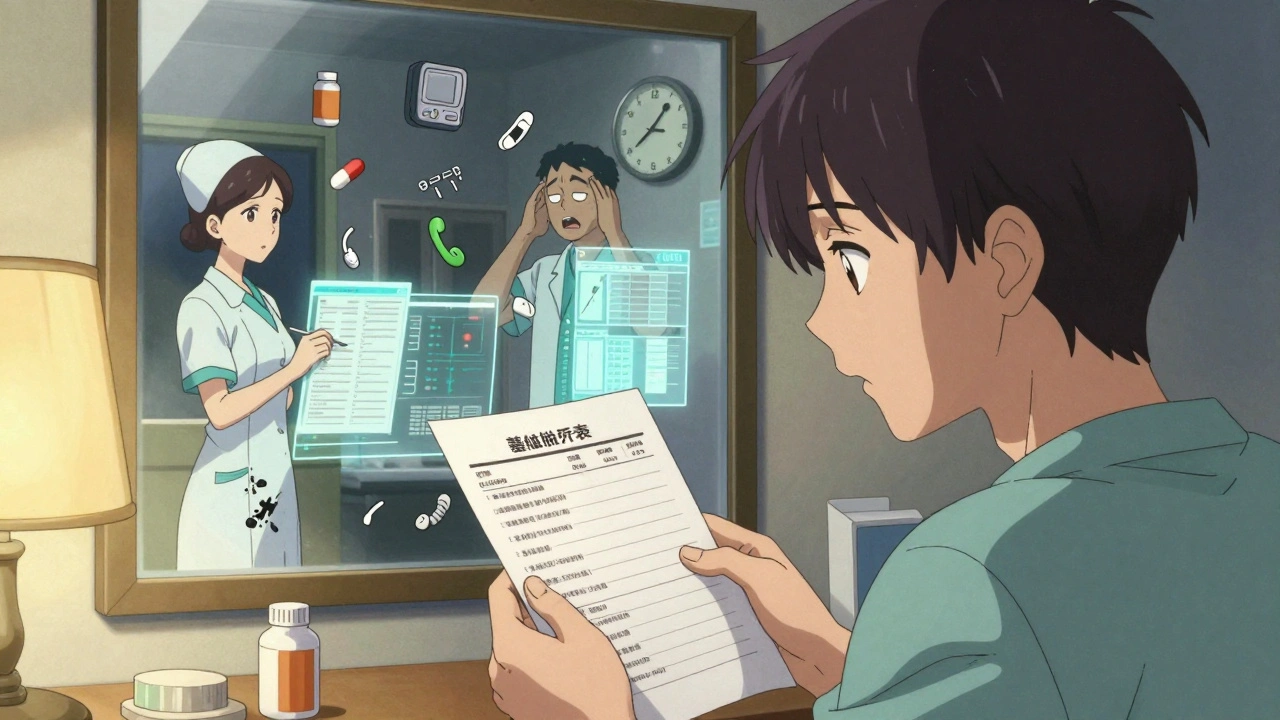
How to Fix It - Real Steps That Work
There’s no magic bullet. But there are proven steps:- Assign clear roles. Who is responsible for getting the home med list? Who verifies it? Who explains it to the patient? The MARQUIS study showed that clear roles reduce harmful errors by 27%.
- Use the MATCH toolkit. Developed by AHRQ, this isn’t just software. It’s a full workflow guide with 159 steps. Hospitals that use all the recommendations see a 63% drop in errors - far better than EHR-only implementations.
- Give pharmacists time. Don’t expect them to reconcile 10 patients in an hour. The best programs allow 15-20 minutes per patient. Even 10 minutes helps. Anything less is a gamble.
- Train staff on what not to do. A 2022 study found that training staff to take med histories without clear roles actually increased errors by 15%. Don’t just train - define responsibility.
- Involve patients. Give them a printed list. Ask them to read it aloud. Say: “Is this what you’ve been taking? Any changes?”
What’s Changing in 2025
The rules are tightening. The 2025 National Patient Safety Goals, released in December 2024, now require verification of high-risk medications using at least two independent sources. That means you can’t rely on one EHR or one pharmacy record. You need two - like a home list plus a pharmacy printout. The World Health Organization launched Phase 2 of its Medication Without Harm campaign in October 2024, targeting a 30% reduction in harm during high-risk transitions by 2027. And new AI tools are emerging. MedWise Transition, cleared by the FDA in August 2024, reduced discrepancies by 41% in a 12-hospital pilot by cross-checking patient data across systems and flagging risks in real time. In Australia, the Australian Commission on Safety and Quality in Health Care has had medication reconciliation as a core standard since 2020. But adoption is still uneven. Many rural clinics still rely on paper. Urban hospitals are better equipped - but still struggle with interoperability.What You Can Do - Whether You’re a Patient or Provider
If you’re a patient: Always carry a current list of your medications - including doses and why you take them. Bring it to every appointment. Ask: “Is this new medicine supposed to replace something I was on?” If you’re a provider: Don’t assume the list you got is right. Verify it. Use two sources. Involve the pharmacist. Don’t rush discharge. If your system doesn’t let you do it right, push for change. The data is clear: doing this right saves lives - and money. The AHRQ estimates full implementation could prevent 800,000 medication errors a year in the U.S. alone - saving $2.1 billion. This isn’t about bureaucracy. It’s about making sure the next person who walks out of the hospital doesn’t come back because they were given the wrong pill. That’s not a failure of technology. It’s a failure of process. And it’s fixable.What is medication reconciliation?
Medication reconciliation is the process of creating the most accurate list possible of all medications a patient is taking - including prescription drugs, over-the-counter pills, vitamins, and supplements - and comparing it to the medications ordered during a hospital stay or care transition. The goal is to catch and fix mistakes like duplicates, omissions, wrong doses, or dangerous interactions before they cause harm.
Why do medication errors happen most often during discharge?
Discharge is a high-risk moment because multiple systems are involved - hospital, pharmacy, primary care, and the patient’s home. Information often gets lost in translation. Prescriptions may be printed without checking what the patient was taking before admission. Patients may not understand their new regimen. And if the hospital doesn’t verify the discharge list with the patient’s community pharmacy or primary doctor, errors slip through. Studies show up to 65% of patients with 10+ medications experience a discrepancy at discharge.
Can electronic health records (EHRs) prevent medication errors?
EHRs can help - but only if used correctly. When integrated with clinical decision support and barcode scanning, they reduce errors by up to 48%. But during implementation, many hospitals see a spike in errors because staff start copying old lists instead of verifying them. Poor interoperability between systems also limits their effectiveness. Only 37% of U.S. hospitals can electronically share medication data with community pharmacies, forcing staff to rely on phone calls and faxes.
Why are pharmacists so important in preventing medication errors?
Pharmacists are trained in drug interactions, dosing, and therapy management. When they lead medication reconciliation, post-discharge errors drop by 57% and hospital readmissions fall by 38% within 30 days. They don’t just input data - they ask questions, verify with patients, and catch subtle mistakes like duplicate drugs or outdated doses that doctors might miss during a busy shift.
What’s the biggest barrier to preventing medication errors during transitions?
The biggest barrier is poor communication between providers and lack of patient involvement. A 2023 study found 78% of errors stem from information gaps between hospital staff, community doctors, and pharmacies. Even worse, only 28% of healthcare facilities consistently involve patients in verifying their own medication lists. Without the patient’s input, even the best system can fail.
How long does it take to implement a successful medication reconciliation program?
It typically takes 6 to 9 months to implement a full program, with organizations using the AHRQ MATCH toolkit seeing results within 12 months. Success depends on assigning clear roles, training staff properly, giving pharmacists enough time per patient (15-20 minutes), and embedding the process into existing workflows - not adding extra steps. Rushing the process or skipping training often leads to more errors.





Andrew Frazier December 6, 2025
This whole thing is a waste of time. We don't need more paperwork. We need to stop letting foreigners and bureaucrats run our hospitals. I've seen nurses spend 20 minutes checking pills while the patient's heart is failing. Fix the system, not the checklist.
Nava Jothy December 7, 2025
OMG this is so TRUE!!! 🥹 I lost my aunt last year because they gave her warfarin AND aspirin without checking... and no one even apologized! 😭 Pharmacists are the real heroes here, not these overpaid doctors who think they know everything. We need to pay pharmacists like surgeons!! 💸💊 #MedicationSafety
brenda olvera December 7, 2025
I work in a rural clinic and we still use paper lists but we started having patients read their meds out loud at discharge and it cut our errors in half. No fancy tech needed. Just listen to the person. They know their body better than any EHR. Trust them. They're not dumb.
Myles White December 7, 2025
I've been a clinical pharmacist for 18 years and I can tell you this: the real problem isn't the lack of tools or even training-it's the culture. Hospitals treat reconciliation like a compliance checkbox instead of a clinical imperative. We have teams doing this in 8 minutes per patient. That's not reconciliation, that's a gamble. The data shows that when you give pharmacists 15-20 minutes, you don't just prevent errors-you prevent readmissions, lawsuits, and grief. But leadership won't fund it because they don't see the ROI until someone dies. And then they blame the nurse.
pallavi khushwani December 8, 2025
You know what's wild? In India we don't even have proper EHRs in most places, but our community pharmacists have this weird ritual-they sit with the patient, make them show the pill bottle, and ask 'Why are you taking this?' It's simple, but it works. Maybe we don't need more tech. Maybe we need to remember that medicine is about people, not forms.
Akash Takyar December 10, 2025
The data presented here is compelling, and the recommendations are both evidence-based and pragmatic. However, the implementation of such protocols requires sustained institutional commitment, adequate staffing ratios, and continuous quality assurance mechanisms. Without these foundational elements, even the most well-designed frameworks will falter under operational pressure. I would recommend cross-departmental audits and patient feedback loops as complementary strategies.
Karen Mitchell December 11, 2025
This is just another bureaucratic overreach disguised as patient safety. The Joint Commission has been pushing this since 2005 and nothing changed. Meanwhile, real problems like staffing shortages, opioid epidemics, and ER overcrowding are ignored. This is virtue signaling with a clipboard. Stop wasting money on checklists and hire more nurses.
Geraldine Trainer-Cooper December 12, 2025
I think we're missing the point. It's not about lists or pharmacists or EHRs. It's about the fact that we treat people like data points. You give someone 12 pills and expect them to remember why they're taking them? That's not healthcare. That's negligence wrapped in a powerpoint.
Kenny Pakade December 13, 2025
AI tools? FDA cleared? Please. This is all corporate snake oil. The real reason meds go wrong is because hospitals are owned by private equity firms that cut staff to maximize profits. You think a pharmacist can do a good job when they're juggling 30 patients? This whole post is a distraction. The problem isn't process. It's capitalism.
Brooke Evers December 15, 2025
I had a patient last week who came back with internal bleeding because they were given two different blood thinners. The discharge sheet said one, the pharmacy had another, and the patient didn’t know the difference. I sat with her for an hour, went through every pill, called her primary care, and talked to the pharmacy. She cried and said, ‘No one’s ever taken this much time before.’ That’s the moment you realize this isn’t paperwork. It’s humanity. And if we keep rushing it, we’re not just failing the system-we’re failing each other.
Chris Park December 15, 2025
Let’s be honest: this whole medication reconciliation push is a cover for the government to track every pill you take. The ‘AI tools’? They’re feeding data to insurance companies and pharmaceutical monopolies. The 37% interoperability rate? That’s not a failure-it’s a firewall. If you want real safety, stop trusting systems built by vendors who profit from your illness. Burn the EHRs. Go back to handwritten notes. At least then you know who’s writing them.