
Why Salt Triggers Your Symptoms
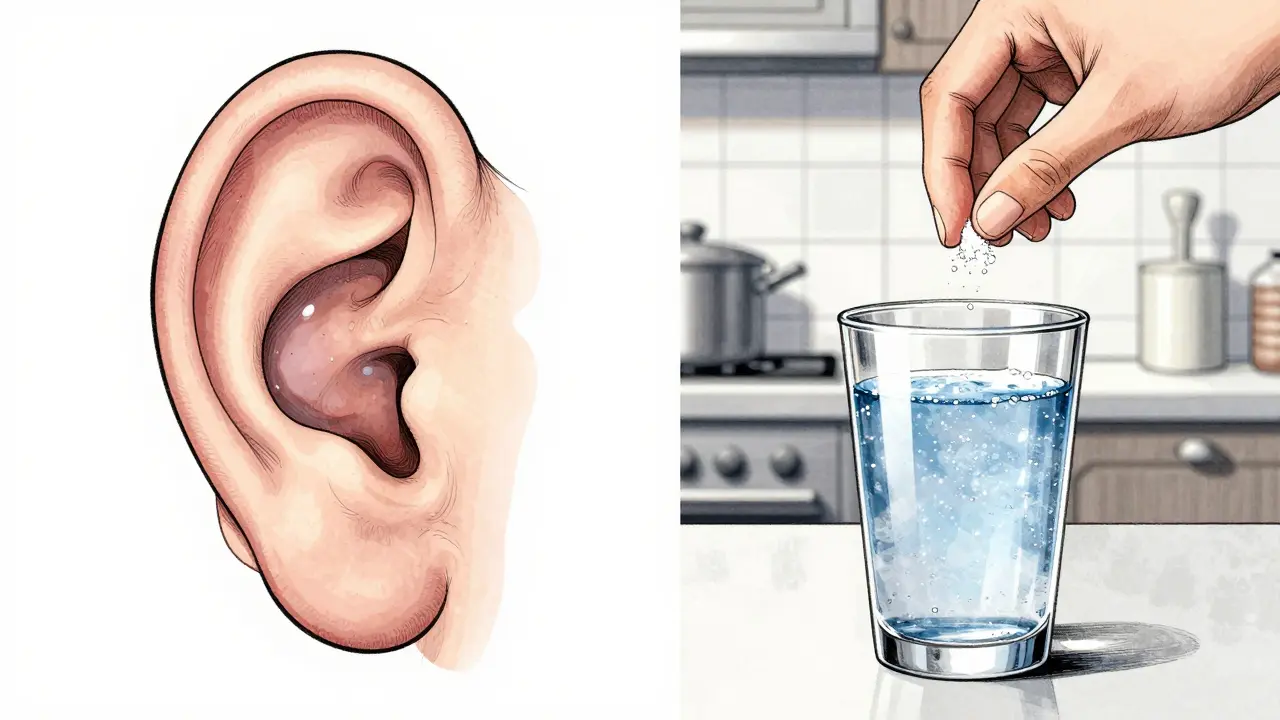
To understand why a Meniere’s Diet focuses so heavily on salt, we have to look at the inner ear. Inside your ear, there's a fluid called endolymph. In a healthy ear, this fluid stays balanced. However, people with Meniere's often experience endolymphatic hydrops, which is basically a buildup of too much fluid in the inner ear. Think of it like a water balloon that's been overfilled; the pressure builds up, and eventually, it triggers a vertigo attack or causes your hearing to fluctuate.
Sodium acts like a sponge in your body, pulling water wherever it goes. When you eat a high-sodium meal, your body retains more water to dilute that salt. This systemic fluid retention can increase the pressure in the endolymphatic sac. Some researchers, like Dr. Richard Miyashita, suggest that keeping salt low helps regulate aldosterone, a hormone that manages how your kidneys handle sodium and water. By keeping your sodium levels steady, you prevent the "spikes" in fluid pressure that lead to those devastating dizzy spells.
Setting Your Sodium Limits
So, how much salt is too much? While general health guidelines might be vague, Meniere's management requires more precision. Most medical authorities, including the Mayo Clinic and the University of Maryland Medical System, recommend limiting your daily sodium intake to between 1,500 and 2,000 mg. To put that in perspective, that's about ¾ to 1 teaspoon of table salt for the entire day.
It's important to realize that this doesn't just mean the salt shaker on your table. Most of the sodium we consume is "hidden" in processed foods. In fact, research shows that about 77% of dietary sodium comes from restaurant and packaged foods rather than what we add while cooking. If you're hitting 3,000 mg or more, you're significantly increasing the risk of a flare-up.
| Sodium Level | Typical Effect/Recommendation | Source/Context |
|---|---|---|
| Under 1,500 mg/day | Optimal for severe cases; highest symptom reduction | European Academy of Otology |
| 1,500 - 2,000 mg/day | Standard first-line dietary target for most patients | Mayo Clinic / UMM Health |
| Up to 2,300 mg/day | General healthy adult limit; may be too high for Meniere's | American Heart Association |
| Over 3,000 mg/day | High risk of fluid retention and vertigo triggers | Miyashita et al. (NIH) |
The Fluid Balance Equation
There is a common misconception that if you're trying to stop fluid buildup in your ear, you should stop drinking water. This is actually dangerous and counterproductive. The goal isn't dehydration; it's stability. When you stop drinking water, your body may actually trigger hormones to hold onto whatever fluid it has left, which can make the pressure in your ear worse.
A recent 2024 study published in Acta Otolaryngologica found that the most successful patients didn't just cut salt-they paired it with consistent hydration. Specifically, they recommended a water intake of about 35 ml per kilogram of body weight daily. For a 175-lb person (roughly 80 kg), that's about 2.8 liters of water. This approach helps flush excess sodium from the system and keeps the fluid levels in the inner ear from fluctuating wildly.
Practical Strategies for a Low-Sodium Lifestyle
Switching to a low-sodium diet can feel like your food has lost its flavor. The trick is to stop relying on salt and start relying on aromatics and acids. Instead of reaching for the salt shaker, try using fresh lemon juice, lime, or high-quality vinegars to "brighten" the flavor of your food.
Here are some concrete ways to handle your daily routine:
- Audit your condiments: Soy sauce, ketchup, mustard, and Worcestershire sauce are sodium bombs. Swap them for salt-free herb blends or homemade versions using apple cider vinegar and garlic.
- The "400 mg Rule": When buying canned or frozen goods, check the label. Aim for options that have less than 400 mg of sodium per serving. If the serving size looks tiny, remember that you'll likely eat more than one serving, doubling or tripling that number.
- Dining Out Strategy: Don't be afraid to ask for your meal "without added salt." Most chefs can easily sear a piece of fish or grill vegetables without salt if you ask beforehand. Avoid fast food entirely, as these are almost impossible to manage.
- Spread it out: Avoid eating one giant salty meal and then eating nothing but celery for the rest of the day. Spreading your sodium intake evenly across your meals prevents the sudden spikes in fluid pressure that can trigger vertigo.

Beyond Salt: Caffeine and Alcohol
While sodium is the main culprit, other substances can mess with your inner ear blood flow. Caffeine and Alcohol are known to constrict blood vessels. When the blood flow to the inner ear is restricted, the organ becomes more sensitive to fluid changes. Many people find that reducing their morning coffee or skipping the evening cocktail reduces the intensity of their tinnitus and the frequency of their attacks.
Comparing Diet to Medical Interventions
You might wonder why you should bother with the diet if there are pills available. Doctors often prescribe diuretics (like hydrochlorothiazide) to help the body shed excess fluid. While these work for 50-70% of people, they come with side effects like dehydration and electrolyte imbalances.
Dietary restriction, on the other hand, has no pharmaceutical side effects. In a study of patients following a strict low-salt diet, 68% experienced significant symptom reduction without any adverse reactions. While it requires more willpower and a bit of a lifestyle overhaul, the long-term safety profile is far superior to long-term medication.
Does a low-salt diet actually cure Meniere's disease?
No, dietary changes cannot cure Meniere's disease, as the exact cause of the disorder is still not fully understood. However, sodium restriction is a first-line therapy that significantly reduces the frequency and severity of vertigo attacks and can help stabilize hearing levels by managing inner ear fluid pressure.
Can I use salt substitutes?
Be very careful with salt substitutes. Many of them replace sodium with potassium. While this is better for some, excessive potassium can be dangerous for people with kidney issues or those taking certain medications. It is always best to use herbs, spices, and citrus juices for flavor instead of chemical substitutes.
How quickly will I see results after changing my diet?
Results vary, but many patients notice a reduction in "aural fullness" (the feeling of pressure in the ear) within a few weeks of consistent sodium restriction. Long-term studies, such as the one in Acta Otolaryngologica, showed significant improvements in hearing thresholds and dizziness scores over a 6-month period of strict adherence.
Is it okay to have a "cheat day" with salt?
In Meniere's management, a single high-sodium meal can trigger an attack. Because the inner ear is so sensitive to fluid shifts, "cheat days" can lead to immediate spikes in endolymphatic pressure, potentially causing a vertigo episode. Consistency is the key to stability.
Why is drinking water important if the problem is too much fluid?
It seems contradictory, but drinking enough water helps your body maintain a steady state. When you are dehydrated, your body produces more aldosterone and other hormones to hold onto water and salt, which can actually worsen the fluid buildup in your inner ear. Adequate hydration helps your kidneys flush out excess sodium effectively.








Darius Prorok April 6, 2026
Everyone knows that salt is just water retention. If you just drink more water, you wash the salt out. It is basic science. Most people just don't get how the kidneys actually work with the inner ear. You don't need fancy doctors to tell you that balance is the key here. Just keep it simple and keep the fluids moving through your system.
Ethan Davis April 7, 2026
Sure, follow the "official" guidelines from the Mayo Clinic. Big Pharma just wants you on those diuretics forever so they can make a buck off your kidneys. They don't want you to find out that the real cause is environmental toxins in our water supply that make us more sensitive to sodium in the first place. Wake up people, this is just a band-aid for a bigger problem they aren't telling us about.
Michael Flückiger April 7, 2026
You can totally do this!!! It takes some work, but your health is worth it!!!! Just imagine how much better you will feel once you get those levels steady!!!! Keep pushing forward!!!!
Toby Sirois April 9, 2026
Most of you are just lazy. You think a little lemon juice is going to save you when you have no discipline in your life. I have mastered my body's flow through sheer will and strict adherence to these rules, and yet I see people still eating processed junk and wondering why they are dizzy. It is honestly pathetic how some of you just can't handle a simple diet change without complaining about flavor. If you actually cared about your health, you would stop whining and just do the work. I have seen people fail this a thousand times because they lack the mental strength to say no to a salty chip. It is not about the salt, it is about your lack of control over your own urges. You are basically slaves to your taste buds and it shows in your symptom flare-ups. Get your life together or just accept that you will be dizzy forever because you love soy sauce more than your own hearing.
Nikhil Bhatia April 10, 2026
Too much reading. Basically just stop eating salt.
Daniel Trezub April 11, 2026
Actually, the 1,500 mg limit is a bit arbitrary. Some people do fine at 2,500 mg as long as they are consistent. I've read a few forums where people swear by a higher limit combined with specific minerals. It's not a one-size-fits-all thing, even if the clinics say it is. Just a thought!
Windy Phillips April 13, 2026
It is simply tragic that so many of us must suffer through such rigorous restrictions because we ignored our health for years... The emotional toll of losing one's balance is something these clinical tables simply cannot capture... I find it quite exhausting to see people treat this so casually...
Grace Lottering April 15, 2026
Hidden sodium is a scam. Government regulates the labels. They hide the truth.
Dhriti Chhabra April 15, 2026
I believe it would be most beneficial for all of us to approach these dietary changes with a spirit of patience and mutual support. It is indeed a challenging transition, yet the potential for improved quality of life is quite significant.
Jamar Taylor April 16, 2026
That's the spirit! Just take it one meal at a time and you'll crush those vertigo attacks!