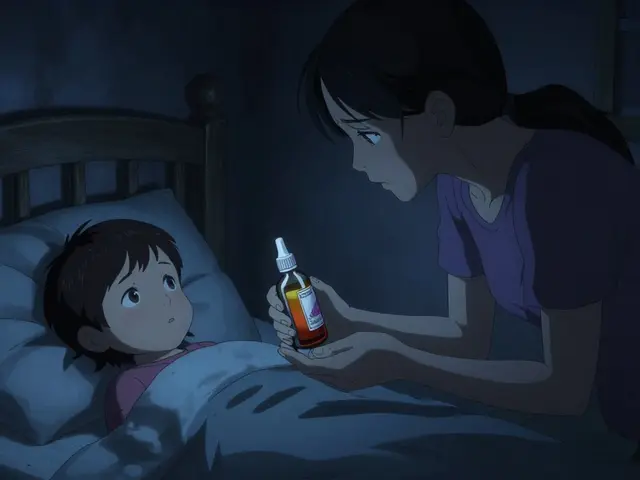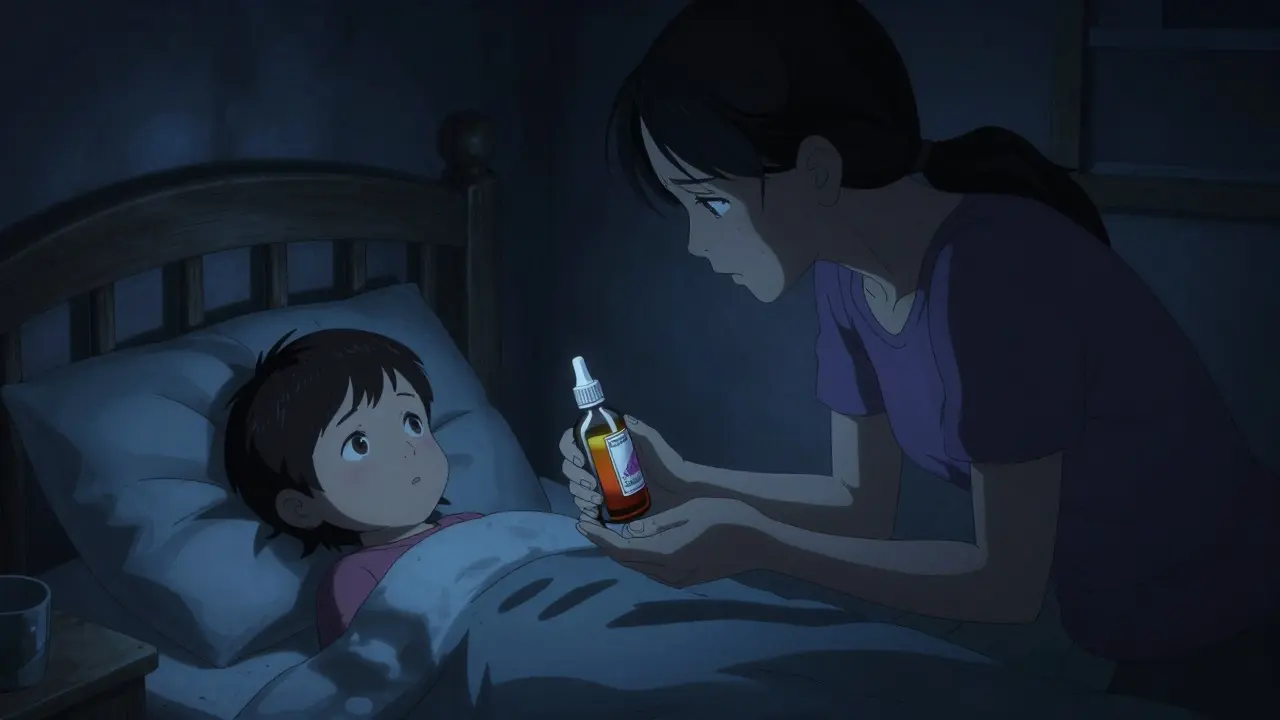
It is 2 AM. Your toddler is coughing fitfully, eyes wide open, refusing to settle back into sleep. The instinct kicks in hard: run to the cabinet, grab that bottle of colorful syrup, and give them a dose so everyone can finally rest. It feels like the right thing to do. But here is the hard truth that every major medical organization agrees on: giving over-the-counter (OTC) cough and cold medicines to children under six years old is not just ineffective-it is dangerous.
You are not alone if you have done this. Surveys show that nearly half of parents still give these meds to young kids because they want relief, fast. However, the science has been clear for years. These drugs do not work well in small bodies, and they carry risks of serious side effects, including seizures and breathing problems. Let’s look at why these products are risky for little ones and what actually works to help your child breathe easier tonight.
Why Experts Say No to Cough Syrup for Toddlers
The guidance against using cough and cold products in young children comes from decades of data. In 2007, the U.S. Food and Drug Administration (FDA) issued a strong warning after analyzing reports of deaths and emergency room visits linked to these drugs. Between 1969 and 2006, there were 123 reported deaths associated with OTC cough and cold use in infants and toddlers. Thousands more ended up in the ER.
The American Academy of Pediatrics (AAP) and the Centers for Disease Control and Prevention (CDC) back this up. They state clearly that neither cough nor cold medications are indicated for children younger than four years. In fact, many experts extend this caution to age six. Why? Because little kids process drugs differently. Their livers and kidneys are still maturing. For example, children under two have only about 23% of the adult enzyme activity needed to safely break down ingredients like dextromethorphan, a common cough suppressant. This means the drug stays in their system longer and builds up to toxic levels much faster than in an adult.
Furthermore, the doses are tricky. A 2015 study found that over 67% of medication errors in children under six involved incorrect dosing. Parents often use kitchen spoons instead of calibrated measuring cups, leading to accidental overdoses. When you add the fact that many products contain multiple active ingredients-like a pain reliever mixed with a decongestant-the risk skyrockets. Giving two different syrups that both contain acetaminophen can lead to liver toxicity. It is a mistake no parent wants to make, but it happens more often than we think.
Understanding the Ingredients and Risks
To understand the danger, you need to know what is inside those bottles. Most pediatric OTC cough and cold products contain a mix of chemicals designed for adult physiology. Here is a breakdown of the common culprits:
- Antihistamines (e.g., brompheniramine, chlorpheniramine): These dry up mucus but can cause drowsiness or, paradoxically, hyperactivity in some kids. They can also thicken secretions, making it harder to cough up phlegm.
- Decongestants (e.g., pseudoephedrine, phenylephrine): These shrink swollen blood vessels in the nose. In young children, they can raise heart rate and blood pressure significantly, leading to jitteriness, insomnia, and even hallucinations.
- Cough Suppressants (e.g., dextromethorphan): These block the cough reflex. While stopping a cough sounds good, coughing is a protective mechanism to clear airways. Blocking it can trap mucus and increase the risk of pneumonia. In high doses, it can cause confusion and rapid breathing.
- Expectorants (e.g., guaifenesin): These thin mucus. There is little evidence they work effectively in children, and they can cause stomach upset.
The FDA’s Pediatric Advisory Committee concluded in 2007 that there is no evidence these products are effective for children under six, but there is clear evidence of potential serious harm. Side effects like respiratory depression (slowed breathing), tachycardia (fast heart rate), and seizures are real risks. Cincinnati Children's Hospital Medical Center warns that inappropriate use can lead to erratic behavior and constipation. The bottom line is simple: the risks outweigh any unproven benefits.
| Ingredient Type | Common Examples | Effect in Young Children | Recommendation |
|---|---|---|---|
| Antihistamine | Brompheniramine, Chlorpheniramine | Drowsiness, Hyperactivity, Thickened Mucus | Avoid under 4-6 years |
| Decongestant | Pseudoephedrine, Phenylephrine | Rapid Heart Rate, High Blood Pressure, Insomnia | Avoid under 6 years |
| Cough Suppressant | Dextromethorphan | Confusion, Respiratory Depression, Toxicity | Avoid under 4-6 years |
| Expectorant | Guaifenesin | Stomach Upset, Low Efficacy | Avoid under 4-6 years |

What Actually Works: Safe Alternatives by Age
If you cannot give syrup, how do you help a miserable child? The answer lies in supportive care, hydration, and specific natural remedies that have proven track records. The approach changes slightly depending on your child’s age.
For Infants Under 6 Months
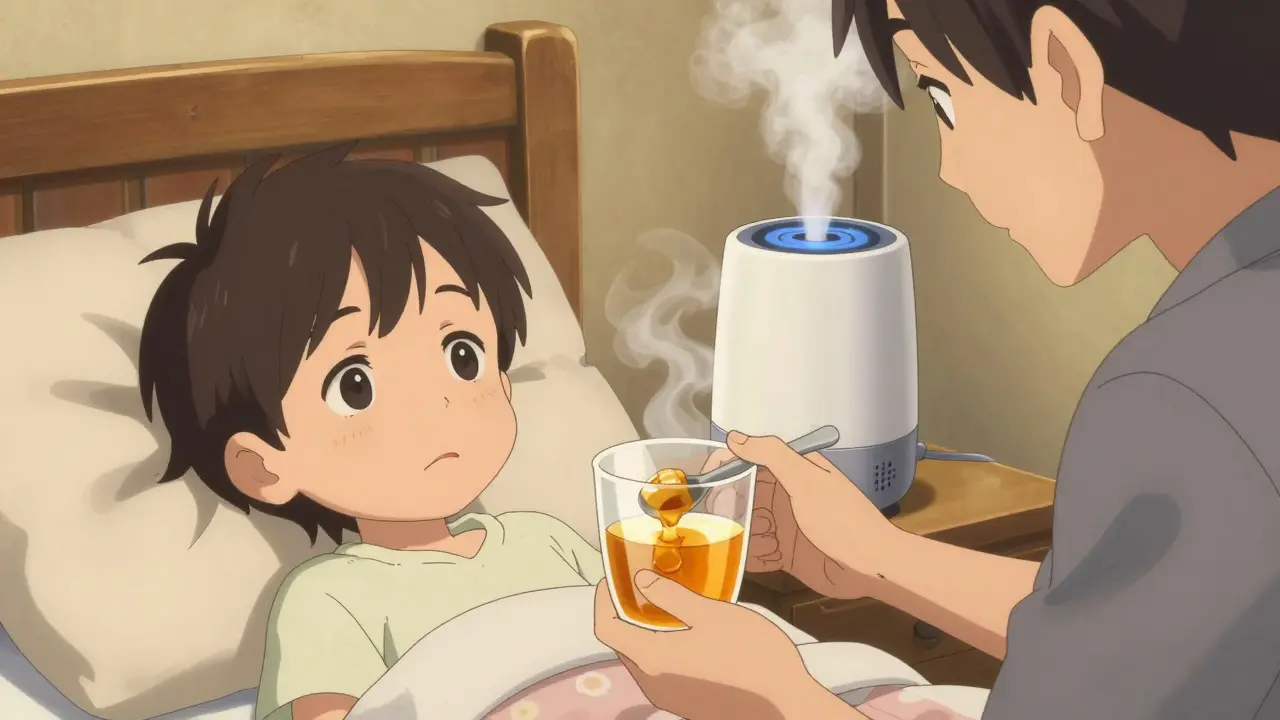
This is the most vulnerable group. Do not give any OTC meds. Focus on comfort and clearing the nose. Use saline nasal drops followed by gentle suction with a bulb syringe. This physically removes the mucus blocking their tiny airways. Run a cool-mist humidifier in the room to keep the air moist, which soothes irritated throats and loosens congestion. Avoid warm-mist humidifiers due to the burn risk. Keep your baby upright when possible to help drainage.
For Children 6 Months to 1 Year
You can continue with saline drops and suction. If your child has a fever or body aches, you may use acetaminophen (Tylenol) if recommended by your pediatrician. The typical dose is 10-15 mg/kg every 4-6 hours, never exceeding five doses in 24 hours. Always use the measuring device that came with the medicine. Hydration is key-offer breast milk, formula, or small sips of water frequently.
For Children 1 Year and Older
Here is the game-changer: Honey is a natural cough suppressant. Yes, plain honey. Studies, including guidelines from the American College of Chest Physicians, show that honey is as effective as, or better than, many OTC cough medicines for children over one year old. Give ½ to 1 teaspoon of honey directly or mixed in warm water. It coats the throat, thins secretions, and calms the cough reflex naturally. Note: Never give honey to infants under 12 months due to the risk of infant botulism.
For older toddlers (ages 4-6), consult your doctor before considering any OTC options. Many experts still advise against them. Instead, try lozenges if your child can swallow them safely without choking. They stimulate saliva production, which soothes the throat. Continue with the humidifier and plenty of fluids.
Reading Labels and Avoiding Pitfalls
Even if you decide to use medication for an older child, label literacy is crucial. Look for the "Active Ingredients" box. Check for acetaminophen. If your child is already taking Tylenol for a fever, do not give a multi-symptom cold medicine that also contains acetaminophen. This double-dosing is a leading cause of accidental liver damage in children.
Also, beware of "nighttime" formulas. These often contain diphenhydramine, an antihistamine that causes drowsiness. While it might knock your kid out, it doesn't treat the underlying virus and can cause next-day grogginess or rebound hyperactivity. Stick to single-ingredient products if you must medicate, and always ask your pharmacist or pediatrician first.
Another pitfall is using adult formulations. Some parents dilute adult pills or liquids when children's versions aren't available. This is extremely dangerous. Adult doses are far too high for small metabolisms. Never improvise with adult meds.
When to Call the Doctor
Colds are viral and usually resolve on their own in 7-10 days. However, watch for red flags that indicate something more serious than a simple cold. Contact your healthcare provider immediately if your child has:
- Difficulty breathing or wheezing
- A fever over 100.4°F (38°C) in an infant under 3 months, or persistent high fever in older children
- Signs of dehydration (no wet diapers for 8+ hours, dry mouth, no tears)
- A cough that lasts more than 10-14 days
- Ear pain or pulling at ears
- Extreme lethargy or irritability
These symptoms could signal pneumonia, ear infections, or other conditions that require prescription treatment, not OTC syrups.
Can I give my 3-year-old Benadryl for a cold?
Generally, no. Diphenhydramine (Benadryl) is an antihistamine. While it helps with allergies, it is not effective for viral colds and can cause significant side effects in toddlers, including extreme drowsiness or paradoxical hyperactivity. The AAP advises against using OTC cough and cold meds in children under 4. Consult your pediatrician for safe alternatives.
Is Vicks VapoRub safe for babies?
Regular Vicks VapoRub should not be used on children under 2 years old. The menthol and camphor can irritate their sensitive airways and potentially cause breathing issues. For infants, look for specific pediatric formulations labeled for ages 2+, or stick to saline drops and humidifiers. Never apply anything near the nose or face of a young child.
How much honey should I give my 2-year-old for a cough?
For children aged 1 to 5 years, the recommended dose is ½ to 1 teaspoon of honey. You can give it straight, mix it in warm water, or stir it into tea (if they drink it). It acts as a soothing demulcent and has been shown in studies to reduce cough frequency and severity. Remember, honey is strictly forbidden for infants under 12 months due to botulism risk.
Why are cough medicines banned for kids under 4?
They are not technically "banned" but strongly contraindicated by the FDA and AAP due to lack of efficacy and safety risks. Young children metabolize drugs differently, leading to higher toxicity risks. Additionally, accurate dosing is difficult, leading to frequent overdose errors. The consensus is that the potential for serious harm (seizures, breathing issues) outweighs any minor symptom relief.
What is the best way to clear a stuffy nose in a toddler?
The safest and most effective method is saline nasal drops or spray followed by suction with a bulb syringe or nasal aspirator. Do this before feeds and bedtime. Using a cool-mist humidifier in the bedroom also helps keep nasal passages moist and loose. Avoid decongestant nasal sprays like oxymetazoline for children under 6, as they can cause rebound congestion and other side effects.