Medication Anxiety Checker
This tool helps determine if your anxiety symptoms might be caused by medications you're taking. Based on information from the article about medication-induced anxiety.
Next Steps
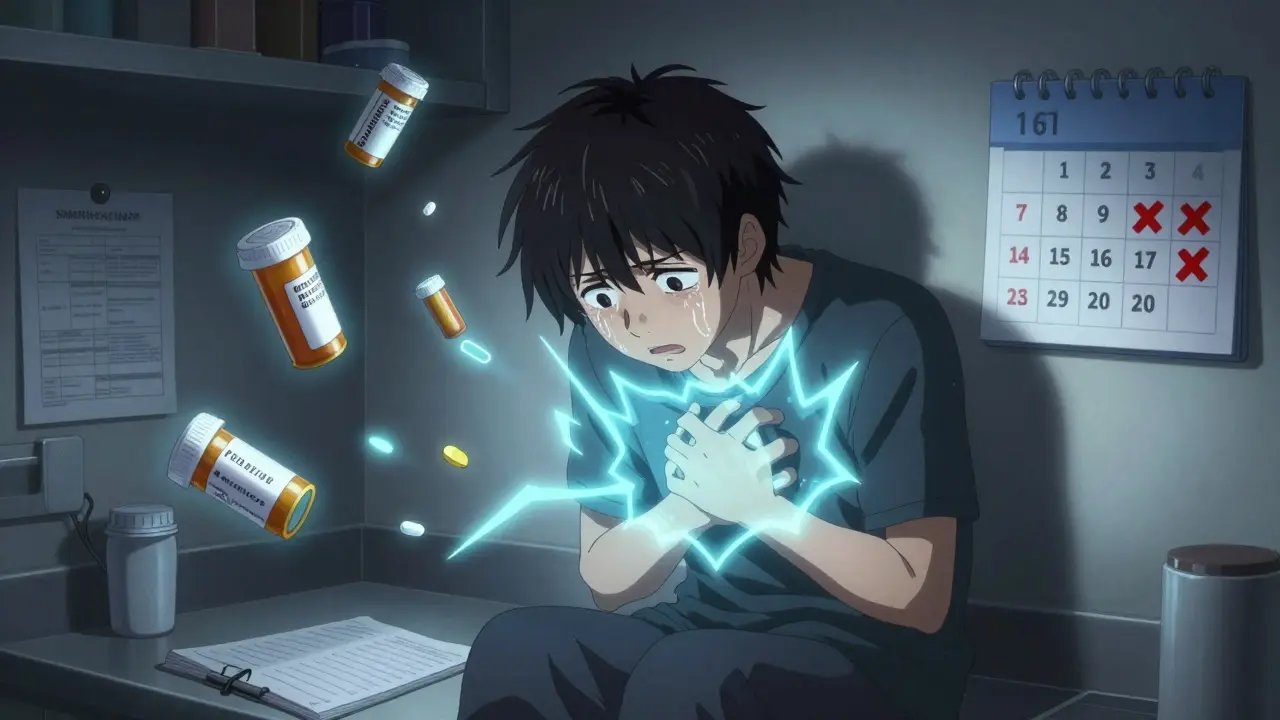
It’s not just in your head - sometimes, the anxiety you’re feeling comes straight from your medicine cabinet. You start a new pill for your asthma, thyroid, or ADHD, and suddenly you’re jittery, your heart races, or panic hits out of nowhere. You might think it’s stress, burnout, or even a new mental health issue. But what if it’s the medication itself? You’re not alone. Around 5-7% of all anxiety cases are directly linked to prescription or over-the-counter drugs. And for people taking multiple meds, that number climbs even higher.
What Medications Can Cause Anxiety?
Not all drugs are created equal when it comes to side effects. Some are well-known triggers for nervousness, panic, and restlessness. Here are the most common culprits:- Corticosteroids - Like prednisone, hydrocortisone, and dexamethasone. These are powerful anti-inflammatories, often used for asthma, allergies, or autoimmune conditions. But they can mess with your brain’s stress system. People on high doses or long-term treatment often report irritability, sleep loss, and full-blown panic attacks. One Reddit user, after starting prednisone for an asthma flare, had three panic attacks in two days - never having experienced anxiety before.
- ADHD stimulants - Adderall, Vyvanse, Ritalin, and Concerta. These work by boosting dopamine and norepinephrine to improve focus. But for some, that boost becomes too much. Instead of calm focus, they get racing thoughts, trembling hands, and a constant sense of dread. Switching to a lower dose or a non-stimulant like Strattera often helps.
- Asthma inhalers - Albuterol (Proventil) and salmeterol (Serevent) can cause shaking, fast heartbeat, and nervousness. These are beta-agonists, which stimulate the nervous system. For someone prone to anxiety, these physical symptoms can easily spiral into a panic attack.
- Thyroid meds - Levothyroxine (Synthroid) is meant to fix low thyroid levels. But if the dose is too high, your body goes into overdrive. Symptoms mimic hyperthyroidism: sweating, heart palpitations, insomnia, and intense worry. Regular TSH tests (aiming for 0.4-4.0 mIU/L) can prevent this.
- Decongestants - Pseudoephedrine in Sudafed and similar products constricts blood vessels. That’s good for a stuffy nose, but bad for your nerves. It can raise your heart rate, make you feel wired, and keep you up at night.
- Antibiotics and anesthesia - Certain antibiotics like fluoroquinolones (Cipro, Levaquin) and even anesthesia drugs have been linked to anxiety episodes. These are rarer, but still documented.
Why Does This Happen?
Your brain runs on chemicals - serotonin, dopamine, norepinephrine, GABA. Medications that change these levels can throw your mood off balance. Stimulants like Adderall pump up norepinephrine, which is tied to alertness… and anxiety. Corticosteroids interfere with your HPA axis - the body’s stress response system - making you overly sensitive to pressure. Even thyroid meds can overstimulate your metabolism, tricking your body into thinking it’s under constant threat.It’s not just about the drug. Genetics matter too. A 2022 study found that people with certain variants in the CYP2D6 enzyme - which breaks down many medications - are more likely to experience anxiety side effects. If your body processes drugs slowly, those chemicals stick around longer, increasing the chance of overstimulation.

How to Tell If It’s the Medication - Not a Mental Health Condition
This is the big question: Is this anxiety because of the pill… or is it something deeper?The key difference? Timing. If your anxiety started within days or weeks of beginning a new medication - especially if you’ve never had anxiety before - it’s likely drug-induced. The DSM-IV (and upcoming DSM-6) says true generalized anxiety disorder (GAD) must last at least six months and be present outside of substance use or withdrawal.
Here’s a simple rule: If the anxiety fades within a few days to weeks after stopping the drug, it’s probably medication-induced. If it sticks around? Then it might be a separate condition.
One patient, "ThyroidWarrior," spent three months and visited two doctors before realizing her constant worry and heart palpitations were from too much levothyroxine. Another, "ADHDmom," cut her Adderall dose in half and switched to Vyvanse - and her anxiety dropped by 70% in two weeks.
Doctors often miss this connection. Consumer surveys show 42% of people wait over three months before their provider links their anxiety to a medication. That’s why keeping a symptom journal matters. Write down: when you took the pill, what time, and when anxiety hit. Did it happen 30 minutes after your dose? Right before bed? That pattern tells your doctor more than any lab test.
What to Do If You Think Your Medication Is Causing Anxiety
Don’t stop cold turkey. Don’t guess. Talk to your doctor. Here’s how to handle it:- Don’t panic - but don’t ignore it. Anxiety from meds is common and treatable. You’re not weak or broken.
- Track your symptoms. Use a notebook or phone app. Note the time of day, dose, and severity of anxiety. Look for patterns.
- Ask your doctor about alternatives. For ADHD, try non-stimulants like Strattera. For asthma, consider a different inhaler or spacer. For thyroid, get your TSH checked - you might be over-replaced.
- Ask about dose reduction. Starting ADHD meds at 1/4 the usual dose and slowly increasing cuts anxiety risk by 65%. Same goes for steroids - tapering slowly prevents withdrawal anxiety.
- Consider CBT. Cognitive Behavioral Therapy helps reframe anxious thoughts while you adjust your meds. Studies show it’s 60-70% effective in managing symptoms during transition.
- Get blood tests. For thyroid meds, a simple TSH test can confirm if your dose is right. For steroids or stimulants, no test exists - but symptoms are the best guide.
One woman on prednisone was told her panic attacks were "just anxiety." She printed a WebMD article about steroids and brought it to her doctor. Within a week, her dose was lowered - and her symptoms vanished.

Prevention Is Possible
You don’t have to wait until you’re in crisis. If you already have anxiety, or a family history of it, tell your doctor before starting any new medication. Ask: "Can this cause anxiety?" and "Is there a less stimulating option?"For corticosteroids: Always use the lowest effective dose for the shortest time. For stimulants: Start low, go slow. For thyroid meds: Monitor TSH every 6-8 weeks after a dose change. For asthma inhalers: Rinse your mouth after use - it reduces systemic absorption.
The American Thyroid Association and Mayo Clinic both recommend regular check-ins. If you’re on long-term meds, don’t assume everything is fine just because you’re "getting used to it." Your body might be quietly screaming.
The Bigger Picture
Research is moving fast. The National Institute of Mental Health has invested $2.3 million into understanding why some people get anxiety from meds - and others don’t. By 2025, we may have genetic tests that predict who’s at risk. Until then, awareness is your best tool.Medications save lives. But they’re not harmless. The line between treatment and side effect is thin. If you feel off after starting a new pill - trust that feeling. You know your body better than any algorithm. And if your doctor dismisses it? Find another one. Your peace of mind matters as much as your physical health.
Can anxiety from medication go away on its own?
Yes, in most cases. Medication-induced anxiety typically clears up once the drug is stopped or the dose is adjusted. For short-acting drugs like albuterol or pseudoephedrine, symptoms may fade within hours or days. For longer-acting ones like prednisone or ADHD stimulants, it can take 1-4 weeks. The key is stopping or changing the drug under medical supervision - never on your own.
Do all people get anxiety from these meds?
No. Only some people are sensitive. Genetics, age, existing anxiety, and how fast your body metabolizes the drug all play a role. Two people on the same dose of Adderall can have completely different reactions. One feels focused, the other feels like they’re vibrating. It’s not about willpower - it’s biology.
Can I take anti-anxiety meds to fix this?
Not usually. Benzodiazepines like Xanax or Klonopin might help short-term, but they don’t fix the root cause. The goal is to remove or adjust the triggering medication, not layer on another drug. If anxiety persists after the trigger is gone, then therapy or other treatments make sense. But using anti-anxiety meds to mask a drug side effect can delay proper care.
What if my doctor says it’s "just stress"?
That’s a red flag. While stress can cause anxiety, if symptoms appeared right after starting a new medication - especially if you’ve never had anxiety before - it’s likely the drug. Bring printed info from reputable sources (like WebMD, Mayo Clinic, or NIH). Ask for a dose review or alternative. If they refuse, seek a second opinion. Your mental health deserves more than a dismissal.
Are natural remedies helpful for medication-induced anxiety?
They can help with mild symptoms, but they won’t fix the cause. Magnesium, chamomile, or deep breathing may calm you down temporarily. But if your anxiety comes from a stimulant or steroid, those remedies won’t stop the chemical reaction in your brain. Focus on adjusting the medication first. Use natural tools as backup, not replacement.








Mike Hammer February 15, 2026
I was on prednisone for a bad allergy flare and thought I was losing my mind. Panic attacks, insomnia, just... wired. Didn't connect it until I read this. Dropped the dose and boom. Normal again. Weird how doctors just shrug and say 'it's stress'.
Also, anyone else notice how albuterol makes your hands shake like you're holding a power drill? Not 'side effect' - that's the drug doing its job. Just not the job you wanted.
Daniel Dover February 16, 2026
This is spot on. Stopped my asthma inhaler. Anxiety gone in 48 hours.
Joe Grushkin February 17, 2026
The fact that we're even having this conversation is a testament to the collapse of modern pharmacology. We've turned the human body into a lab rat experiment with a prescription pad. Prednisone isn't 'causing anxiety' - it's revealing the fragile, chemically dependent shell we've built around ourselves. You think your brain is 'yours'? It's a cocktail of synthetic molecules and corporate profit margins.
And don't get me started on 'non-stimulant alternatives'. Strattera? That's just Ritalin with a bankruptcy lawyer.
Mandeep Singh February 17, 2026
This is such a basic concept yet people act like it's groundbreaking. Of course meds cause anxiety - look at the pharmacology! Stimulants = norepinephrine surge = fight-or-flight mode. Corticosteroids = HPA axis disruption = cortisol overload. Thyroid meds = metabolic overdrive = your body thinks it's being chased by a bear.
And yet doctors still act like it's a mental health issue. I had a GP tell me my panic attacks from levothyroxine were 'just anxiety from work'. I asked for my TSH levels. She said 'you don't need tests if you feel fine'. I walked out. Found an endocrinologist who actually reads the lab. My dose was 2x too high. Anxiety vanished in 10 days. Stop blaming the patient. Start blaming the system.
Esha Pathak February 18, 2026
It's like your body's a symphony and meds are the guy who shows up with a chainsaw and says 'I'm here to fix the flute'.
I was on Adderall for a year. Felt like I was vibrating inside my skin. Couldn't sleep. Heart pounding like a jackhammer. Thought I had generalized anxiety disorder. Went to five therapists. One of them asked, 'When did this start?' I said, 'Right after I started the Adderall.' She said, 'Huh. Maybe it's the Adderall.' I switched to Vyvanse. Half the dose. No more vibrating. I feel like I'm human again.
Why is this so hard to understand? Your body isn't broken. The chemistry is just out of whack. And yeah, I'm gonna say it - if your doctor doesn't get this, find a new one. Your peace isn't optional.
Betty Kirby February 19, 2026
I'm so tired of people treating this like it's a mystery. It's not. It's basic pharmacology. You take a drug that stimulates the nervous system? Of course you get anxiety. You take a drug that floods your body with synthetic cortisol? Of course you get panic attacks.
And yet we have people on SSRIs for 'anxiety' while they're on prednisone or Adderall. It's like putting a bandaid on a broken leg and calling it a cure.
Also, 'natural remedies'? Chamomile tea won't undo a 20mg dose of Adderall. Stop wasting your money. Fix the root. Stop the drug. Adjust the dose. That's it. No magic herbs. No spiritual awakening. Just science.
Josiah Demara February 19, 2026
Let me break this down for the people who still think this is 'in their head'.
1. The brain doesn't have a 'stress button'. It has receptors. Receptors that get overstimulated.
2. Corticosteroids bind to glucocorticoid receptors in the amygdala. That's the fear center. You're not 'anxious' - your amygdala is being hijacked.
3. Beta-agonists like albuterol activate beta-adrenergic receptors in the heart and brain. That's why your pulse races. That's why your palms sweat. That's not 'anxiety'. That's pharmacology in action.
4. Levothyroxine? Too much T4 = overactive metabolism = your body thinks it's running from a lion. No mental health diagnosis needed.
And don't give me that 'just get therapy' nonsense. Therapy doesn't unbind a steroid from a receptor. It doesn't reduce a TSH level. You fix the drug. Not the mind.
Kaye Alcaraz February 20, 2026
To anyone reading this and feeling alone - you're not. This happens more than you think. And it's not your fault. Your body is reacting to a chemical, not a character flaw.
Tracking symptoms? Yes. Talking to your doctor? Yes. Asking for alternatives? Absolutely.
One small step: Write down the time you take your pill and when anxiety hits. You might be surprised. I had a client who realized her panic attacks always hit 45 minutes after her thyroid med. She brought it to her doctor. Dose adjusted. Peace restored.
You deserve to feel safe in your own skin. This is fixable. And you're already doing the right thing by paying attention.
Erica Banatao Darilag February 21, 2026
I appreciate this post. I was on prednisone for polymyalgia and developed severe anxiety. My GP said I needed an SSRI. I refused. I asked for a dose reduction. They lowered it. Within three days, my anxiety lifted. I wish more doctors listened to patients instead of reaching for the prescription pad. Thank you for sharing this. It helps.
Charlotte Dacre February 22, 2026
So let me get this straight - you're telling me that if I take a drug designed to make me hyper, I might... get hyper? Shocking. Next you'll tell me water is wet.
Chiruvella Pardha Krishna February 22, 2026
There is a deeper truth here, one that lies beyond the biochemical cascade and the receptor binding curves. We have, as a society, outsourced our bodily wisdom to the pharmaceutical industry. We trust the pill more than the pulse, the lab report more than the intuition. And yet, when the body screams - it is not rebellion. It is remembrance.
The anxiety is not the enemy. The silence of the system is.
Perhaps the real medicine is not in the tablet, but in the courage to question it.