Imagine saving over $373 billion in a single year just by switching to a different version of medicine. That is exactly what generic drugs have achieved for the American healthcare system recently. But this wasn't always the case. For most of the 20th century, these affordable alternatives were barely on the radar. Today, they make up the vast majority of prescriptions filled across the country. Understanding how we got here requires looking back nearly two centuries, from early apothecaries to complex modern legislation.
The Wild West of Medicine
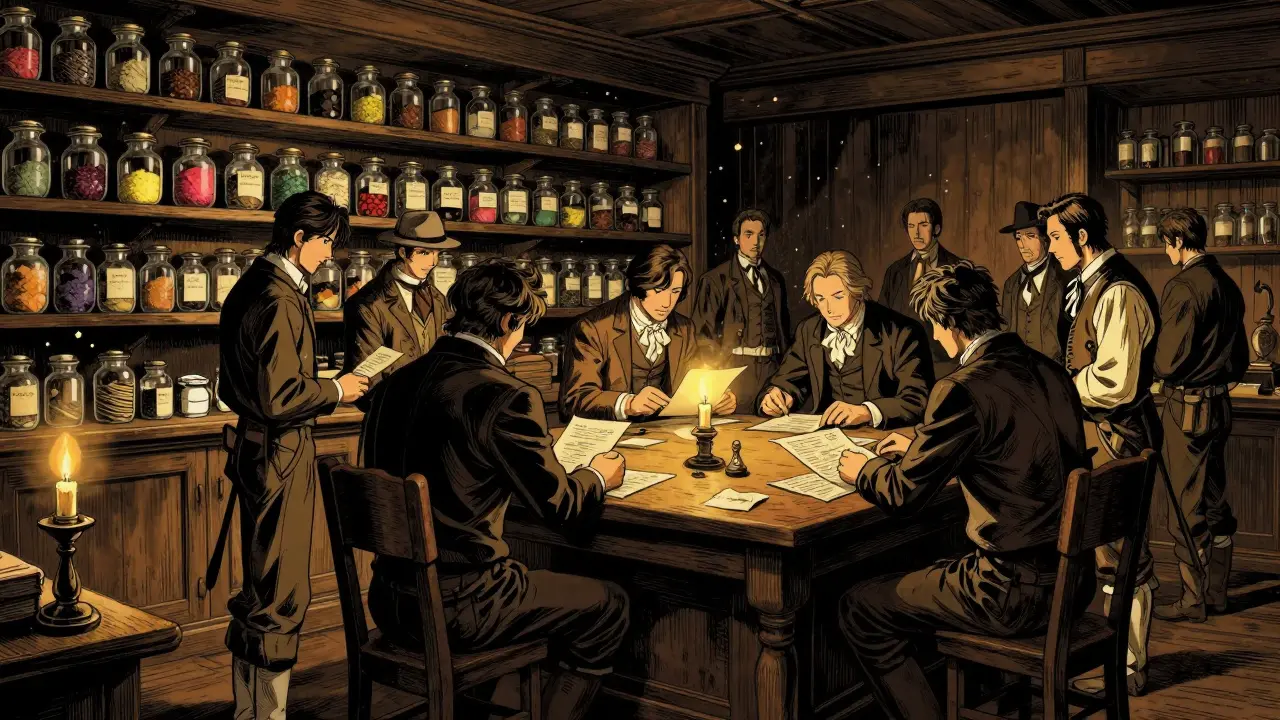
Generic drugs are pharmaceutical products that contain the same active ingredients as their brand-name counterparts. They must be identical in strength, dosage form, route of administration, and safety standards before they can reach your local pharmacy.Before this standard existed, the drug market was chaotic. In the early days of the republic, there was little oversight regarding what people put into their bodies. If you bought medicine from a merchant, you took their word on its quality. This began to change in 1820 when eleven physicians met in Washington, D.C. Their goal was ambitious: create a national standard for medicines. This meeting established the U.S. Pharmacopeia (USP), a compendium setting the rules for drug purity and quality. For decades, this remained a voluntary set of guidelines. It wasn't until later that laws forced compliance. By 1888, the American Pharmaceutical Association published the National Formulary to further combat counterfeiting. However, real protection required government teeth. President Theodore Roosevelt signed the Federal Food and Drugs Act in 1906. This law demanded labeling requirements to prevent misbranding and adulteration. While it laid the foundation for regulatory authority, it still didn't require manufacturers to prove their cures worked-they only had to stop lying about what was inside the bottle.
Safety First: The Catalyst Years
The true turning point for safety came from tragedy. In 1937, a medication called Elixir Sulfanilamide caused the death of 107 people, many of them children. The culprit was diethylene glycol, a toxic solvent used as a sweetener in the liquid drug formulation. Public outrage demanded immediate action, leading to the Federal Food, Drug, and Cosmetic Act (FDCA) of 1938.
This legislation mandated that new drugs must be proven safe by the manufacturer and cleared by the agency before marketing. It also created the modern framework for what would eventually become the Food and Drug Administration. Even then, generics weren't really a category yet. The focus was entirely on ensuring that brand-name products did not harm patients. Another major shift arrived in 1951 with the Durham-Humphrey Amendment, which officially classified drugs as either prescription-only or non-prescription. This distinction helped define which medications needed professional supervision, setting the stage for a regulated pharmaceutical market.

Efficacy and the Rise of Proof
Proving safety wasn't enough for lawmakers in the 1960s. After concerns grew over untested drugs on the market, Congress passed the Kefauver-Harris Drug Amendments in 1962. This law made a critical requirement: manufacturers had to prove both safety and efficacy. This applied retroactively too; companies had to submit data for all products sold between 1938 and 1962. Suddenly, many older drugs couldn't prove their effectiveness and were pulled from shelves.
While this protected patients, it also created a high barrier for new competition. Developing clinical trials cost millions. Smaller companies found it impossible to compete with big pharma giants. During this era, brand-name manufacturers held almost total control. It wasn't until the mid-1960s that federal health programs like Medicare and Medicaid started prioritizing generic options to lower costs, nudging the industry toward a new competitive model.
The Game Changer: Hatch-Waxman Act
If any single law deserves credit for the modern drug landscape, it is the Drug Price Competition and Patent Term Restoration Act of 1984, informally known as the Hatch-Waxman Act. Before 1984, generic drugs made up only about 19% of prescriptions dispensed in the U.S. The act recognized a problem: patent expirations left patients with expensive drugs but no cheap alternatives ready to take the place immediately. Manufacturers often had to redo costly clinical trials to get approval for their versions, which delayed entry and kept prices high.
Hatch-Waxman solved this by creating the Abbreviated New Drug Application (ANDA) process. Instead of repeating human trials, generic manufacturers simply needed to prove their product was bioequivalent to the original. Bioequivalence means the drug behaves in the body the same way as the brand-name version. This shortcut allowed generics to hit the market years faster. The result was staggering. From 19% of all prescriptions, the generic share jumped to over 90% within a few decades. This massive shift saved consumers billions while keeping innovation alive through patent protections for innovator companies.
| Attribute | Brand-Name Drugs | Generic Drugs |
|---|---|---|
| Active Ingredient | Identical to generic | Same chemical formula |
| Potency & Purity | FDA tested | FDA tested (must match brand) |
| Approval Cost | ~$2.5 Billion R&D | Bioequivalence study only |
| Color & Shape | Proprietary design | May differ visually |
| Price | Higher (Patent protection) | 20-80% less than brand |

The Modern Era: Challenges and Solutions
Despite the success story, the path hasn't been smooth sailing in recent years. Starting around 2007, the FDA launched the Generic Initiative for Value and Efficiency (GIVE) to streamline approvals and reduce backlogs. They saw that even with Hatch-Waxman, the review times for ANDAs were dragging, sometimes taking three years. By 2022, the agency reported reducing average review times to just ten months, boosting approval rates significantly.
However, the global nature of manufacturing introduced new vulnerabilities. Most active pharmaceutical ingredients (APIs) for these pills come from facilities outside the United States. According to recent FDA reports, roughly 80% of these ingredient facilities are located in China and India. This heavy reliance creates supply chain risks. When factories close or quality issues arise abroad, shortages ripple through the entire domestic system.
Shortages became a headline issue in the 2010s. Between 2018 and 2022, there were over 1,200 drug shortages reported. Surprisingly, 65% of those shortages involved generic drugs rather than brand names. Why does this happen? Because margins on generics are razor-thin. If a factory shuts down due to environmental violations or fire, other manufacturers might not rush to fill the gap unless the price skyrockets. Experts noted a disturbing trend where prices for 15% of generic drugs increased by more than 100% between 2013 and 2017, driven by limited competition and volatility.
Closing Loopholes and Looking Ahead
The system isn't perfect. There have been accusations that brand-name companies exploit loopholes in the Hatch-Waxman framework. A common tactic involves suing a generic competitor immediately after they file for approval, triggering an automatic 30-month stay on that generic's entry. Critics call this "evergreening," effectively delaying competition indefinitely.
To fight this, Congress passed the Creating and Restoring Equal Access to Equivalent Samples (CREATES) Act in 2019. This law aimed to punish brand manufacturers who hoard samples needed for testing or intentionally block access. As of late 2022, the FDA had already taken dozens of enforcement actions under this rule. The goal remains balance: encourage innovation while protecting patient access.
Looking forward, the next frontier is biosimilars. These are complex biological products similar to small-molecule generics but designed to mimic biologic drugs like monoclonal antibodies. Biologics represent some of the most expensive treatments available today. Just as generics revolutionized pill-based medicine, biosimilars promise similar savings for biologics in the coming decade. Industry analysts project generic and biosimilar market dominance will hold steady between 90% and 92% through the late 2020s.
Are generic drugs exactly the same as brand-name drugs?
They must have the same active ingredient, strength, dosage form, and route of administration. The inactive ingredients (fillers or dyes) may differ slightly, causing differences in color or taste, but they work the same way in the body.
Why are generic drugs cheaper than brands?
Generic manufacturers don't pay for the initial research and clinical trials that the brand company did. They only need to prove bioequivalence, which costs a fraction of the price, allowing them to sell at a much lower cost.
What is the Hatch-Waxman Act?
Passed in 1984, this law created the legal pathway for generic drugs (ANDA) while extending patents for brand-name drugs to compensate for lost time during FDA review. It standardized generic competition.
Do generic drugs face shortages often?
Yes. About two-thirds of reported drug shortages involve generic products. This is often because margins are low, meaning fewer manufacturers produce the drug, making the supply chain vulnerable to disruptions.
How does the FDA ensure generic quality?
The FDA inspects manufacturing facilities globally and reviews bioequivalence data. Since 2012, user fee amendments have improved inspection frequencies and reduced approval review times to increase safety oversight.





Kendell Callaway Mooney March 31, 2026
The United States Pharmacopeia really changed things back in 1820. It set the stage for how we check medicines today. Before that you could buy almost anything without knowing what was inside. It is great to see how far regulations have come over the last two centuries. We still rely on those old standards for purity testing.
Cameron Redic April 1, 2026
Supply chains are totally broken right now.
Biraju Shah April 3, 2026
We need to stop letting big pharma hold us hostage with these patent games. Prices are way too high for average families to handle properly. The government needs to step in and enforce stricter price caps immediately.
dPhanen DhrubRaaj April 5, 2026
in india we see different side of story because prices are already low but quality issues arise often
Michael Kinkoph April 6, 2026
Frankly, most individuals; simply do not comprehend the nuanced financial incentives involved. Innovation requires profit margins! Without substantial rewards, no one would invest billions in research. It is morally imperative that we protect intellectual property rights fiercely.
Dan Stoof April 7, 2026
Oh wow the history of generic drugs is such a bright spot in healthcare! I love reading about the Hatch-Waxman Act because it truly changed everything for good. You know what people forget is that generics save lives by making meds affordable. Just think about the billions saved every single year! It is absolutely fantastic how science serves society like this. Some folks get scared of switching pills but honestly it makes perfect sense. The active ingredient stays exactly the same which is amazing. Imagine having access to heart meds that used to cost a fortune before laws passed. Now anyone can walk into a store and grab what they need cheaply. Sometimes the packaging looks different but that does not matter one bit. Safety remains our number one priority with the FDA watching closely. We should celebrate these small miracles in public health policy all day long. The balance between profit and patient safety is finally working out well. I feel super hopeful for biosimilars coming soon in the pipeline. Maybe next decade everyone gets treatment that used to be luxury goods. Surely everyone wants medicine to be accessible for the common person everywhere!
Adryan Brown April 9, 2026
While I understand your concern regarding the investment required for pharmaceutical development, it is also crucial to acknowledge the human cost when access becomes restricted due to pricing structures. There is a delicate equilibrium between encouraging innovation through financial gain and ensuring that life-saving treatments remain reachable for the vast majority of patients who require them daily. History has shown us repeatedly that monopolies can stifle progress if not checked by regulatory bodies that prioritize public welfare above corporate ledgers alone. We must find a middle ground where companies earn fair returns while communities maintain their ability to stay healthy without bankruptcy looming overhead constantly.
Brian Yap April 10, 2026
Funny enough down here in Australia we deal with similar stuff but usually our PBS system helps keep costs lower than US prices might be. Sometimes the pills look a bit weird shaped compared to what you expect but the med works same regardless. Supply chain issues hit us hard when factories overseas shut down for any reason though.
Calvin H April 10, 2026
Yeah sure supply chains are the problem because nothing ever breaks in logistics anymore. Tell me more about how the sky isn't falling when we run out of insulin batches occasionally. Real convenient narrative there buddy.
William Rhodes April 12, 2026
Your optimism is refreshing but perhaps naive regarding the complexities of global manufacturing dependency. We must question whether convenience outweighs security when eighty percent of ingredients come from distant lands beyond our control entirely. True safety demands diversification and resilience rather than relying solely on efficiency metrics that favor speed over stability fundamentally.
Marwood Construction April 12, 2026
The Pharmaceutical Benefits Scheme in Australia indeed provides a robust framework for managing drug expenditures effectively. However, reliance on imported active pharmaceutical ingredients introduces vulnerabilities that domestic production policies may mitigate eventually. Comparing regulatory outcomes requires analyzing specific import dependency ratios across different nations objectively.
Jonathan Alexander April 14, 2026
I saw a report once about a shortage causing hospitals to ration painkillers for surgeries. It makes my stomach turn just thinking about patients waiting longer because of a factory fire somewhere. The stress levels for doctors trying to manage that are unimaginable under current conditions unfortunately.
Charles Rogers April 14, 2026
Diversification solves risk but increases cost significantly without immediate ROI incentives driving private sector action.