Carpal Tunnel Surgery: What You Need to Know Before You Decide
When your hand goes numb, tingles, or aches constantly, especially at night, you might be dealing with carpal tunnel syndrome, a condition where the median nerve gets squeezed as it passes through a narrow passage in the wrist. Also known as nerve compression in the wrist, it’s one of the most common nerve disorders in the U.S., affecting millions—especially people who type, grip tools, or do repetitive hand motions daily. If conservative treatments like splints, stretches, or steroid shots haven’t helped after months, your doctor might suggest carpal tunnel surgery, a procedure to cut the ligament pressing on the nerve and give it more room. It’s not a major operation, but it’s still surgery—and you should know what to expect before you say yes.
The surgery itself comes in two main forms: open release and endoscopic. Open release means a small cut along the palm to see and cut the ligament directly. Endoscopic uses one or two tiny cuts and a camera to do the same job with less scarring and often faster recovery. Neither removes the nerve or bones—it just relieves pressure. Most people go home the same day. Recovery isn’t instant: you’ll need to keep the hand bandaged, avoid heavy lifting for weeks, and do gentle exercises to keep the wrist flexible. Some feel better in days. Others take months to regain full strength. The success rate is high—around 90% of patients report major improvement—but not everyone gets 100% back. If your nerves were compressed for years, some numbness or weakness might stick around.
Not everyone needs surgery. Many cases improve with wrist splints worn at night, anti-inflammatory meds, or changes to how you use your hands. If you work at a computer, adjusting your keyboard height or taking micro-breaks can make a big difference. Physical therapy focused on nerve gliding exercises has helped people avoid surgery entirely. But if you’re losing muscle in your thumb, dropping things often, or waking up every night with pain, waiting too long can lead to permanent nerve damage. That’s when surgery becomes the smartest choice.
What you’ll find in the posts below isn’t just about the procedure. It’s about the bigger picture: how medications interact with recovery, what to watch for after surgery, how to manage pain without relying on risky drugs, and why some people bounce back faster than others. You’ll see real-world advice on tracking symptoms, avoiding complications, and making decisions that match your lifestyle—not just what a doctor says. Whether you’re considering surgery, just had it, or are trying to avoid it, these posts give you the clear, no-fluff facts you need to take control.
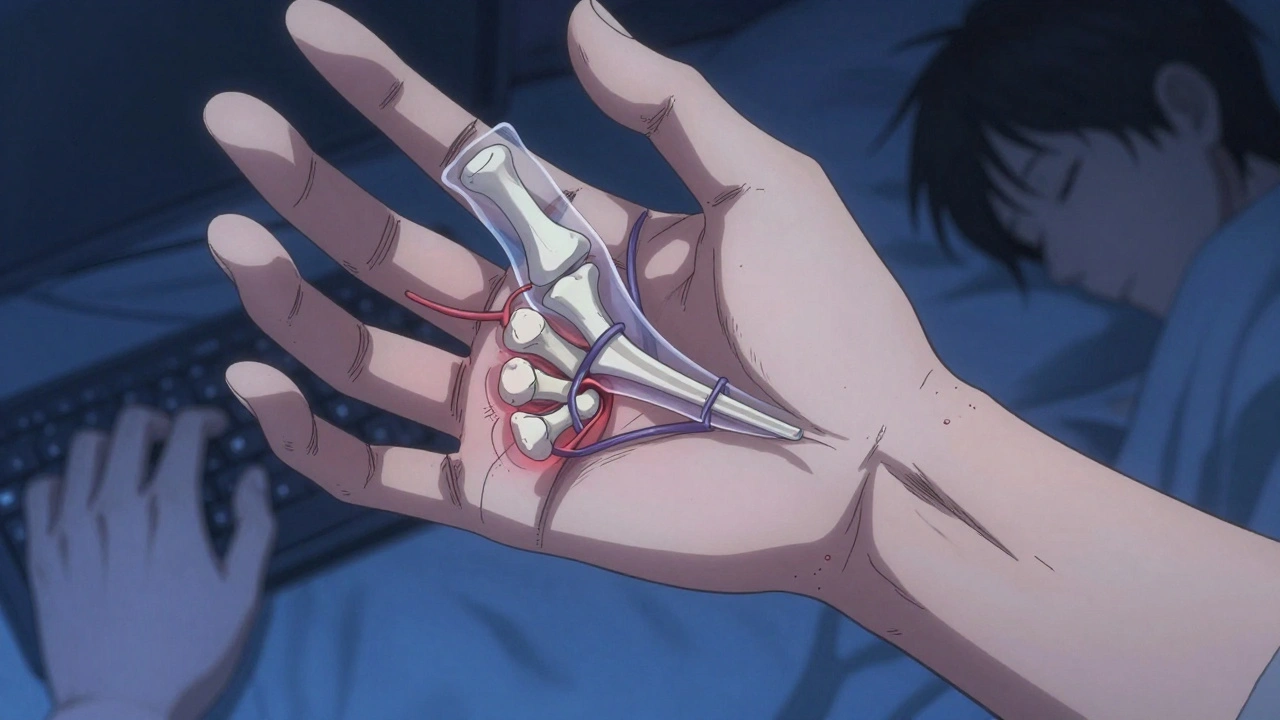
Carpal Tunnel Syndrome: Understanding Nerve Compression and Effective Treatment Options
Carpal tunnel syndrome is a common nerve compression disorder causing numbness and weakness in the hand. Learn the signs, proven treatments-from splints to surgery-and why early action prevents permanent damage.