QT Prolongation Risk Assessor
Select the patient profile and medication details below to calculate a composite risk score for QT prolongation.
Recommendation
Please select options and click Calculate.
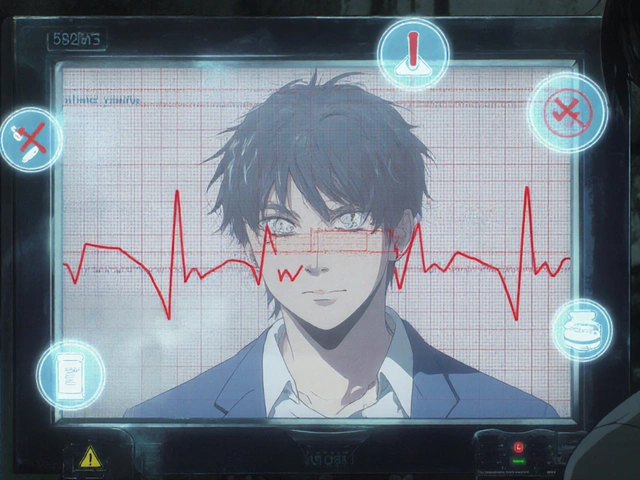
Imagine prescribing a life-saving medication for severe psychosis, only to unknowingly trigger a fatal heart rhythm. This is the reality of QT prolongation, a dangerous electrical delay in the heart's recovery phase that can lead to sudden cardiac death. When combining antipsychotics with psychiatric medications used to treat schizophrenia and bipolar disorder and other cardiac medications with drugs affecting heart rhythm or blood pressure, clinicians walk a tightrope between mental health stability and cardiovascular safety.
You don't need to be a cardiologist to understand the stakes. The heart’s electrical system resets after every beat. If this reset takes too long-measured as the QT interval on an electrocardiogram (ECG)-the heart becomes vulnerable to chaotic rhythms like torsade de pointes (TdP), a specific type of ventricular tachycardia that causes fainting or sudden death. While nearly all antipsychotics carry some risk, understanding which drugs are safe, how to monitor patients, and when to intervene can save lives without compromising psychiatric care.
Understanding the Risk Spectrum
Not all antipsychotics are created equal when it comes to heart safety. In the 1960s, thioridazine was a first-generation antipsychotic linked to severe cardiac arrhythmias became infamous for causing TdP, leading to its removal from the U.S. market in 2005. Today, we have a clearer picture. A 2023 pharmacovigilance study analyzing FDA data from 2004-2021 revealed stark differences in risk. Thioridazine had a reporting odds ratio (ROR) of 14.2 for QT prolongation, while newer agents like lurasidone showed an atypical antipsychotic with minimal effect on QT intervals had an ROR of just 1.2-barely above background levels.
Here is how common antipsychotics stack up based on current evidence:
| Medication | Risk Category | Average QTc Increase (ms) | Clinical Note |
|---|---|---|---|
| Thioridazine | High | ~35 ms | Removed from US market; avoid if possible |
| Haloperidol | High | 4-6 ms (IV higher) | Caution in polypharmacy; IV use requires monitoring |
| Ziprasidone | Moderate-High | 10-15 ms | Context-dependent; safer in healthy patients |
| Quetiapine | Moderate | 5-10 ms | Commonly used; monitor electrolytes |
| Aripiprazole | Low | <5 ms | Preferred for high-risk cardiac patients |
| Lurasidone | Low | <5 ms | Minimal QT effect; take with food |
The key takeaway? You can treat psychosis effectively without sacrificing cardiac safety by choosing lower-risk agents when appropriate. However, context matters. A 2023 JAMA Network Open study found that in ICU patients with baseline QTc < 550 ms, neither haloperidol nor ziprasidone significantly increased arrhythmia risk compared to placebo. This suggests that while drug properties matter, patient-specific factors often drive outcomes more than the medication alone.
Identifying High-Risk Patients
Before you prescribe, ask yourself: Who is most likely to suffer a cardiac event? Risk isn’t evenly distributed. According to the British Heart Rhythm Society guidelines (2018), certain demographic and clinical factors drastically increase vulnerability.
- Age: Patients over 65 have an odds ratio (OR) of 2.3 for QT prolongation.
- Sex: Women face a 1.7x higher risk than men due to hormonal influences on repolarization.
- Electrolyte Imbalances: Hypokalemia (potassium <3.5 mmol/L) was present in 28% of prolonged QT cases. Magnesium deficiency also plays a critical role.
- Polypharmacy: 63% of QT prolongation cases involve two or more QT-prolonging drugs. Combining antipsychotics with macrolide antibiotics, antifungals, or antiarrhythmics creates a perfect storm.
If your patient has multiple risk factors, you must adjust your strategy. Don’t just pick the cheapest antipsychotic. Choose one with the lowest cardiac footprint. For example, if a 70-year-old woman with hypokalemia needs treatment for acute agitation, aripiprazole or a partial dopamine agonist with low QT risk is far safer than haloperidol.

Monitoring Protocols That Work
Knowing when to check an ECG is as important as knowing which drug to prescribe. Many clinicians skip baseline testing, assuming “it’ll be fine.” But data shows 18.7% of psychiatric inpatients develop QTc > 500 ms during treatment, and 68% of those cases involved other QT-prolonging meds. Here’s a practical, step-by-step approach:
- Baseline ECG: Obtain before starting any moderate- or high-risk antipsychotic. This establishes your reference point.
- Early Follow-up: Repeat ECG within one week of reaching therapeutic dose. Most significant changes happen early.
- Annual Checks: For stable patients on long-term therapy, annual ECGs catch slow drifts in QTc.
- Electrolyte Management: Keep serum potassium >4.0 mmol/L and magnesium >1.8 mg/dL. Correct imbalances aggressively-they’re reversible contributors to risk.
When do you act? Use these thresholds:
- QTc > 450 ms (men) / > 470 ms (women): Monitor closely. No immediate action needed unless rising.
- QTc > 500 ms OR increase > 60 ms from baseline: Investigate causes. Check electrolytes, review concomitant meds, consider dose reduction.
- QTc > 550 ms: Discontinue or switch antipsychotic immediately. Hospitalize if symptomatic.
Remember, QTc is corrected for heart rate using formulas like Bazett’s. Always verify the calculation method your lab uses, as discrepancies can lead to misinterpretation.
Managing Drug Interactions
Antipsychotics rarely travel alone. Patients often take antidepressants, antihistamines, or antibiotics-all potential QT offenders. The danger lies in synergy. Two mild QT-prolonging drugs can combine to create a severe effect.
For instance, combining ziprasidone with an antipsychotic with moderate QT risk and fluconazole (an antifungal that inhibits CYP3A4) can dramatically raise ziprasidone levels and prolong QTc. Similarly, adding citalopram (an SSRI with known QT effects) to an antidepressant associated with dose-dependent QT prolongation increases risk exponentially.
To mitigate this:
- Use tools like CredibleMeds.org to screen for QT-prolonging combinations.
- Avoid mixing high-risk antipsychotics with other Class III antiarrhythmics (e.g., amiodarone, sotalol).
- If combination is unavoidable, choose the lowest effective doses and monitor weekly initially.
In one Massachusetts General Hospital case series, 57% of QT prolongation cases resolved simply by correcting electrolyte abnormalities-no drug change needed. Always look for reversible causes first.

Balancing Psychiatric Benefits vs. Cardiac Risks
Let’s address the elephant in the room: Should we withhold antipsychotics because of QT risk? Absolutely not. Schizophrenia carries a 5% lifetime suicide risk and a 12% additional mortality from accidental death. Studies show antipsychotic users have 40% lower overall mortality than non-users. The relationship follows a U-shaped curve: both no treatment and excessive dosing increase death risk.
Dr. David M. Taylor, author of the Maudsley Prescribing Guidelines, puts it plainly: “Assume all antipsychotics carry an increased risk of sudden cardiac death-but they protect against the consequences of schizophrenia, including suicide, at low and medium cumulative doses.”
Your job isn’t to eliminate risk-it’s to manage it. If a patient has borderline QTc but severe psychosis, don’t deny them treatment. Instead:
- Switch to a low-risk agent like lurasidone or aripiprazole.
- Reduce dose gradually rather than stopping abruptly.
- Optimize electrolytes and remove interacting drugs.
- Consider continuous telemetry in hospitalized patients during initiation.
In outpatient settings, telemedicine ECG interpretation is emerging as a viable solution, reducing barriers to monitoring in rural or underserved areas.
Future Directions and Emerging Data
The landscape is evolving. The FDA now requires thorough QT (TQT) studies with 100+ healthy volunteers for all new antipsychotic applications-a standard set in 2005 after thioridazine’s withdrawal. Between 2015-2020, three new candidates were rejected by the European Medicines Agency due to unacceptable cardiac profiles.
Newer agents like lumateperone are a novel atypical antipsychotic with promising safety profile are undergoing rigorous evaluation. Preliminary data suggests minimal QT impact, but long-term real-world evidence is still pending. A multicenter trial (NCT04567891) enrolling 800 medically complex patients will provide crucial insights into real-world QT effects by late 2024.
Meanwhile, hospital formularies are adapting. As of January 2023, 63% of U.S. academic medical centers implemented QT risk-based prescribing protocols. Sales of lurasidone grew 14.2% year-over-year in 2022, reflecting shifting preferences toward safer options.
What is the safest antipsychotic for patients with heart disease?
Lurasidone and aripiprazole are considered the safest options, with minimal effects on QTc intervals. They are preferred for patients with existing cardiac conditions or those taking other QT-prolonging medications.
How often should I order an ECG for a patient on antipsychotics?
Order a baseline ECG before starting moderate- or high-risk antipsychotics. Repeat within one week of reaching therapeutic dose, then annually for stable patients. More frequent monitoring is needed if QTc exceeds 450 ms (men) or 470 ms (women).
Can electrolyte imbalances cause QT prolongation?
Yes. Low potassium (<3.5 mmol/L) and low magnesium (<1.8 mg/dL) are major contributors. Maintaining potassium >4.0 mmol/L and magnesium >1.8 mg/dL significantly reduces risk. Always check electrolytes when QTc is prolonged.
Is ziprasidone safe for patients with cardiac issues?
Ziprasidone has moderate QT risk. Recent studies show it may be safe in healthy patients with normal baseline QTc, but caution is advised in critically ill patients or those on multiple QT-prolonging drugs. Context matters more than the drug alone.
What should I do if a patient’s QTc exceeds 500 ms?
Investigate immediately. Check electrolytes, review concomitant medications, and consider dose reduction. If QTc exceeds 550 ms or the patient is symptomatic, discontinue the antipsychotic and seek cardiology consultation. Do not ignore this threshold-it signals high risk for torsade de pointes.
Do all antipsychotics prolong QT interval?
Nearly all antipsychotics carry some risk, but the degree varies widely. First-generation agents like haloperidol pose higher risk, while second-generation agents like lurasidone and aripiprazole have minimal impact. No antipsychotic is completely risk-free, but many are very safe with proper monitoring.
Should I avoid antipsychotics in elderly patients with heart disease?
No. Elderly patients benefit greatly from antipsychotics, but require careful selection and monitoring. Choose low-risk agents, correct electrolytes, avoid polypharmacy, and monitor ECGs regularly. The benefits of treating psychosis outweigh the manageable cardiac risks.
How does polypharmacy affect QT prolongation risk?
Polypharmacy is a major risk factor. 63% of QT prolongation cases involve two or more QT-prolonging drugs. Combining antipsychotics with antibiotics, antifungals, or antidepressants can have synergistic effects. Always screen for interactions and minimize unnecessary medications.