Torsades de Pointes: Causes, Risks, and Medications That Can Trigger It
When your heart’s electrical system gets disrupted, it can lead to a life-threatening rhythm called torsades de pointes, a specific type of irregular heartbeat that can spiral into sudden cardiac arrest. Also known as polymorphic ventricular tachycardia, it doesn’t just happen out of nowhere—it’s often linked to something you’re taking, like an antibiotic, antidepressant, or even a common heart medication. This isn’t some rare theoretical risk. It’s a real, documented danger tied to drugs that stretch out the heart’s QT interval—the time it takes for the heart to recharge between beats. When that interval gets too long, the heart can misfire, and torsades de pointes is what follows.
Many medications can cause this. Antibiotics like azithromycin, a common prescription for infections, have been linked to QT prolongation and torsades. So have certain antidepressants like sertraline, a widely used SSRI, and even some anti-nausea drugs and antipsychotics. It’s not always about dosage—it’s about how your body reacts, especially if you’re already taking multiple drugs, have low potassium or magnesium, or have a pre-existing heart condition. The risk doesn’t always show up right away. Sometimes it builds slowly, which is why doctors check your ECG before and after starting certain meds.
What makes torsades de pointes scary is how fast it can turn dangerous. You might feel dizzy, have palpitations, or pass out—sometimes without warning. The good news? It’s often preventable. If you’re on a drug known to affect the QT interval, your doctor should monitor you. Blood tests for electrolytes, heart rhythm checks, and reviewing all your meds (including over-the-counter ones) can catch problems early. And if you’ve ever had a bad reaction to a medication that made your heart race or feel off, tell your doctor. That detail could save your life.
Below, you’ll find detailed comparisons of medications that carry this risk—like how azithromycin stacks up against other antibiotics, or why certain antidepressants trigger side effects in some people but not others. These aren’t just general guides. They’re practical, real-world breakdowns of what’s in your medicine cabinet and what it might be doing to your heart.
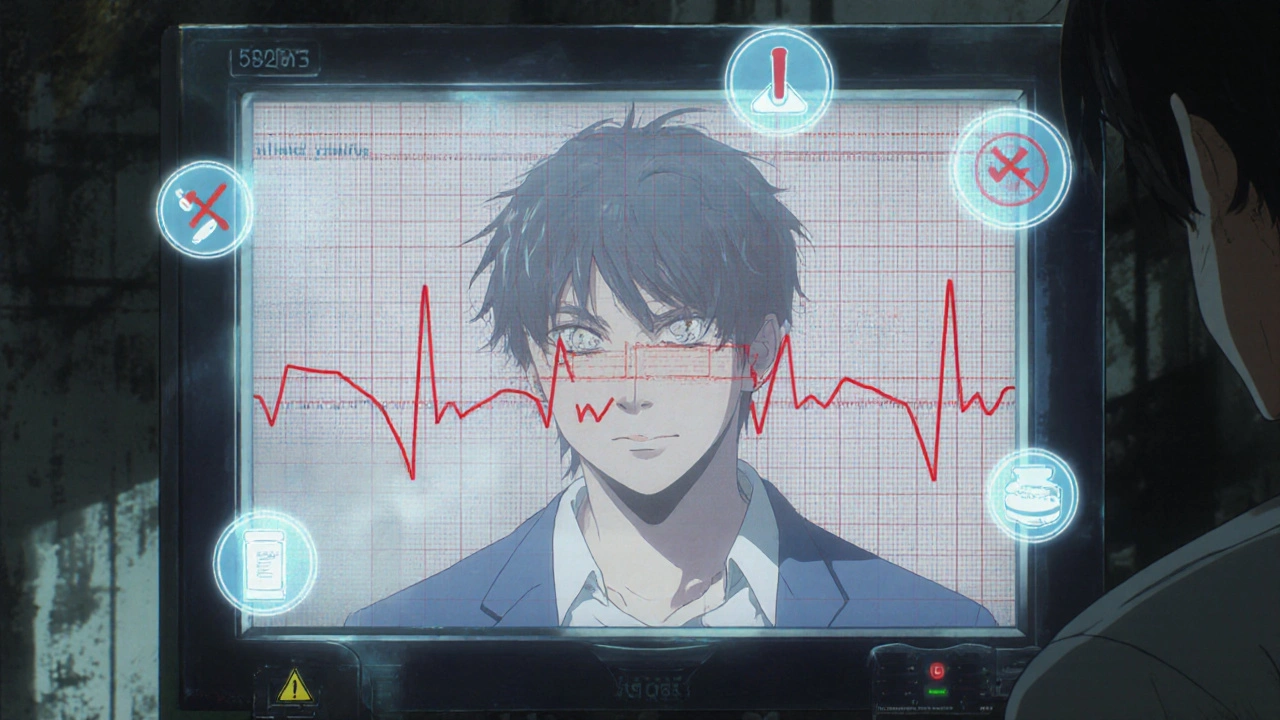
Antipsychotics and QT-Prolonging Drugs: What You Need to Know About Arrhythmia Risk
Combining antipsychotics with other QT-prolonging drugs can dangerously stretch the heart's electrical cycle, raising the risk of sudden cardiac arrest. Learn which medications increase this risk, who's most vulnerable, and how to prevent life-threatening arrhythmias.